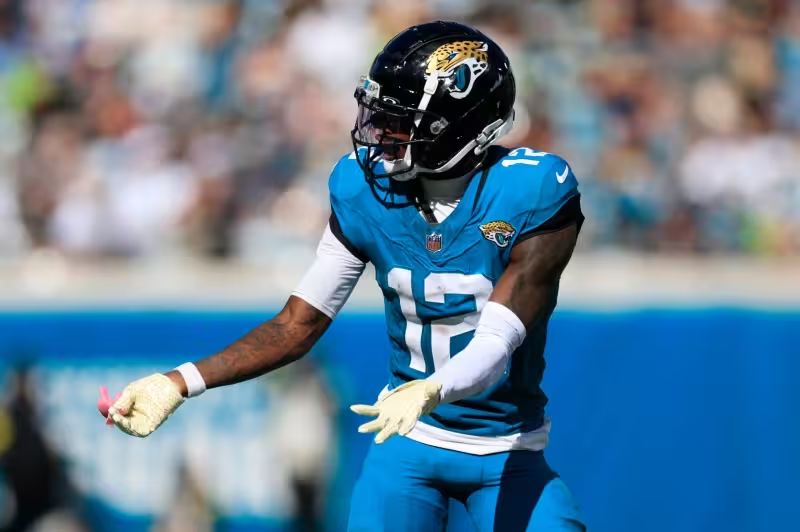
Travis Hunter spends 25–30 minute stretches in a virtual room multiple times a day, working through game situations from a defensive back’s perspective while he rehabs a knee injury, Jaguars coach Liam Coen said Thursday.
"The virtual room has been really good for Travis to be able to go in there," Coen said. "We expanded that room downstairs to make it one big room, and man, you can go in there and essentially play a game like almost from the defensive back’s perspective."

Coen said Hunter can see the linebackers, the defensive line and the offense in the expanded space and is using the simulations to refine alignment, assignment, calls and adjustments to formations. "Right now, you’re not going to be able to get a ton of all the routes and how they play out, but alignment, assignment, making calls, adjustments to formations has been so valuable to him," he said.
Those simulated repetitions are specific and frequent: Coen said Hunter has gone into the virtual room for 25-30 minute sessions multiple times per day, and "that’s accumulating a ton of reps that he’s not going to be able to get until he’s cleared to go." For a player who was selected second overall in the 2025 draft and whose rookie year ended with an LCL injury, the volume matters.
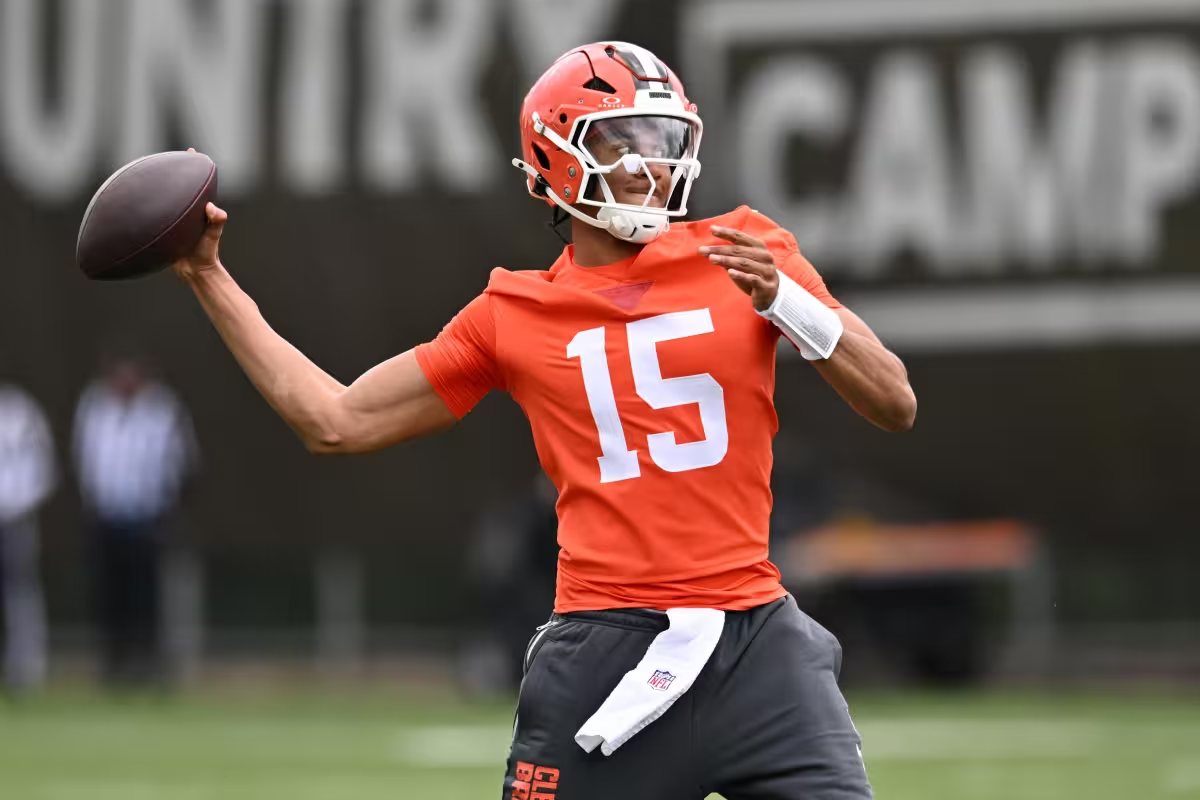
The virtual work is also keeping Hunter visible off the field. He ranked second on the NFLPA’s 2025 licensing income list with $12.8 million, behind Shedeur Sanders at $17.7 million, and the attention around him has only increased expectations for his Year 2 role. The team projects an uptick in his playing time at cornerback even as Jacksonville remains stacked at receiver and seeks reinforcements in the secondary.
Coen framed the virtual-room regimen as a development bridge rather than a substitute for live practice. "Right now, you’re not going to be able to get a ton of all the routes...but alignment, assignment, making calls, adjustments to formations has been so valuable to him," he repeated, underscoring how the sessions are meant to preserve instincts, not mask physical readiness.
At the same time, the Jaguars are not rushing Hunter back to the grass. "So, we’re really at the mercy of the rehab and the docks in terms of what that looks like in the next steps of getting out on the grass," Coen said, adding that there is no pressure on Hunter and that "he’s done a phenomenal job." Team officials describe him as ahead of schedule in recovery, but they will defer to medical clearance before resuming on-field work.
The friction is obvious: Hunter is collecting meaningful, coach-led development reps in a controlled virtual setting and drawing significant off-field attention, yet he remains unavailable for the live practices that define readiness. The virtual room buys the Jaguars time to sharpen his football instincts without jeopardizing recovery, but it cannot replicate the contact, timing and route depth of grass work.
The next milestone is medical. Coen’s update offers a clear interim plan — expanded virtual reps several times daily — but not a timetable for when Hunter will return to practice or games. Until the doctors sign off, those simulated sessions will be his primary source of in-game repetitions and the team’s main tool for keeping him engaged in Year 2 development.