



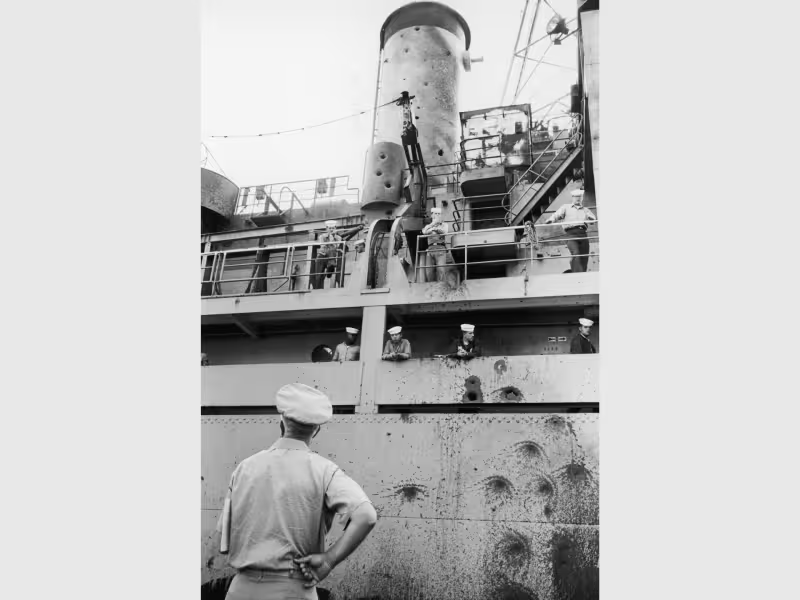
Rep. Thomas Massie stood on the House floor Monday to honor the survivors of the USS Liberty and to demand a new investigation into the June 8, 1967 attack that killed 34 U.S. service members and wounded more than 170.
Twelve surviving crew members watched from the House gallery as Massie described the ship as unarmed, sent to observe the Six-Day War, and flying a clearly visible American flag when Israeli jet fighters and torpedo boats struck the vessel off the coast of Egypt in international waters near the Sinai Peninsula.

Massie recounted graphic accounts of the assault during his remarks. "According to eyewitness accounts, the Israelis machine gunned the lifeboats that they put down," he said. "They machine gunned the firefighters who were on the deck." He said the attack was "an effort to kill everybody on board," and that ships sent to assist the Liberty were recalled. Massie urged colleagues to "Honor these individuals" and to "Quit ignoring they exist. Go to their website USSLiberty.org. Support them, and while they’re still alive, they need closure. Let’s give them closure. Let’s have an investigation. Let’s pass a resolution honoring them. It’s long overdue."
The historical record cited during the speech is stark: Israeli jets first attacked the Liberty, striking the deck with anti-personnel weapons and armor-piercing bullets; torpedo boats later blew a massive hole in the ship’s starboard side. Twenty-five men were killed instantly in the lower research spaces. Survivors and advocates say records remain classified nearly 60 years after the incident and that the U.S. Congress never formed a formal committee to probe what happened.



Officials in Washington and representatives of Israel have long maintained the attack was a tragic case of mistaken identity. Israeli statements say naval forces believed the ship to be Egyptian. Survivors dispute that account. Former crew members and researchers have argued the ship’s American identity was evident; Richard Brooks told an interviewer in 2015, "it wasn’t a tragic accident," adding, "It was a deliberate attack. They knew who we were. They tried to sink us. They wanted us out to either bring the Americans into the war by blaming the Arabs or we picked up some information about their war plans." Ernie Gallo and the USS Liberty Survivors Group dismiss Israel’s mistaken identity explanation as a lie.
The House recognition thrust those disagreements back into public view. Massie portrayed the survivors’ conclusion plainly: "None of these distinguished men think this was an accident. They think it was intentional murder by the country of Israel, either as a false flag operation or because they simply didn’t want anybody observing what they were doing that day." His speech combined those assertions with the casualties—34 dead, more than 170 wounded—and the presence of surviving witnesses to press for action.
The immediate consequence of Monday’s event is political pressure: Massie called for an official investigation and for a congressional resolution honoring the crew. He said ships that could have aided the Liberty were recalled and pushed lawmakers to seek answers. There is no new inquiry announced, and Massie did not lay out a timetable or the procedural route he will use to force hearings or declassification.
The central unresolved fact remains the same one survivors have raised for decades: what exactly happened that day and why the U.S. government never undertook a full, public investigation. Massie’s appeal makes that unanswered question the issue before Congress now — whether members will move beyond recognition and toward the oversight or inquiry the survivors say they have been denied for nearly 60 years.



