




Samuel Alito did not take part Monday in a Supreme Court decision involving a retirement benefits fight tied to DuPont and Corteva, leaving the justices to resolve the case without him. The court’s order list showed only seven justices participating in the matter, a routine but consequential reminder that recusals can shape how the high court acts.
The case, Gasper v. EIDP, Inc., centered on former employee David Gasper’s claim that his monthly retirement benefit had been improperly reduced after his divorce. The Fourth Circuit rejected that challenge, finding that the plan administrator properly spread the cost of a survivor benefit across the total pension and also turned aside his request for penalties over delayed document disclosures.

Alito’s absence was not publicly explained. The Supreme Court usually does not spell out why a justice sits out a case, even though federal ethics law says a justice must recuse when impartiality “might reasonably be questioned.” In practice, the reasons are often inferred from the record, and this kind of corporate benefits dispute can fit a familiar financial-conflict scenario.

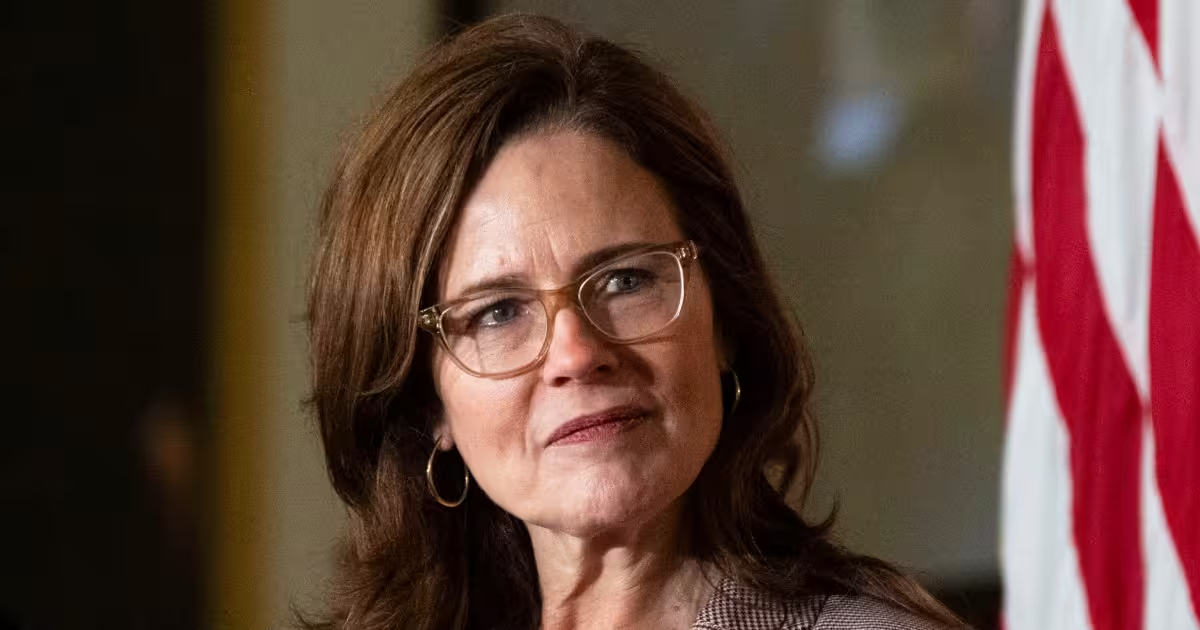
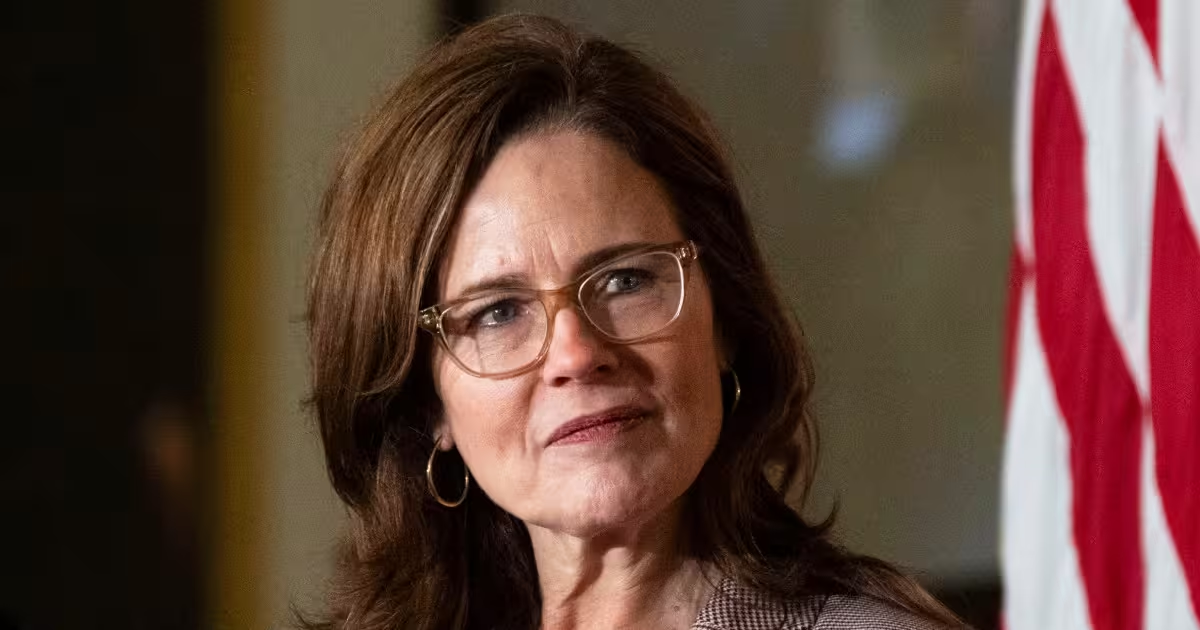
A second justice, Amy Coney Barrett, also sat out a separate case released Monday. Her recusal involved a Seventh Circuit matter concerning federal inmate Eural Black, who is serving a lengthy sentence tied to “stacked” firearm convictions and argued that the gap between his sentence and what he would receive today should count as an “extraordinary and compelling” reason for early release. The Seventh Circuit said its own precedent still barred using those sentencing reforms as a basis for compassionate release.
Barrett’s decision fits a more visible pattern because she served on the Seventh Circuit before joining the Supreme Court. Alito’s reason was not disclosed, and the court did not say whether it stemmed from a prior connection, a financial interest or another concern. The result was the same in both cases: seven justices heard the dispute, and the lower-court rulings remained in place.
For Gasper, that means the Fourth Circuit’s ruling stands. For the court, Monday’s decisions showed how recusals quietly affect the work of the justices, even when the court offers no explanation and no additional review is expected.



