



Apple announced macOS Golden Gate 27 during the WWDC keynote on June 7, 2026, unveiling a new desktop release that adds a global slider to adjust Liquid Glass opacity and formally drops support for Intel-based Macs.
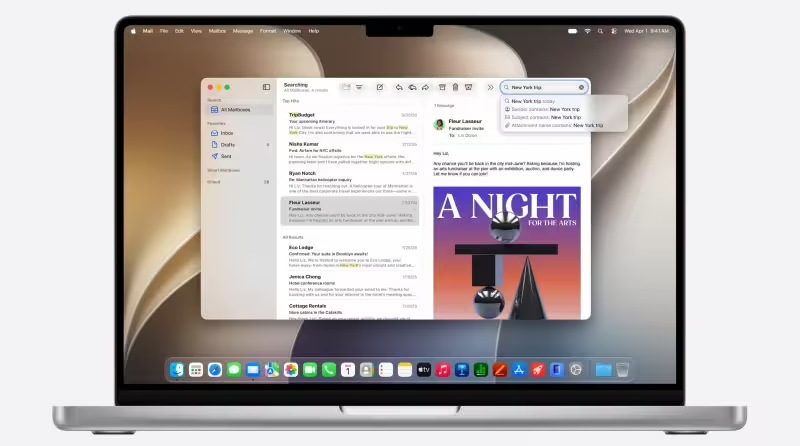
Golden Gate 27 tightens window corner radii for a more unified look and brings a rebuilt Search engine that can index all content on a device and add new items almost immediately. Spotlight gains deeper results for Photos and Mail, and Apple said many cross-platform features shown at WWDC — including updates to parental controls and Screen Time, a bold new architecture for Apple Intelligence and Siri AI — will ship with macOS 27.

The new OS follows last year’s macOS 26 Tahoe, which introduced the Liquid Glass redesign along with a revised Spotlight and a Phone app. Tahoe proved divisive: its Liquid Glass visual overhaul generated frequent criticism. Separately, Apple confirmed at WWDC 2025 that Tahoe would be the last major macOS release to include native support for Intel Macs; Golden Gate now carries that transition forward by excluding x86-based machines entirely.
It is notable that Golden Gate expands user control over Liquid Glass even though Tahoe’s redesign was controversial and often disliked. Rather than retreating from the visual overhaul, Apple is adding a system-wide opacity slider — a granular control that changes how the Glass effect reads across the desktop — and refining corner geometry to push toward a single visual language.
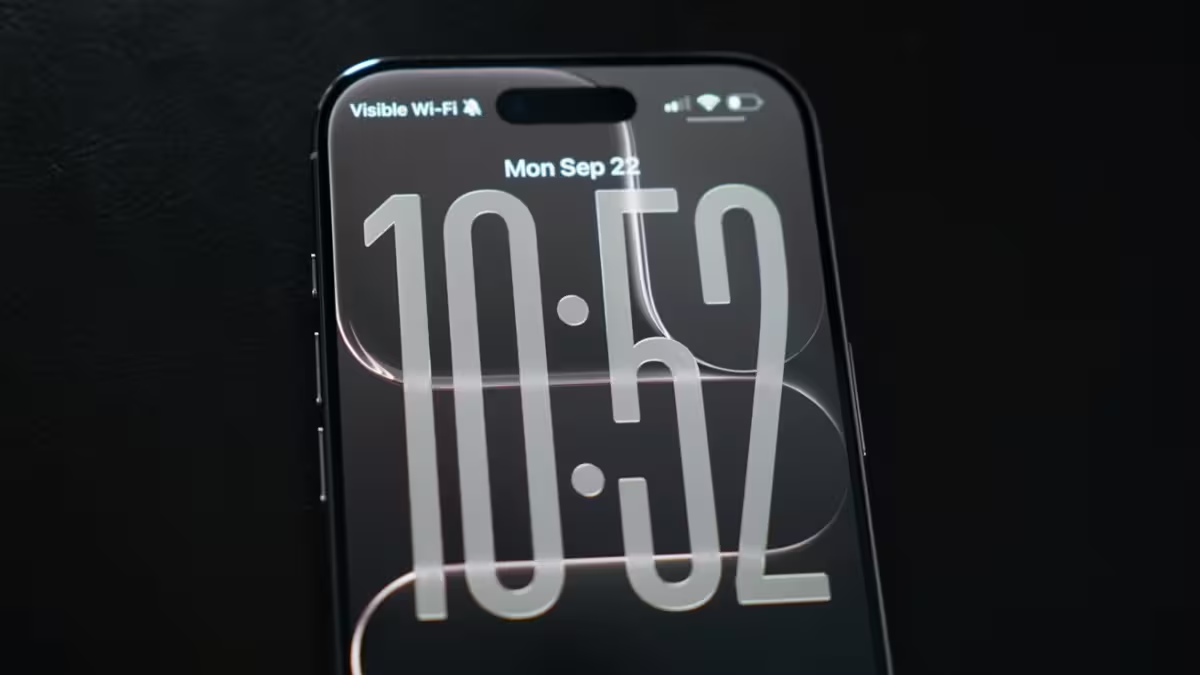


The immediate consequence is practical and binary: Intel-based Macs will not be supported by this next major release. People with aging Macs that run on x86 Intel chips were promised three years of security updates, but Golden Gate is the first new macOS that will be unavailable to those machines. For owners of older hardware the announcement changes upgrade calculus from whether to update macOS to whether to replace a machine.
Functionally, Golden Gate’s rebuilt Search matters beyond headline interface tweaks. By indexing all device content and ingesting new items almost instantly, the system promises a faster, broader Spotlight that ties into Photos and Mail more tightly than before. Those improvements pair with the cross-platform work Apple previewed at WWDC to deliver feature parity across devices running the company’s newer architecture.
Apple did not provide a public release date for macOS Golden Gate 27 during the keynote. That omission leaves a practical gap: the timing of Golden Gate’s rollout will determine which Intel Macs remain eligible for the three years of promised security updates and whether users who planned to stay on older hardware can expect patches beyond security fixes.
Apple set the direction at WWDC: macOS 27 pushes the Liquid Glass aesthetic into finer-grain user control, rebuilds search from the ground up, and completes the move away from Intel. The most consequential unanswered fact is when Golden Gate will arrive in users’ hands — that release date will decide how many older Macs actually receive the security support Apple pledged and how quickly the new interface lands on the majority of active Macs.



