




Alphabet Inc. announced at the start of June an $80 billion equity investment round and simultaneously raised its 2026 capital expenditure forecast to $180 billion–$190 billion, up from an April range of $175 billion–$185 billion.
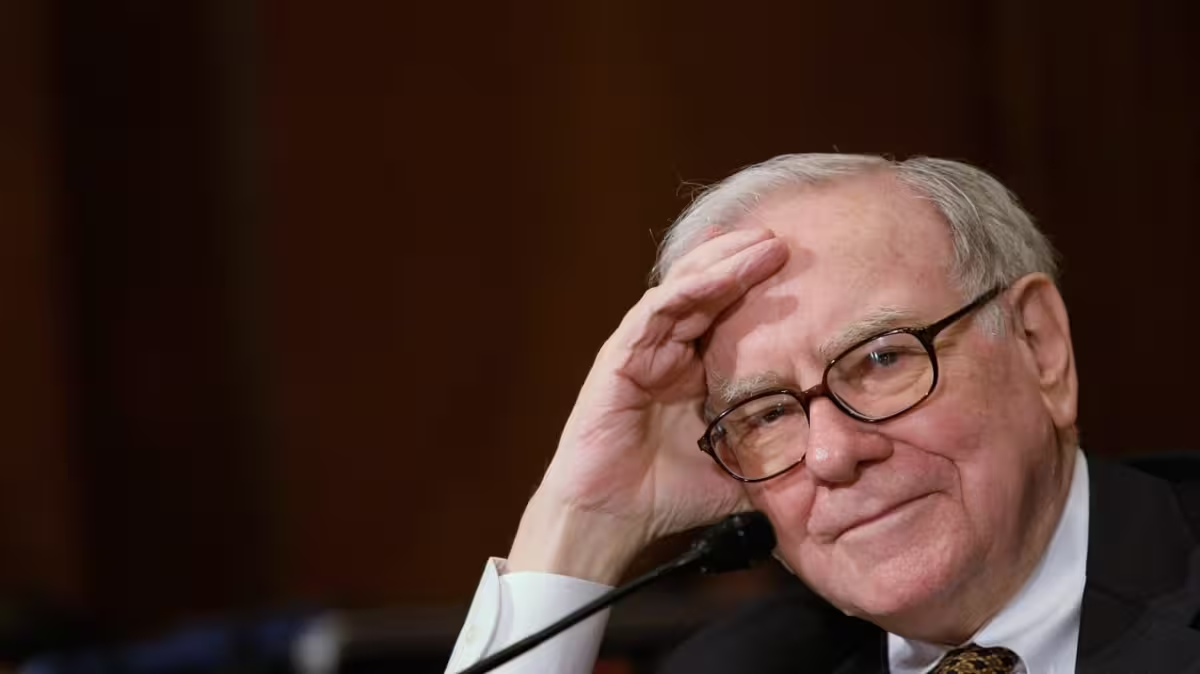
The financing matter is immediate: Warren Buffett’s Berkshire Hathaway will provide $10 billion of the round, and the company said the proceeds will "fund investments in its world-class AI compute infrastructure to meet its unprecedented customer demand." Alphabet’s shares have already been strong — up 121% over the past year and 18% year-to-date — and the raise locks in fresh funding for the AI push.

For investors the valuation math is part of the story. Alphabet trades at a forward P/E of 25, cheaper than the broader market’s forward P/E of 27.66 but pricier than Microsoft’s forward multiple of 19.46. That spread frames the argument from some shareholders and analysts who view the name as attractively valued even as the company expands its spending.
Outside investors have taken notice. In a Q1 2026 investor letter, Alpha Wealth Insiders Fund wrote that "Business: Alphabet Inc.’s (NASDAQ:GOOG) dominant market share and broad scope are often underestimated," and argued the company could become the most valuable in the world. The letter also suggested Google’s position remains strong as generative AI reshapes product lines and competitive dynamics.

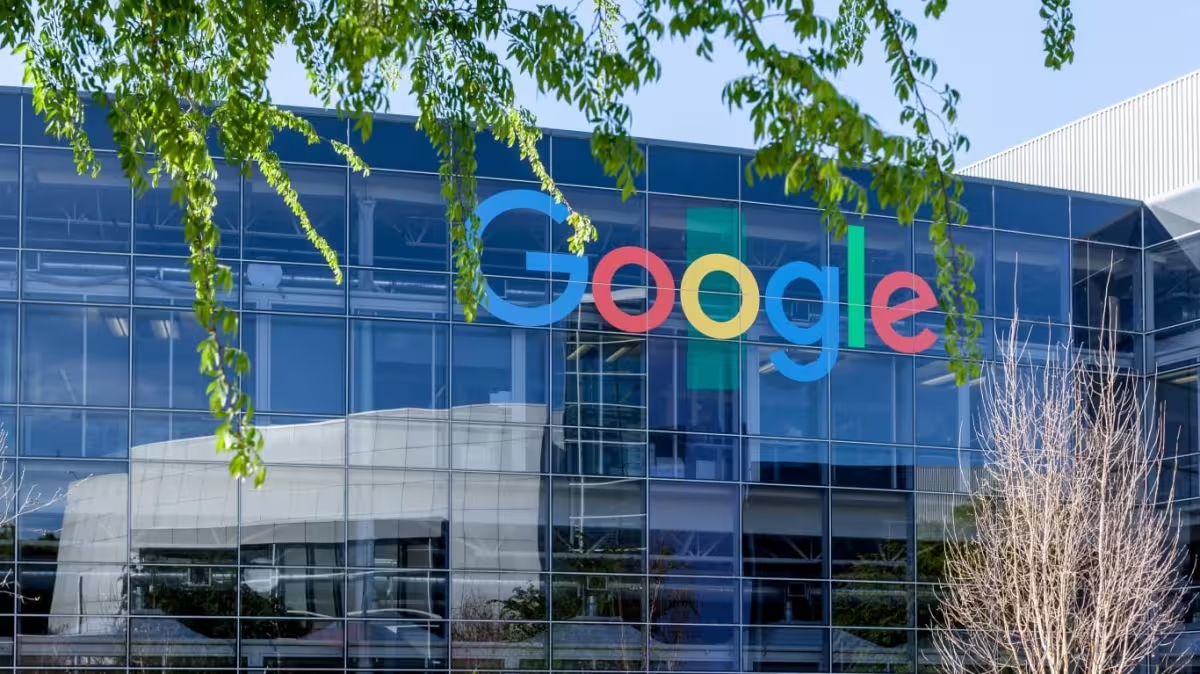
The company’s stated purpose for the new capital is narrow and specific: build AI compute. Alphabet’s own wording was explicit — the money will "fund investments in its world-class AI compute infrastructure to meet its unprecedented customer demand." The combination of extra capital and higher capex guidance signals that Google’s internal forecasts expect heavy, near-term demand for compute capacity.
That is where the tension sits. On one hand, the stock’s forward multiple looks reasonable versus the market, which supports the case that googl stock can absorb a large spending program without immediate multiple compression. On the other hand, Alphabet’s capex needs have been ratcheting up — the company raised its guidance to $180 billion–$190 billion from $175 billion–$185 billion in April — and that scale of investment is material regardless of valuation differentials.
Operationally, Alphabet is not a small lever. Google’s search engine still controls roughly 89.8% to 91.4% of global search as of April 2026, a dominant cash cow that lets the company plow profits into infrastructure and moonshot bets. But the core open question remains whether the incremental AI infrastructure will produce proportional revenue or new customer monetization quickly enough to justify the outlay.
For traders tracking googl stock, the combination of a large equity raise, a higher capex ceiling, and Berkshire’s participation will be the immediate focus. The raise reduces near-term balance-sheet risk and signals external investor confidence; the higher capex number quantifies just how much more Alphabet expects to spend to scale AI compute.
The next, and most consequential, question is explicit: how fast will these larger AI infrastructure investments translate into revenue growth or measurable customer expansion? Alphabet has committed clear capital and secured partners for the round, but the timeline from machines in data centers to meaningful top-line lift is not specified in the announcement — and that gap will determine whether investors treat the move as prudent scaling or an expensive prelude to longer payback periods.



