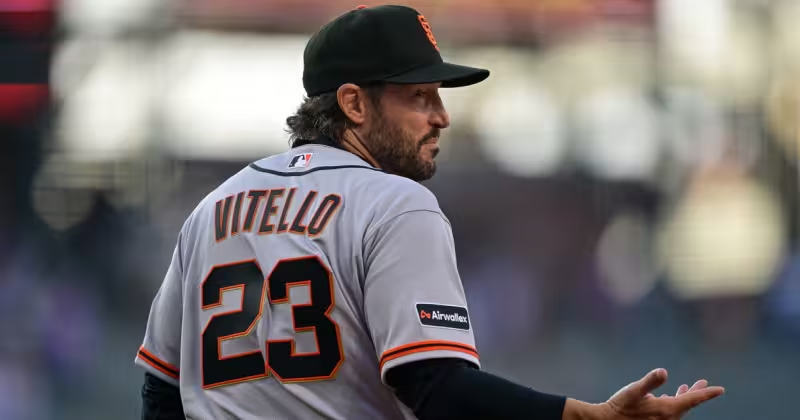
Tony Vitello said Wednesday he expects to remain the Giants’ manager through 2028 and that he is not planning a return to college coaching, even as the first-year manager wrestles with a 24-38 record. He opened the conversation by cutting to the chase: “I’m my harshest critic,” he said, then added that taking the job was always meant to be a challenge he would live with.
The commitment comes after a 1-0 victory Wednesday night in Milwaukee, a rare clean result in a season that has drawn sharp criticism from some fans. The win did not, Vitello acknowledged, erase the larger problems — but he said the only practical response was to refine the club’s approach and trust results will follow.

General manager Zack Minasian backed Vitello publicly, saying the manager has been easy to work with and is the kind of presence the front office wants in the dugout. “Obviously, our record’s not where we want it to be, but for me, and I feel comfortable speaking for the front office, he’s someone that’s been very easy to work with and someone you like to be around,” Minasian said. He added: “He’s a tireless worker with a great combination of empathy and passion. He’s got all the intangibles, everything you need to be very successful, and I fully expect him to be in that dugout for a while.”
Vitello’s authority within the organization is clear: the Giants gave him the power to draw up the lineup and make in-game decisions, a level of control that helped convince him to leave his prior job at the University of Tennessee and manage in the majors. Buster Posey, the club’s architect, made the offer in mid-October; Vitello accepted and has been steering the ballclub through his first major-league season.
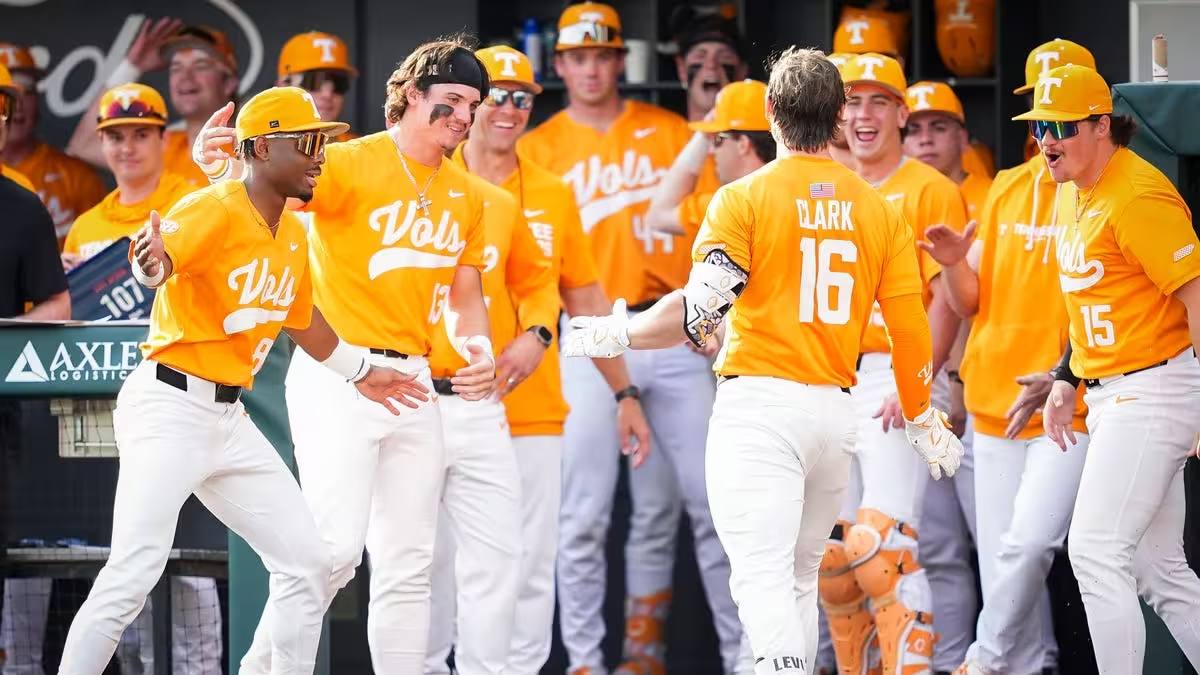

That college pedigree matters to how Vitello frames the work. He transformed Tennessee into a national power, a record that made his hiring notable in baseball circles. But he said he does not foresee a return to the college ranks: when asked about the possibility, he answered bluntly, “I don’t see that happening.” He also said he is “very happy with where I’m at and what I’m doing,” and emphasized his focus is wholly on improving the Giants’ results.
Still, the friction in this story is plain. College coaching openings routinely surface around the College World Series, and Vitello’s recent success in college makes him an attractive candidate should a program call. Vitello insists he is committed to the contract through 2028 and that he is focused on changing this season’s trajectory; the practical reality is that colleges could still inquire, and the franchise would have to respond if an offer materialized.
That gap between promise and possibility frames how the front office and fans assess the season. Vitello has the backing and the in-game authority the club promised when it hired him, and the GM’s public support reduces immediate questions about internal friction. But the 24-38 ledger remains the clearest measure of where the team stands — and it is the metric that will determine whether patience holds.
Vitello’s posture is personal and procedural at once: he accepts blame, points to process, and refuses to let speculation become a distraction. The unanswered question is now practical, not philosophical — will the Giants’ results improve enough, soon enough, to make his pledge more than words? Until he turns the ledger around, clubs with openings may still pick up the phone. That is the next test for Vitello and the SF Giants: convert commitment into wins, or invite the very calls he says he won’t take.