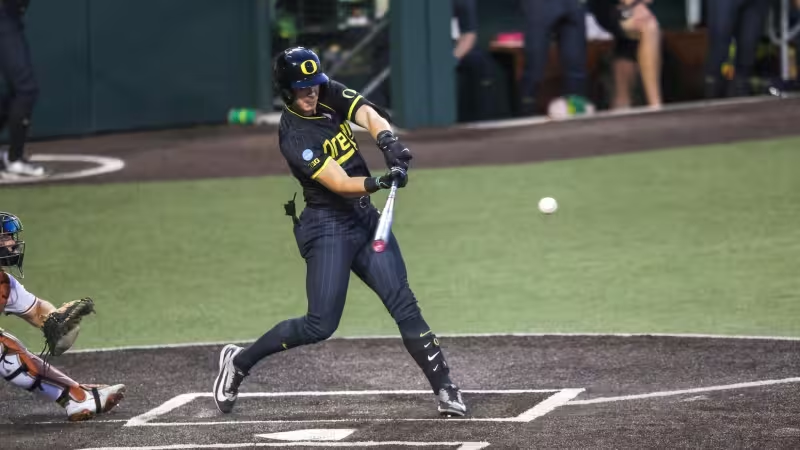
The Oregon Ducks dropped Game One at the Austin Super Regional, a result that landed even as Adrian Rodriguez accounted for a large share of the team's offense.
Rodriguez drove in five runs and delivered two sacrifice flies; Aiden Robbins added a sacrifice fly and scored once. Ethan Mendoza had two RBIs and scored once, Casey Borba and Dariyan Pendergrass each produced an RBI, and Borba crossed the plate twice.

Runs came from across the lineup: Anthony Pack Jr. scored three times, Temo Becerra scored twice and was hit by a pitch once, Maddox Molony scored once and supplied two doubles, Lauaki Jr. and Naulivou each doubled, and Drew Smith and Jack Brooks each reached the scoreboard once.
Hit-by-pitch entries also factored into Oregon's baserunners: Mendoza and Pendergrass were each plunked once, helping extend innings that produced the Ducks' runs but not a victory.
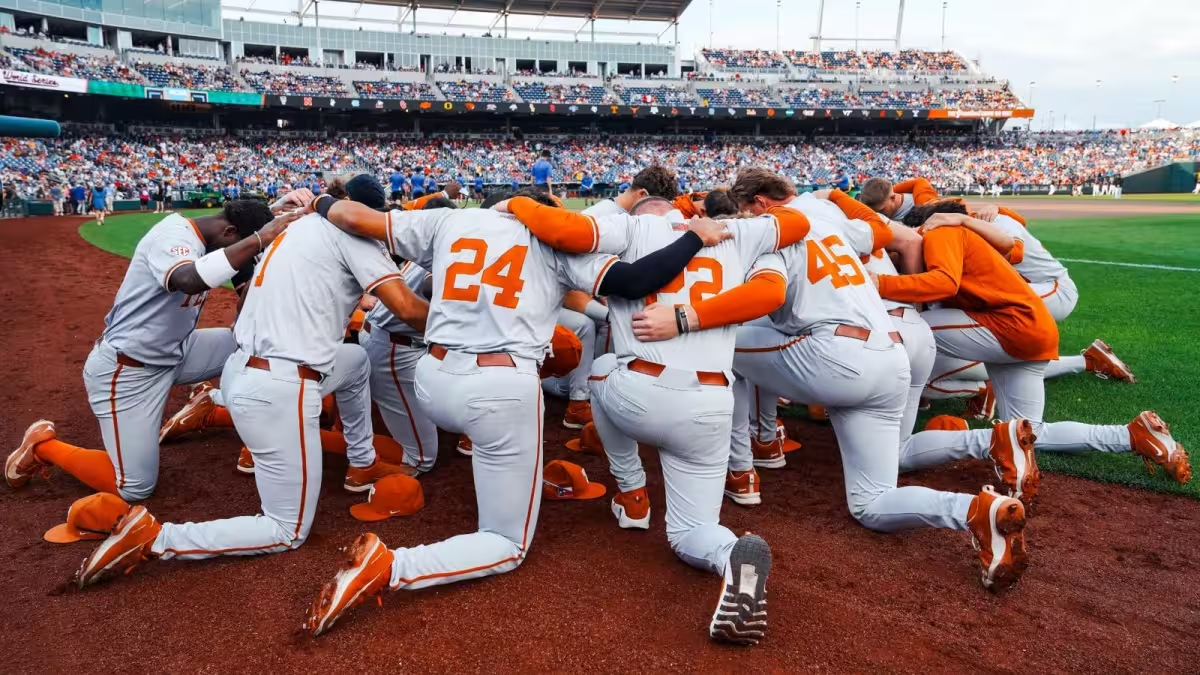

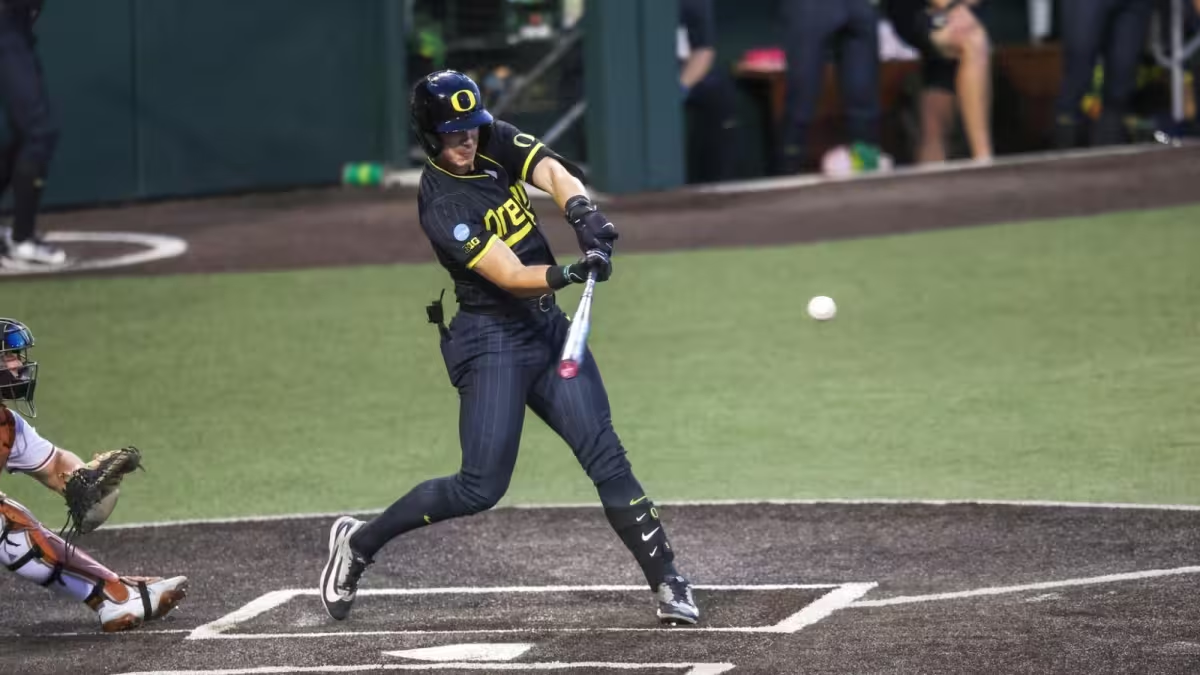
Those figures are the weight of the game: a concentrated outpouring of offense from Rodriguez and contributions from a handful of teammates, but not enough to carry Oregon to a win in Austin.
Context matters: the numbers above come from the University of Oregon's postseason recap of the Austin Super Regional, which lists individual offensive contributions and shows where the Ducks generated production and where they did not. The concentration of RBIs — five from Rodriguez alone — is the clearest single-line takeaway from Game One.
The friction is plain. Rodriguez produced five RBIs and two sacrifice flies, yet Oregon still dropped Game One. A performance that would normally swing a postseason matchup did not; the rest of the lineup supplied moments but not sustained, distributed scoring.
That imbalance is the deciding question for the Ducks heading into the remainder of the Super Regional: can they translate Rodriguez's big night into a repeatable, team-wide effort? Game Two at the Austin Super Regional will hinge on whether Oregon can spread the run production beyond one player and turn base hits, doubles and hit-by-pitch opportunities into enough runs to change the series' momentum.
The loss leaves an obvious next line: Oregon must find more consistent run support and a way to convert offensive chances into a full-game advantage. How the coaching staff adjusts the batting order, situational strategy and plate approach — and who supplies the secondary run production — will determine whether the Ducks can recover from Game One's concentrated scoring and extend the Super Regional.