



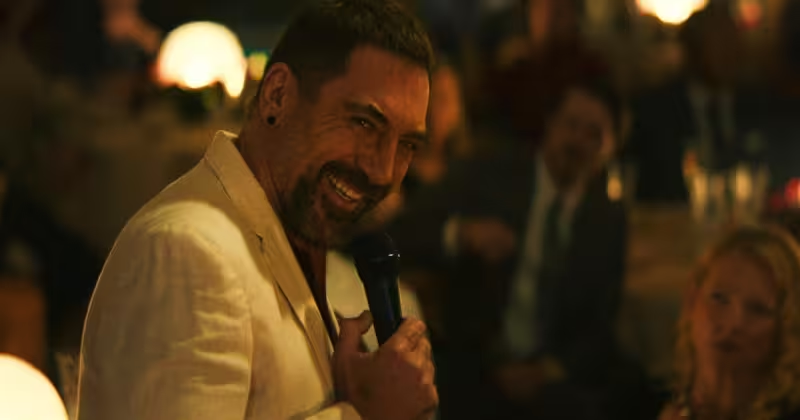
Cape Fear premiered Friday on Apple TV as a 10-episode limited-series remake that chooses to be a thriller of evidence more than of pure menace: Javier Bardem’s Max Cady arrives no longer only as a hulking instinct of revenge but as the center of a legal mystery that the show makes its engine.
The series, created by Nick Antosca, relocates the old story’s muscle into modern media. Bardem leads a cast that includes Patrick Wilson as Tom Bowden and Amy Adams as Anna Bowden; Lily Collias plays Natalie, Anna’s daughter from a previous relationship, and Joe Anders is Zach, the younger half-brother. CCH Pounder appears as Noa Toussaint. The headline facts are simple and sharp: Cady — who in the novel and earlier films served time for rape — is here imprisoned for the murder of his wife and unborn child and is sprung from custody after 17 years when new evidence suddenly emerges.

That suddenness is the point. The remake borrows the shape of the 1962 film and Martin Scorsese’s 1991 reworking, but Antosca’s version pulls the story into a world of catfishing, drones, deep fakes, social media and pushy true-crime podcasters. Those technologies are not window dressing; they become instruments in how suspicion forms, how reputations are wrecked and how a family like the Bowdens — Tom, Anna and the two Bowden children — are targeted and exposed.
The decisive, specific update is psychological as well as technological. Cady arrives with a prison-acquired brain injury. He endures headaches, hallucinations, painful reactions to flashbulbs and visions of his dead wife and son, whom he imagines grown. Those symptoms complicate the viewer’s reading of events: are some scenes the product of a damaged mind, or proof of manipulation by outside forces using modern tools?
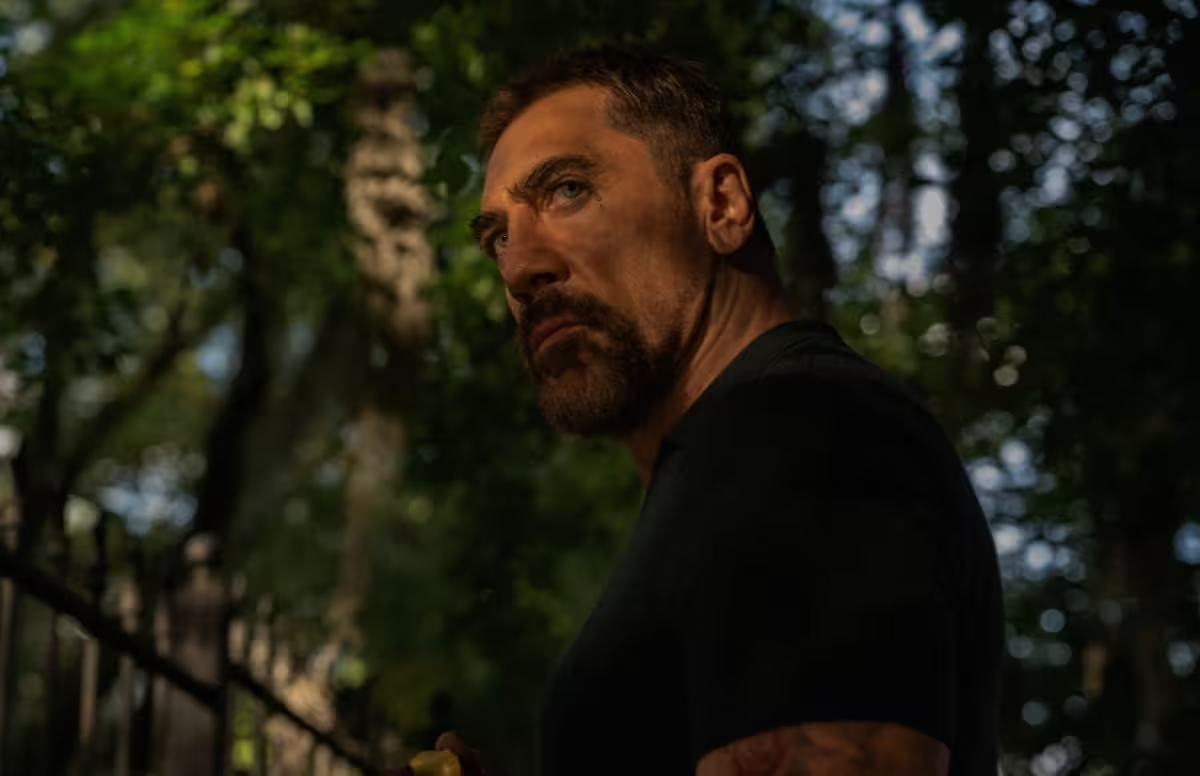

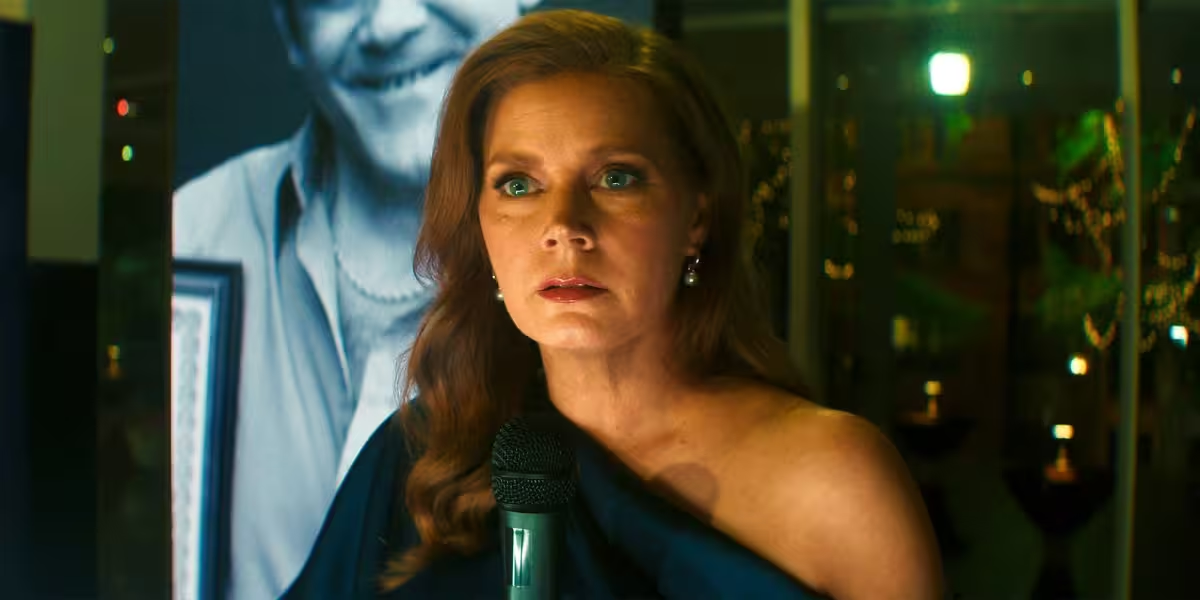
Context matters here: Cape Fear has been adapted repeatedly since John D. MacDonald’s 1957 novel The Executioners, through the 1962 original and Scorsese’s 1991 remake. Antosca’s series keeps recognizable beats — the Bowden household under siege, the lawyer-father pulled into moral compromise — while making the courtroom and the court of public opinion parallel battlegrounds. The choice to change Cady’s original crime from rape to the murder of his family both freshens and heightens the moral stakes for audiences who know the story’s history.
The tension that drives the episodes is not whether Cady wants revenge — he does — but whether he is simply guilty, or wrongfully convicted and then victimized again by a system and a media ecosystem that refuses nuance. The show explicitly positions new evidence as the liberator of Cady after 17 years, but it also plants doubt about that same proof: documents, clips or forensic turns that free him will themselves become objects of suspicion, subject to manipulation by the very technologies the series spotlights.
Natalie’s subplot — a teenager who, quietly ignored by busy parents, flirts with danger in small, lived-in ways — gives the show its human anchor. She is written as someone who wants to go “a little bad,” and her private restlessness makes the Bowden family more than a cinematic target; it makes them vulnerable in modern, believable ways to a predator whose tactics now include social deception as much as physical menace.
Cape Fear’s first episodes answer some immediate questions — who’s in the cast, what’s different, and how the rewiring toward contemporary media culture will shape the plot — and leave the single most consequential question sharp and open: what exactly was the new evidence that freed Max Cady after 17 years? The series commits to spending its 10 episodes unspooling that answer and, in the process, testing whether proof can be trusted in an era that manufactures doubt as easily as it manufactures outrage.



