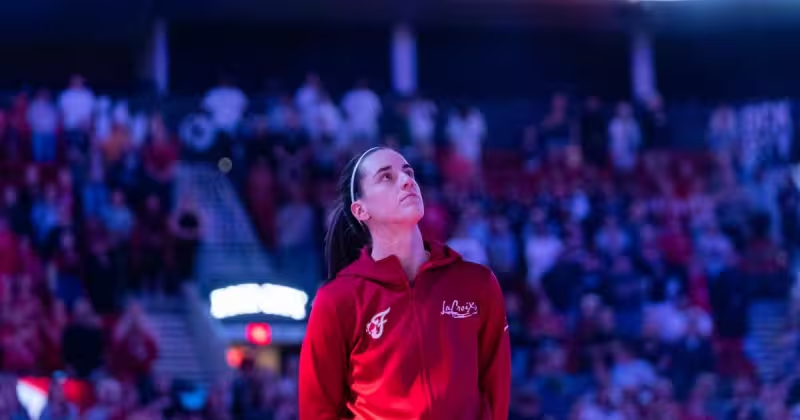
"I wish Caitlin Clark would just stop whining and play," a Los Angeles Times commentary begins, turning the spotlight from Clark's scoring and popularity to her sideline conduct.
The opinion piece, headlined "Whiny Caitlin Clark’s tired antics needs to end," centers on a series of recent on-court moments that the writer says reveal a change in tone from the WNBA's most popular player in her third season. It names a nationally televised game earlier this week, a viral bench argument and exchanges with coaches as evidence that Clark's demeanor has become a story in itself.

Most stark for the column was Clark's performance and posture during a loss to the Portland Fire, when the piece notes she made one basket and engaged in a heated timeout discussion with head coach Stephanie White. The commentary recounts that Clark left her seat to stand next to White and shake her head after being pulled, a bench scene the writer described as part of a larger pattern of poor sideline etiquette.
The column also revisits an earlier, nationally televised game against the Atlanta Dream in which Clark was fouled on a layup by Jordin Canada. The piece says the officials properly called the foul, and that Clark — rather than tempering her reaction — "immediately broke into a wild cheer," a moment the writer used to argue Clark's interactions with officials have become performative.

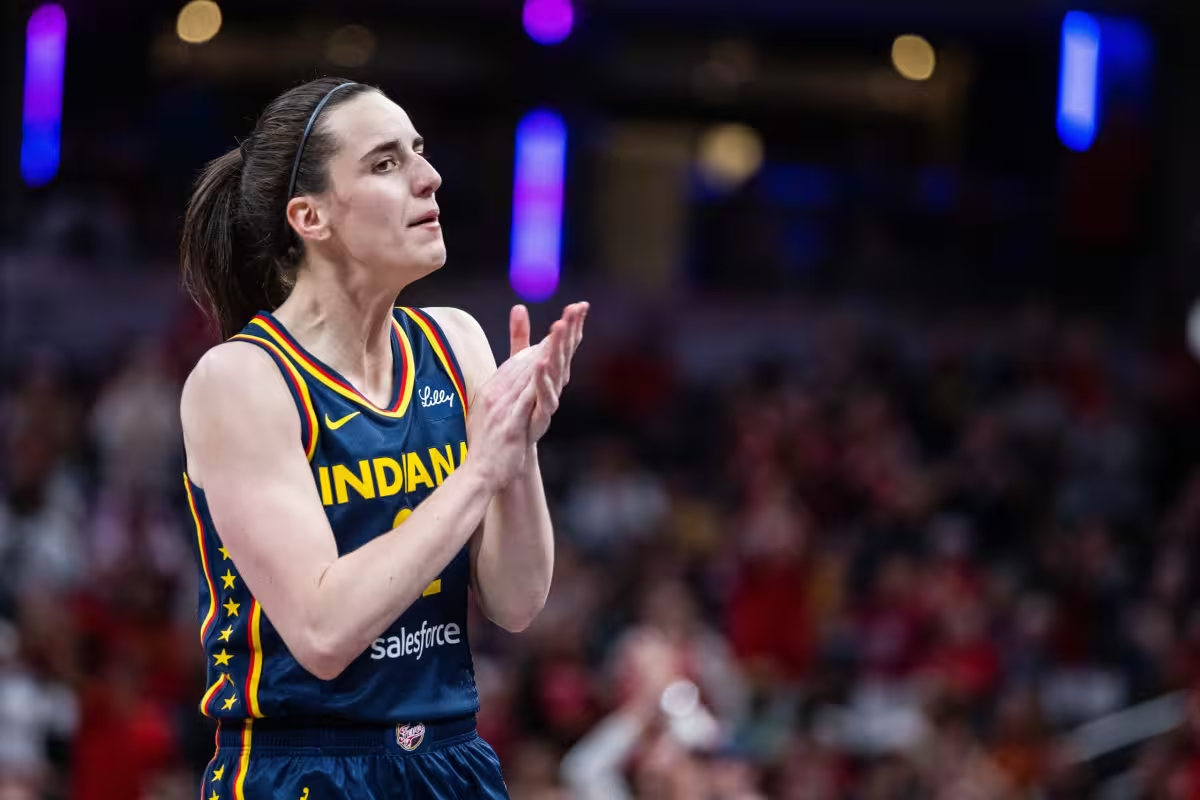
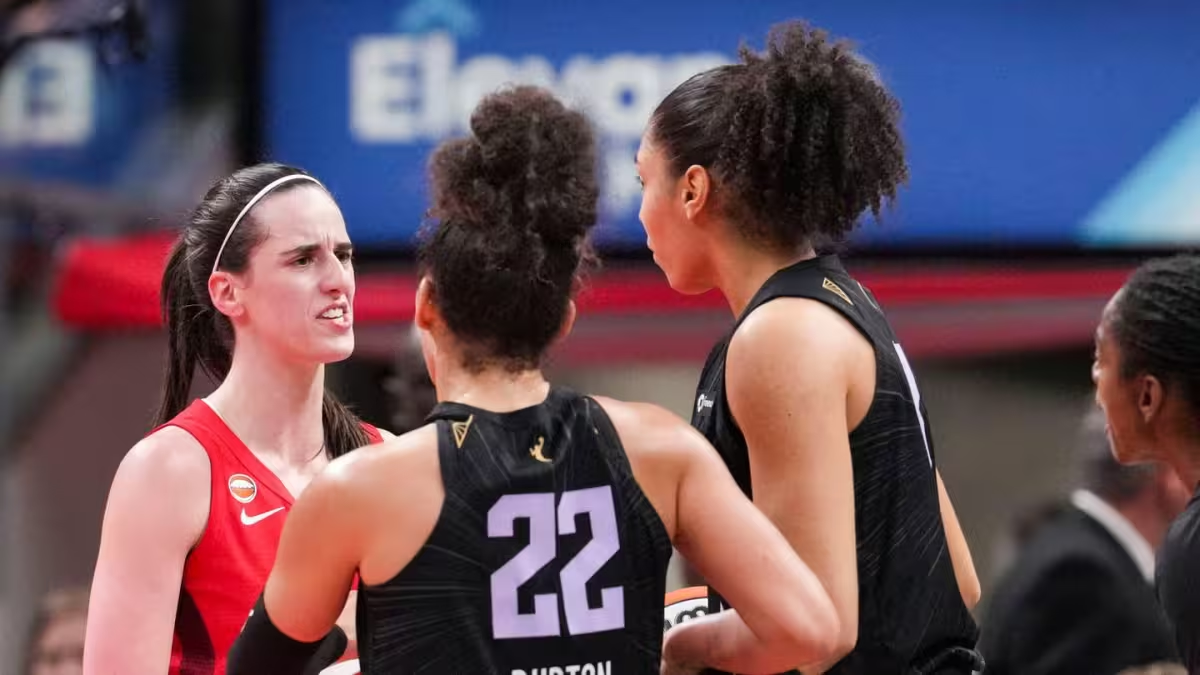
That tally of moments is not limited to those two games: the commentary says Clark shouted back at assistant coach Briann January in one game this season, and it paints those episodes as symptomatic of a player who has moved from celebrated newcomer to what the writer calls "rude, entitled and, frankly, not all that fun." The column even labels Clark a "logo-shooting, circus-passing, shape-shifting revelation" turned sour, while acknowledging her stature in the sport.
Context in the piece is blunt: Clark is identified as the league’s most popular player, yet the commentary singles out her weakest area—defense—and the way opponents isolate and attack that side of her game. The writer frames the tension as more than tactics; it is about how Clark carries herself when calls go against her, when coaches pull her, and when assistants attempt to correct play.
The friction at the heart of the opinion is pointed. The writer accepts that a foul was correctly called on Jordin Canada, then uses Clark's celebratory reaction as evidence of what the piece describes as disrespect toward officials. That critique sits beside charging her with being disrespectful to coaches—an assessment that collides with the column's own portrait of her as a must-watch star, creating a squeeze between performance and personality.
For Clark and the Indiana Fever, the column is a reminder that popularity does not insulate a player from scrutiny over demeanor as much as it does from scrutiny over results. The Los Angeles Times piece ties a handful of visible episodes—a properly called foul, a timeout confrontation, a shouted exchange—into a single argument about changing public tastes and the penalties of mismatch between image and behavior.
What the commentary does not answer is whether Clark or the Fever will respond. The next consequential moment will be public and plain: Clark's reactions on the bench and in close-game moments the next time she is visibly tested. The unanswered question, sharpened by the column, is simple and immediate: will Caitlin Clark quiet the sideline drama and reshape the narrative, or will those episodes become an enduring part of how the league's most popular player is remembered?