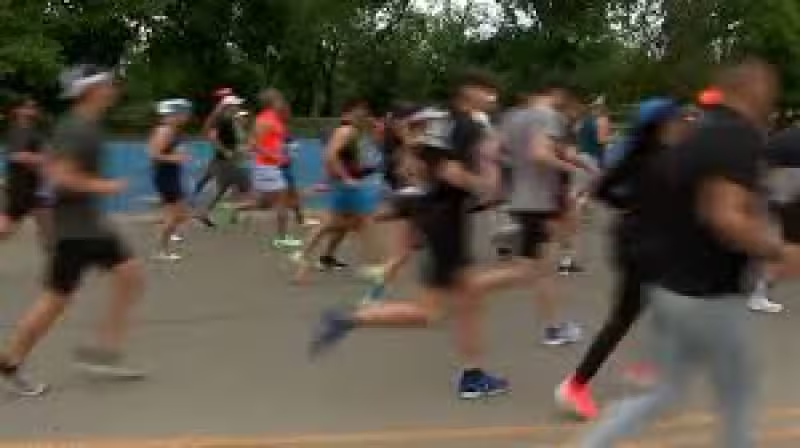
Runners took on the Bank of America Chicago 13.1 half-marathon on Sunday, a 13-mile course that began at 7 a.m. and finished in Garfield Park after running through Douglass Park and Humboldt Park.
The race required early traffic changes: no-parking zones along the course were enforced beginning at 1 a.m. Sunday, and street closures were in place starting at 5:30 a.m. The timed window for running the route ran through the morning, with closures recorded between 5:30 and 11 a.m. as the field moved through each section.

Those numbers matter on a city morning. A 13.1 event that starts at 7 a.m. and pushes through three West Side parks forced both residents and drivers to alter plans; parking restrictions began in the predawn hour and the course itself occupied streets during the peak running period.
Chicago’s Office of Emergency Management and Communications said streets would reopen as runners passed points along the route, allowing traffic to return to normal progressively. Organizers and city crews used that staged reopening to clear intersections and neighborhood blocks once competitors had moved beyond them.

That operational detail resolves one practical worry for drivers and transit users: many streets were expected to open again during the morning once runners had passed. But it also creates a second, more awkward one. Street closures related to the event were listed as remaining in effect until 5 p.m. Monday, even while the city planned incremental reopenings during Sunday to restore traffic flow as quickly as possible.
The overlap — progressive reopenings during the race paired with closure-related restrictions extending into late Monday afternoon — left a practical burden on people living or working along the route. No-parking enforcement from 1 a.m. Sunday meant cars needed to be moved before dawn; the extended closure window meant restrictions, permit checks or block-level controls could still be enforced long after the last runner crossed the finish line in Garfield Park.
The preview detail every neighbor and commuter needed was simple and immediate: the race started at 7 a.m., the 13-mile course ran through Douglass Park, Humboldt Park and concluded in Garfield Park, and no-parking and closure regimes began before daylight. Street closures were active between 5:30 and 11 a.m. on Sunday, with reopening staged as runners passed, but the related restrictions were scheduled to remain in place until 5 p.m. Monday.
The remaining open question for residents, commuters and businesses along the route is exact and actionable: which specific streets were closed and when each block would be cleared. Organizers provided the broad times and the parks on the route, but the list of individual streets under closure was not supplied with the schedule; anyone who needed certainty should expect restrictions through Monday at 5 p.m. and check with city channels for block-by-block updates before moving vehicles or planning deliveries.