




K'Andre Miller said at breakup day that it was "a hard season for me to get a grip of how I wanted to play." He left that sentence hanging in January; through 13 postseason games for the Carolina Hurricanes he has supplied the answer on the ice — eight assists, a league-leading plus-14 rating and an average of 23:55 of ice time per game as Carolina heads into Game 1 of the Stanley Cup Final on Tuesday.
The production is concrete. Miller has been on the ice nearly 24 minutes a night in the 2026 playoffs, creating offense without scoring a goal and finishing with eight assists. His regular-season numbers for Carolina were steady — 37 points in 72 games and a 0.51 points-per-game rate while averaging 22:24 a night — but the playoff footprint is larger, and the plus-14 runs through every box score and lineup sheet.

Those playoff minutes are the bookend to a trade that landed Miller in Raleigh last July. New York sent Miller to Carolina while he was a restricted free agent and received a 2026 first-round pick (No. 26, acquired via Dallas), a second-round pick and 23-year-old defenseman Scott Morrow, who had six points in 29 NHL games in 2025-26.
Carolina rewarded Miller with an eight-year extension at $7.5 million a year. The deal and his playoff form have pushed the Rangers' summer decision back into the spotlight, because the trade was not just about roster fit: it was also a move to clear cap space and accumulate young assets. In January, general manager Chris Drury said the team wanted to target players who bring "tenacity, skill, speed, and a winning pedigree" while building with young players, picks and cap flexibility.
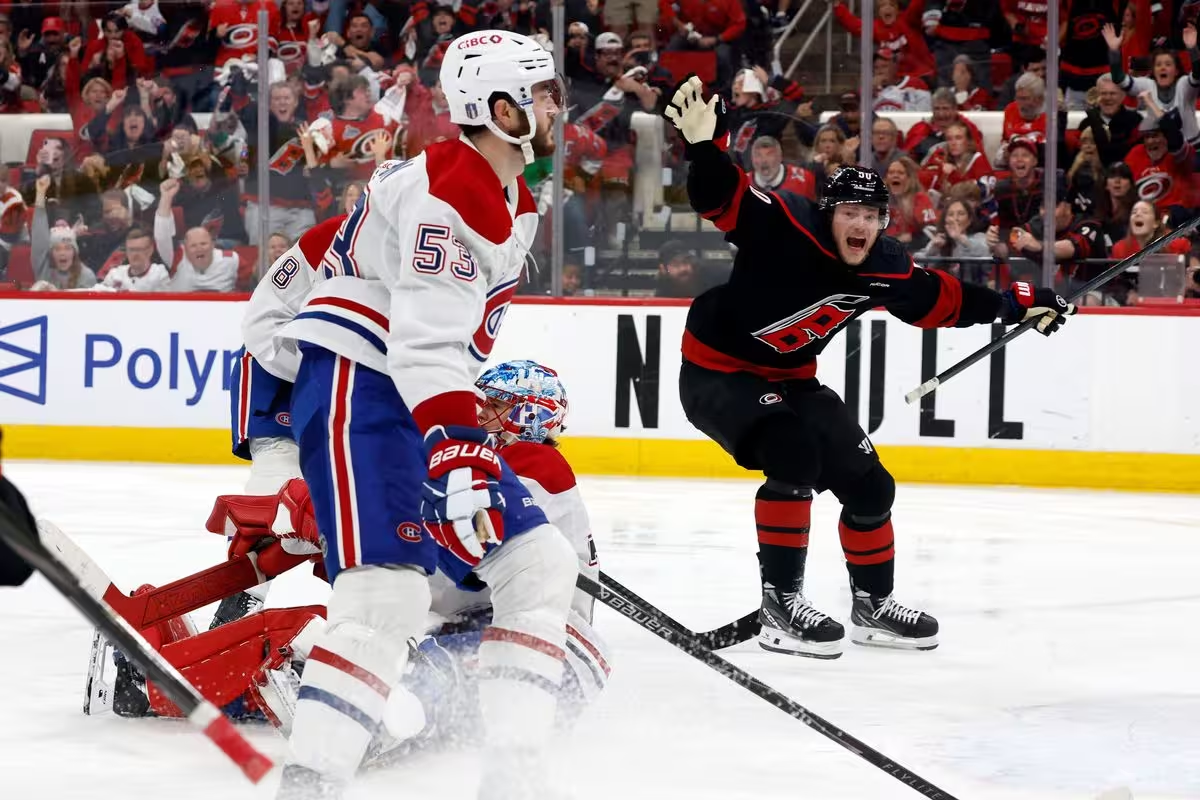


The friction that makes this a story is that Miller's rise was not linear. He struggled for consistency in 2024-25 — particularly early while paired with Jacob Trouba — and he admitted at breakup day that he had trouble finding how he wanted to play. New York followed that season by firing coach Peter Laviolette and an assistant, and later identifying puck-moving defenders as an explicit team need under coach Mike Sullivan.
That sequence matters because it frames both sides of the trade. The Rangers traded a young, high-upside puck-moving defenseman they chose not to re-sign, replacing that potential with picks and a younger defenseman in Morrow. Carolina bet on Miller, bought him long-term and has unlocked a version of the player who can log heavy minutes and tilt possession in the playoffs.
There is a sharp, practical yardstick here. Miller led all playoff skaters in plus-minus at plus-14, a stat that, for better or worse, captures game-by-game impact on the scoreboard. He has been trusted with top minutes and he has produced playmaking that has helped Carolina reach the Final. Those are measurable returns against the package New York received: a late first-round pick, a second-rounder and a 23-year-old with limited NHL mileage.
FilmoGaz chronicled one small, human moment from this run — Miller cradling his son on the bench after a clinch — that underlines how quickly a player's life and valuation can change in a few months (see
He skates in Game 1 on Tuesday. If Miller helps Carolina close the deal, the conversation about the Rangers' trade will shift from internal logic to public verdict: did New York extract the right assets to retool, or did they give up a building block who is just now coming into his best form? The playoffs will answer that more clearly than anything said in a GM's office or at a breakup-day presser.



