



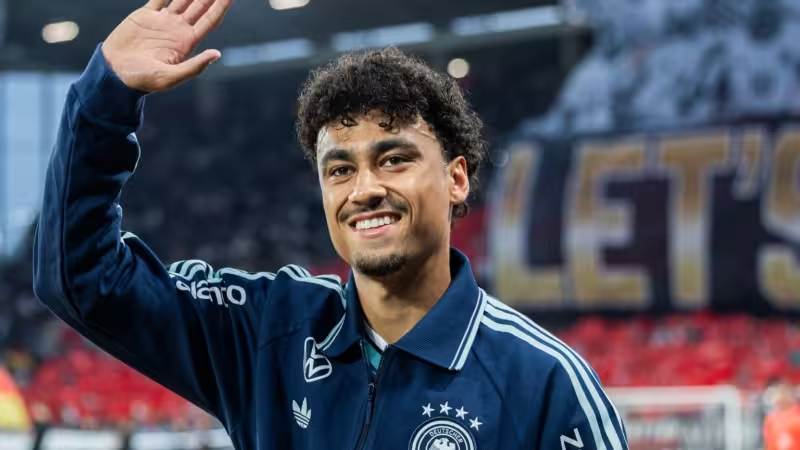
Bayern Munich have reached a full verbal agreement with Nathaniel Brown on a long-term contract running until 2031, but the transfer can still collapse because the two clubs have not yet agreed a fee.
Brown, the 22-year-old Eintracht Frankfurt defender and Germany international, is in Chicago with the national team ahead of the World Cup and an upcoming friendly against the USA and is expected to address his future at a scheduled DFB press conference in the United States.

Frankfurt sporting director Markus Krosche is said to be holding firm on a valuation in the region of €60 million for Brown, the figure that has stalled talks. The number reflects Brown’s breakout 2025–26 season — four goals and six assists in 42 games — and why Frankfurt view him as a must‑not‑lose asset after finishing eighth and missing out on European qualification.
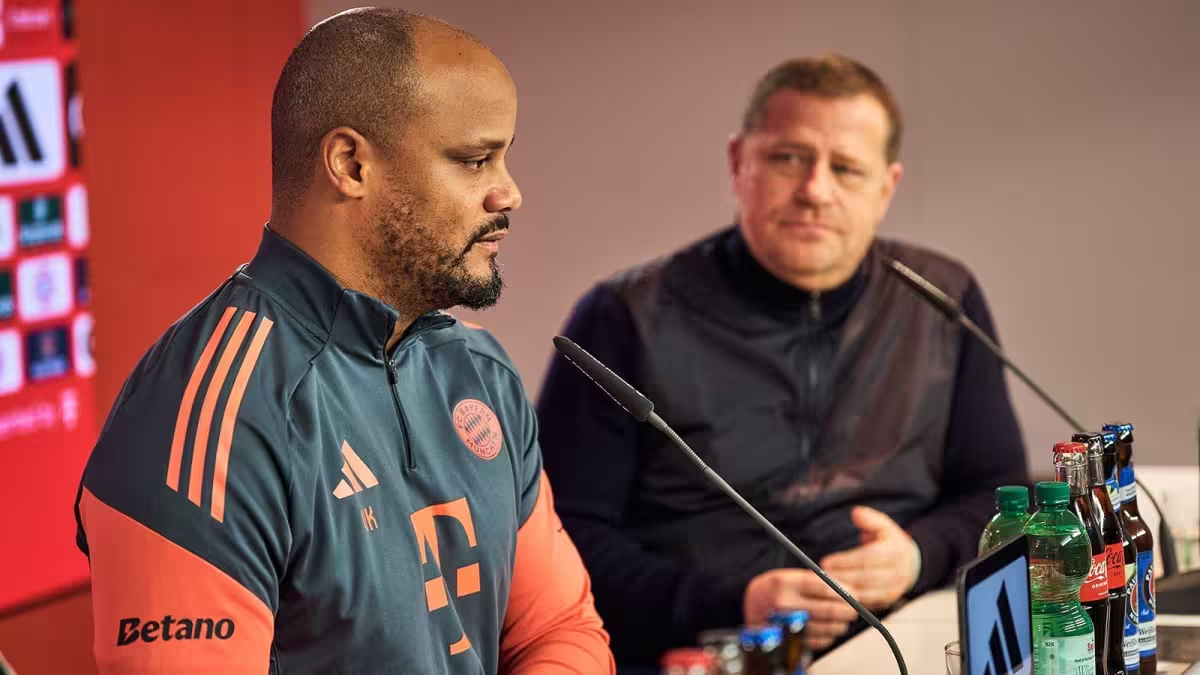
The immediate consequence for Bayern is straightforward: signing Brown at that price would likely force squad changes. German media have reported that Bayern sporting director Max Eberl would need to offload either Hiroki Ito or Alphonso Davies before a concrete move can be sanctioned; without such departures, the club’s reported €60–65 million valuation for Brown remains out of reach.
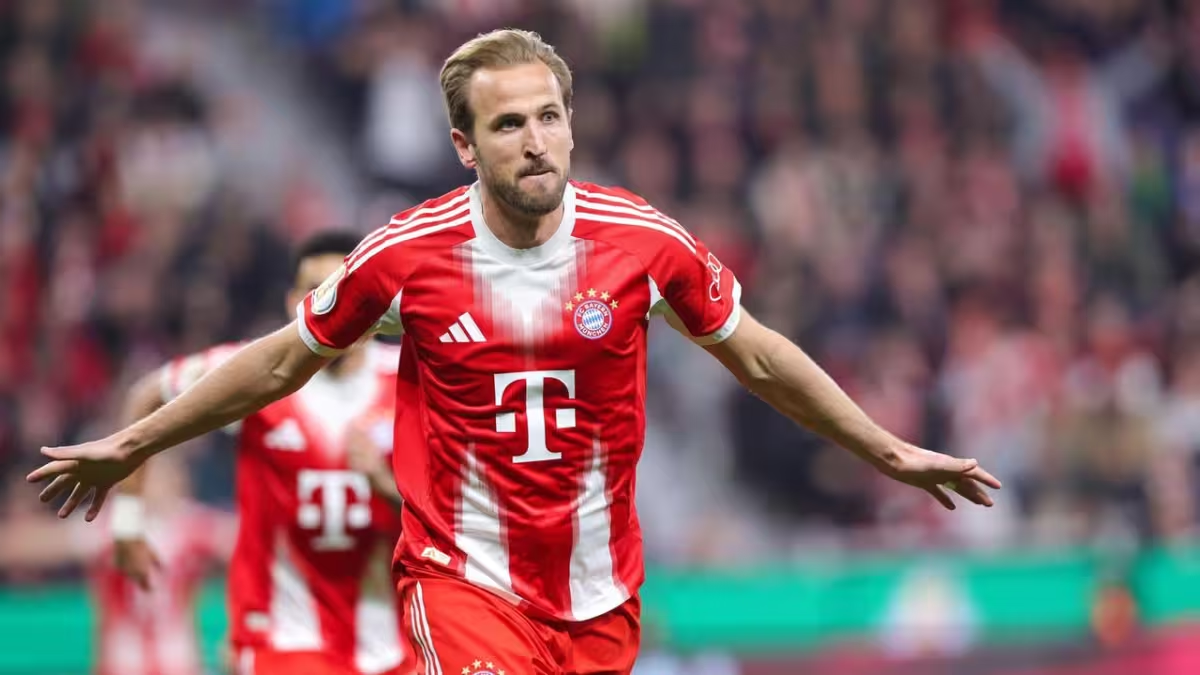
The verbal agreement with Brown binds the player and Bayern on personal terms but not the clubs. That distinction matters because a completed transfer requires Eintracht Frankfurt and Bayern Munich to settle on the fee. Until they do, the move is a standing offer, not a done deal — and it can still fall apart despite the player’s willingness to sign.
Complicating the picture is sustained external interest. Over the past year Arsenal, Manchester City and Real Madrid have all been credited with interest in Brown, a fact that keeps pressure on Frankfurt to convert interest into a fee and on Bayern to act decisively if they want to avoid losing their priority target.
Bayern’s interest in Brown has been framed inside a broader squad overhaul under Vincent Kompany. The club values Brown’s versatility — able to play left-back, right-back or further forward on the left — as a modern option for multiple roles. That tactical appeal is why Bayern moved quickly to agree personal terms, even as negotiations over the transfer sum lag behind.
What happens next is clear: Bayern and Eintracht must bridge the valuation gap or the transfer will not proceed. Brown will face the media in Chicago and is expected to be asked about his future by Germany’s DFB; his comments could clarify his stance but cannot force the clubs to agree on money. The deal’s fate now hinges on Bayern’s willingness and ability to clear space on the wage bill or net sales to meet Krosche’s demand — if they cannot, the verbal agreement with Brown will remain only that.



