



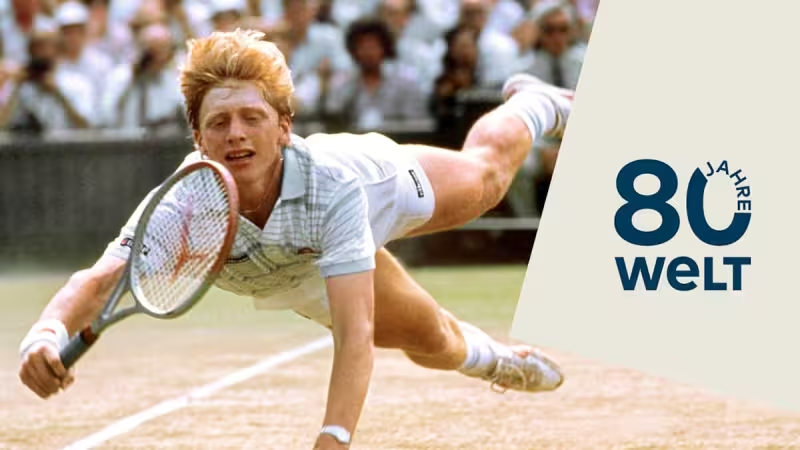
On 7 July 1985 Boris Becker won Wimbledon at the age of 17, becoming the tournament’s youngest champion ever — a single result that landed as both a sporting milestone and a cultural jolt.
The victory produced an immediate outcry of celebration at home: the German press put the triumph on its front page the next day, and Bundespräsident Richard von Weizsäcker sent personal congratulations that captured the national mood. He wrote, "Wir alle haben Ihre Spiele in den letzten Tagen mit begeistertem Herzklopfen und den Höhepunkt heute Nachmittag mit atemloser Spannung verfolgt." He added praise for Becker’s composure: "Ich habe die Sicherheit bewundert, mit der Sie sich durchgesetzt haben, und beglückwünsche Sie zu dem großartigen Erfolg und Ihrer sportlichen Leistung und Haltung."

The raw numbers are simple and stark: 7 July 1985; 17 years old; youngest Wimbledon champion of all time. Those facts explain why the result still reads as more than a youthful upset. They also explain why audiences — in Germany and in Britain — treated the match as an event that altered expectations about who could belong on that grass and how the game should look.
Context matters here: Wimbledon has long been coded as English gentility — champagne, strawberries, gossip and small talk. Becker’s arrival was the counterimage: the win was described as brachial and forceful, a kind of youthful exuberance that did not comfortably fit the tournament’s patrician decorum. That clash — between a centuries-old venue of manners and a 17-year-old whose style was described in terms more commonly used for brute athleticism — is part of what made the title feel consequential beyond sport.


That friction also shaped how the moment landed in different places. In Britain the match altered a tidy narrative about tradition and decorum; in Germany it triggered national celebration and immediate official recognition. The two-sided reaction — quiet astonishment on one turf, ecstatic pride on another — is the clearest evidence that Becker’s Wimbledon was never just another Grand Slam result. It read like the start of a generational shift.
The record the next day is limited but telling: front-page coverage, the president’s congratulations and public talk about a new face of tennis. Those are verifiable consequences of the title. What is less settled in the day-by-day archive is the immediate arc of Becker’s career in the weeks and months that followed — how that one title translated, step by step, into the wider celebrity and opportunity people now associate with his name.
For readers returning to the date now, the most consequential unresolved point is not whether the match mattered — it did — but how a single afternoon at Wimbledon became the hinge on which an entire image of modern tennis turned. The facts on record after 7 July 1985 show celebration, official praise and a reshaped public conversation; they leave open the precise mechanism by which a 17-year-old’s brachial, exuberant performance became the generational touchstone critics and fans still name.
Whatever the later chapters of his life and career may contain, the immediate truth is plain: on 7 July 1985 Boris Becker forced Wimbledon’s picture of itself to expand. The front pages and the president’s words recorded the national moment; the deeper question — how that afternoon remade tennis culture and Becker’s path from that point forward — is the story that begins with the lines the world still reads back to that grass court victory.



