Georgia is two wins away from booking its first trip back to Omaha since 2008 as it hosts nationally seeded Mississippi State in a best‑of‑three super regional that opens Saturday at 11 a.m. and continues Sunday at noon, with a possible deciding Game 3 scheduled for Monday.
The series carries immediate weight: Mississippi State enters as a national seed and lost four games to Georgia during the regular season, and the super regional itself is one of only three ranked matchups — the lone one not slated for an evening slot.

The early start times landed with a jolt. Georgia’s head coach publicly leaned into it — Josh Brooks posted on X Tuesday that “nothing says ‘top remaining seed’ like an 11 a.m. Saturday start for Game 1” — and his pitching staff and players say timing won’t be an excuse. Kolby Branch put it bluntly: “We don’t really care.” He added that while “it’s fun to play at night,” the team will “show up to the field in the morning” and is “ready to go, no matter what.”
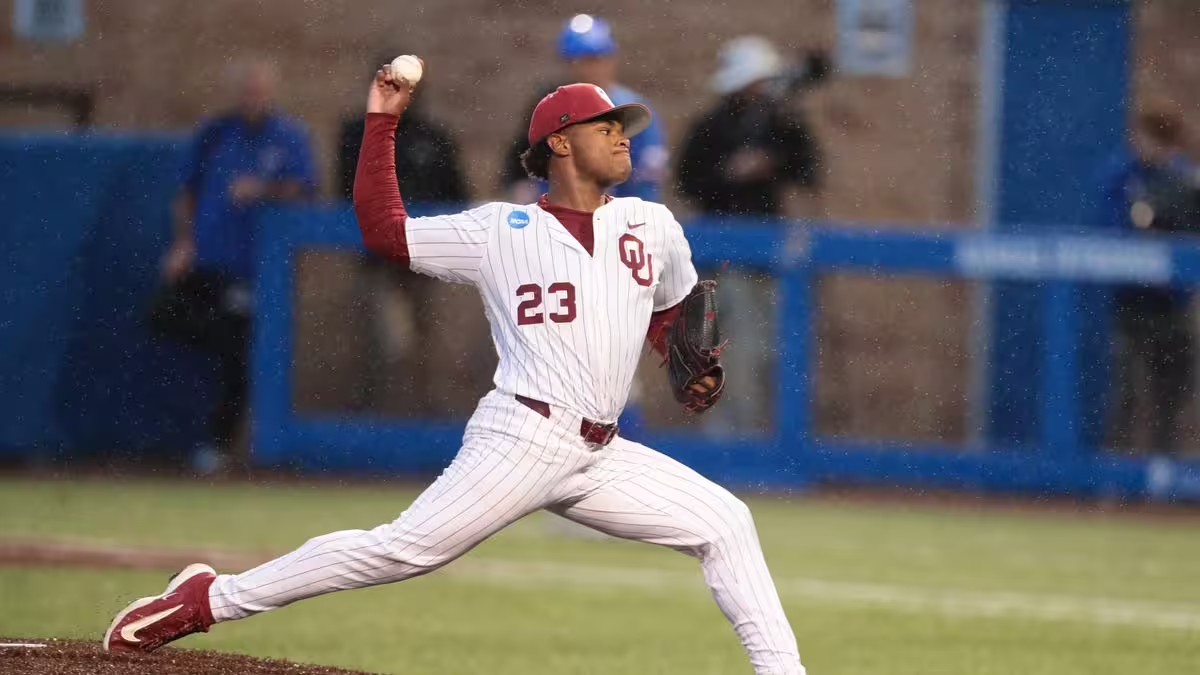


Georgia’s familiarity with early baseball is measurable: the Bulldogs had four games this season that began at noon or earlier, going 3‑1 in those contests. Their earliest start came April 4 — an 11 a.m. series finale against Mississippi State — evidence the schedule here is not entirely novel for this roster.
Still, the timing has unsettled a vocal slice of both fan bases. Many supporters expressed surprise and some animosity when the NCAA released the Saturday‑through‑Monday schedule Tuesday, raising questions about whether turnout and atmosphere will match a typical night game. Coach Wes Johnson of Mississippi State said he was neutral on the topic — “Yeah, I don’t control that. I mean, I’m neutral, I mean, we played early in Hoover; it doesn’t matter” — and told reporters he expects his sideline to see a strong crowd: “I think our fans will be out and be out in full force. They did phenomenal for us in the regional and all season, all our SEC weekends, and everything. Our fans are going to come out; it’s going to be a big advantage for us.”
The friction is straightforward: Georgia insists the early times won’t alter its preparation or resolve, but the practical effect on attendance and the stadium environment is unknown. The home coach says fan energy will be a factor; the team’s recent 3‑1 mark in early games suggests Georgia can handle morning starts. Yet the super regional is decided in two wins — not in sentiment — and the crowd at first pitch could tilt a close outing.
What to watch when the series begins: Game 1 starts at 11 a.m. Saturday and will reveal whether fans arrive early enough to recreate the kind of ripple that benefits a host team. Game 2 follows at noon Sunday, and if necessary, the winner of a Monday finale will seal who advances to the College World Series in Omaha. The single biggest unresolved question heading into this weekend is whether the early windows will dilute the home‑field atmosphere that Georgia believes will carry it back to Omaha; the answer — and the destination — will be known before the last out on Monday.