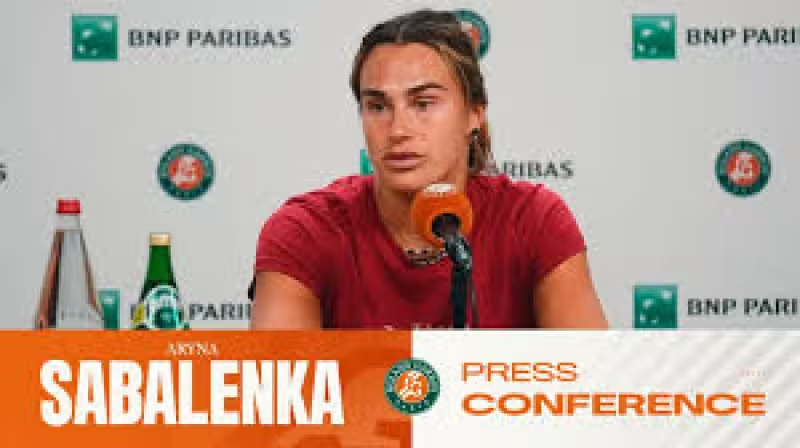
Aryna Sabalenka, the world No. 1, was beaten by No. 25 seed Diana Shnaider 3-6, 7-5, 6-0 in the French Open quarterfinals on Wednesday, after surrendering the match’s final 10 games on the clay of Roland Garros.
The scoreline underlines how the match broke: Sabalenka took the first set, then dropped the second 7-5 before Shnaider ran away with the decider. Shnaider’s seizure of the last 10 games turned a tight contest into a rout and ended Sabalenka’s bid for a return to the Paris final she lost a year ago.

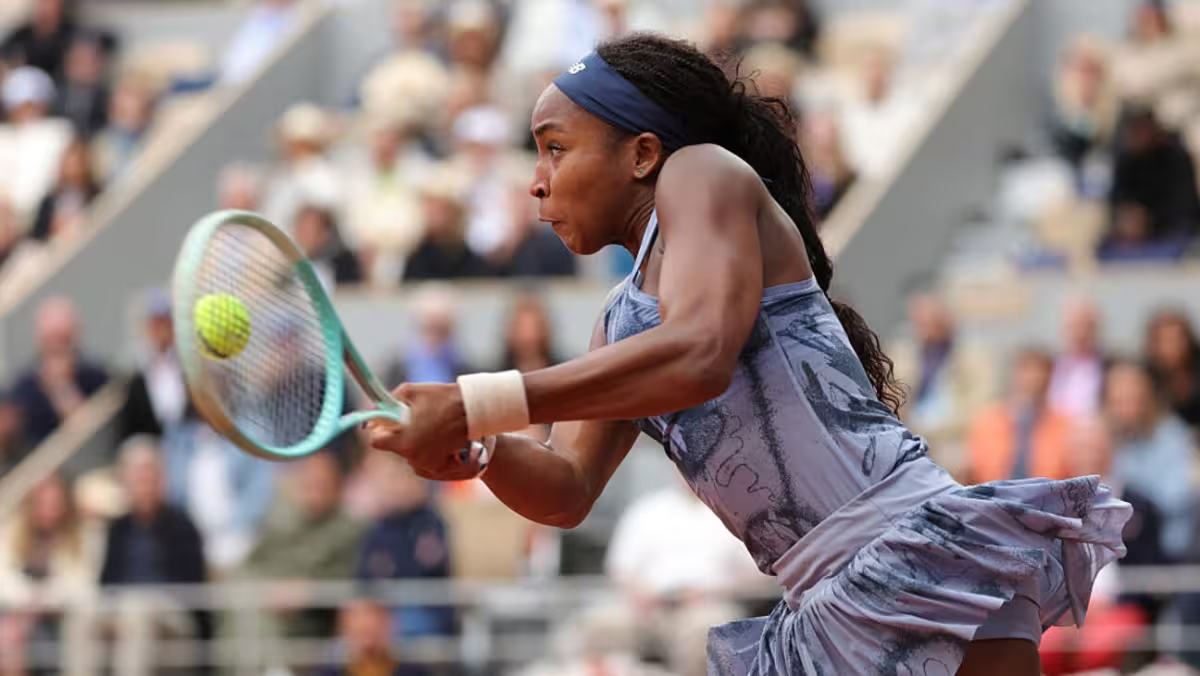
That 2024 final loss to Coco Gauff came on the same court and carried an eerily similar footprint — Sabalenka won the opening set in Paris then could not close. The repeat — winning the first set and failing to finish — is now a defining pattern on the slow surfaces for a player whose best results this season have come on hard courts.
Sabalenka began the year among the sport’s hard-court elite: she reached the Australian Open final and captured the BNP Paribas Open at Indian Wells and the Miami Open. Her tournament record, however, exposes surface split: 21-10 in career finals on hard courts, 3-8 on clay and 0-2 on grass, with her three clay titles all earned in Madrid, where conditions favour a faster game than at Roland Garros.
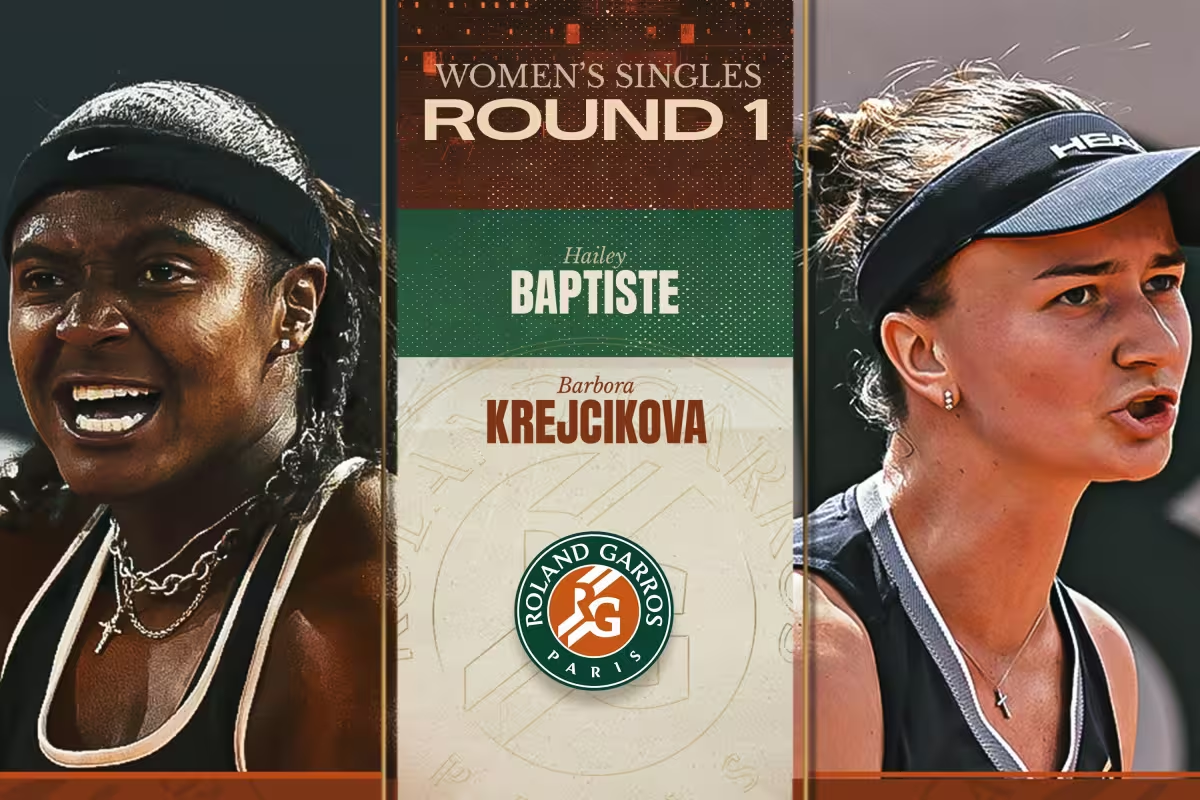
The tournament sequence this spring and summer has sharpened the question about Sabalenka’s major championship arc. She has repeatedly produced dominant stretches but has also bowed out in late stages on slower courts — most recently Wednesday in Paris and previously in Madrid, where she suffered a quarterfinal defeat after holding six match points against Hailey Baptiste. Those episodes sit beside her past runs at Wimbledon: she reached the semifinals in 2021 but has made no final at the All England Club in six tries.
The friction is simple and specific: Sabalenka is the world No. 1 with a hard-court résumé few can match, yet on clay and grass she keeps leaving matches unfinished. Winning a first set at Roland Garros has stopped being a sign of momentum and, in two successive key matches on the same court, turned into a prelude to collapse. That contradiction — top ranking and late-match fragility on slow surfaces — is the clearest story from Wednesday.
Shnaider’s surge in Paris will send her deeper into a draw she navigated by flipping the script after the second set. For Sabalenka, the loss is another data point: a 28-year-old champion on hard courts whose Grand Slam ledger on clay and grass remains incomplete. She has time; there is room in the calendar and in her career for adjustments and reinvention.
The central unresolved question is now sharpened rather than softened: can Sabalenka translate her hard-court dominance into the finishing power required at Roland Garros and on grass? If she cannot correct the pattern of late collapses, her record on clay and grass will define her legacy as much as the titles she has already won on faster surfaces — a contrast that keeps the conversation about all-surface greats alive, a conversation that even touches names like Venus Williams as fans and critics sort eras and styles.