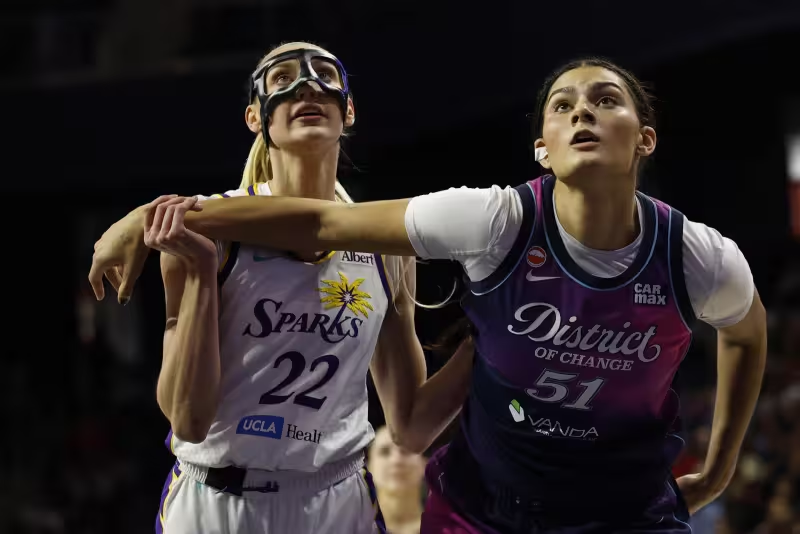
Cameron Brink delivered 16 points in 17 minutes on Friday night and helped the Los Angeles Sparks beat the Washington Mystics 92-87, a performance that both underscored her efficiency and sharpened the question of how many minutes she will get going forward.
The stat line was crisp: 16 points, two rebounds, an assist, a steal, a block and two turnovers in limited time. Brink’s showing pushed her early-season averages to 9.3 points and 4.3 rebounds through seven games, and she sits fourth in the WNBA in blocks at 1.7 per game.

That blocks rate is notable because Brink reaches it in far fewer minutes than most leaders — she is averaging 1.7 blocks in 17.5 minutes per game, roughly one block every 10.2 minutes. Only Emily Engstler (2.3), Kiah Stokes (2.0) and A'ja Wilson (2.0) are ahead of her on the leaderboard; Natasha Mack is at 1.6.
Los Angeles coach Lynne Roberts has been explicit about what the team needs from Brink. After the Sparks’ first game of the season Roberts said the team needed Brink to produce and to bring defensive energy, adding that Brink must get on the floor with more confidence. Those words are now visible in the box score: after an eight-minute, scoreless opening-game outing that included three rebounds and three turnovers, Brink’s minutes and production have trended upward.


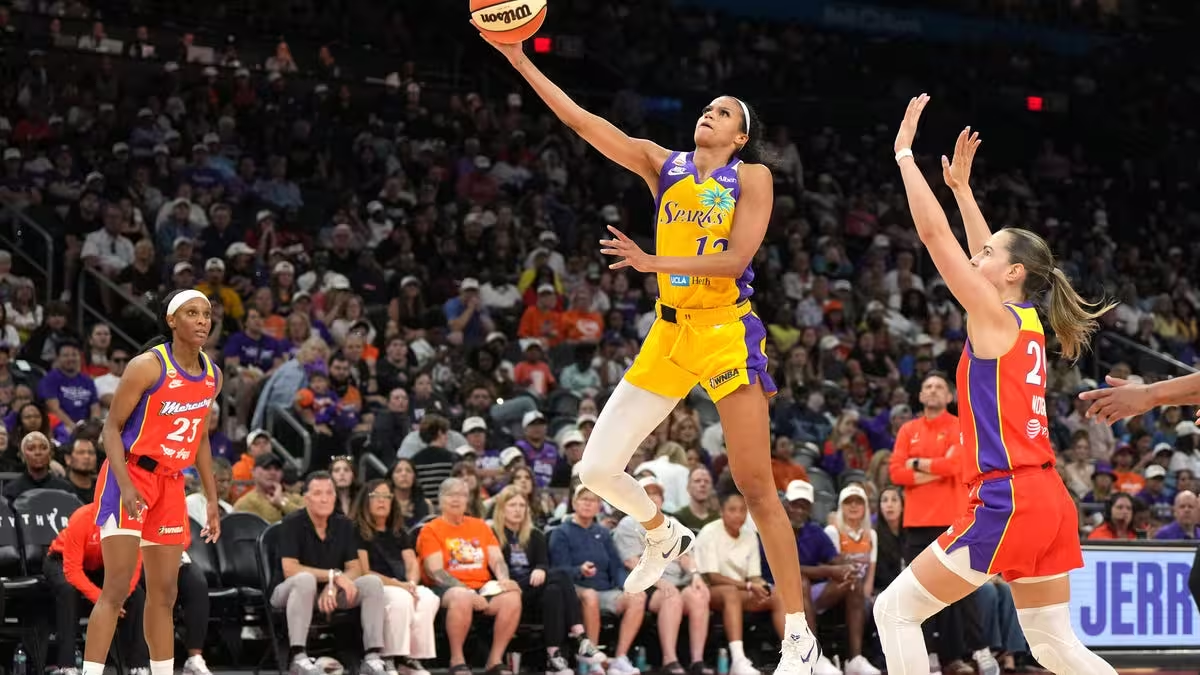
The result against Washington also came within a broader team arc. The Sparks went 4-2 in the six games after that first contest, and Friday’s win featured veteran Nneka Ogwumike producing 20 points and 11 rebounds to anchor the frontcourt while Brink provided an efficient complement off the floor.
Washington’s frontcourt yielded its own talking points: Kiki Iriafen had 13 points and nine rebounds, and Lauren Betts chipped in two points, one rebound and two blocks off the bench. Those performances help explain why Brink’s short-run impact—scoring, blocking and altering shots—matters beyond the box score: she changes matchups for the Sparks when she’s on the court.
The friction is clear. Brink is producing efficiently in bursts, but the Sparks still need her to play with more confidence and to earn more minutes. Her rebound from an ACL injury suffered in her rookie year — she played 15 games before the injury in 2024 and returned to play 19 games last season — is the backdrop to the current output, and her per-minute rim protection suggests a valuable upside if her court time rises.
What is not yet decided is the critical next step: how the Sparks will allocate minutes. Brink’s per-minute production argues for a boost in playing time; her block rate and scoring efficiency in games like Friday’s give the coaching staff a concrete reason to expand her role. But the team’s need for consistent defensive energy and Brink’s own confidence level are the variables Roberts flagged after the opener.
The single most consequential unanswered question is simple and immediate: will the Sparks convert Brink’s efficiency into a larger, regular role that tests whether her blocks and scoring can sustain over more minutes? If they do, Brink could become one of the league’s more impactful rim protectors; if they don’t, her high-impact flashes will remain episodic. For now, Friday’s 16-point, 17-minute performance is proof of concept — and a prompt for the Sparks to decide how much faith to put in it.