



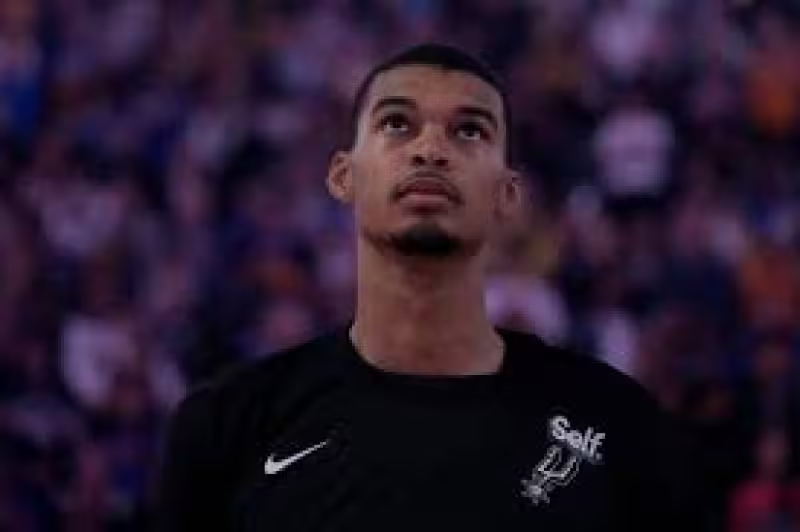
Victor Wembanyama stood with his arms folded while The Star-Spangled Banner played before Game 1 of the 2026 NBA Finals in San Antonio, a brief pregame posture that drew headlines and a direct reaction from President Donald Trump later that day.
Trump, who watched Game 1, was asked aboard Air Force One by OutKick’s Dan Zaksheske about the Spurs star’s gesture. “I did not see that; is that what he did?” the president asked. When told no reporter had asked Wembanyama about his intent after the game, Trump pressed, “What did he mean by that?” and, after being told there had been no question to the player, said, “Well, I guess you have to ask him.”

The exchange narrowed the moment into a political question even as no one sought an answer from Wembanyama on the court that night. Trump split his remarks between curiosity about the gesture and praise for the series: “I thought it was amazing,” he said of Game 1, adding, “I think the Knicks have an amazing team. The way they play; it started slow, and it's just gotten stronger and stronger.” He also offered a nod to the Spurs forward: “Wemby looks like he's going to be a great player, but (the Knicks) really played well.”
Wembanyama, a third-year player from France, is the subject of heightened attention throughout the Finals matchup between the New York Knicks and the San Antonio Spurs. The moment before the anthem became a focal point because of his nationality and star status — an international player at center stage in an American sporting ritual — though no public statement from him has followed the gesture.
The question Trump raised—what the folded-arms posture meant—remains open precisely because the routine postgame access that might resolve it did not take place. No reporter asked Wembanyama about intent after Game 1, and the record ends there: a visible motion on the court, no contemporaneous explanation, and a president who opted to request an answer on behalf of the public rather than await one from the player.
The moment also hands reporters and listeners a clear line to follow: whether Wembanyama will be asked about it in New York, where Trump has said he plans to attend Game 3. That trip makes the gesture—and the president’s questions about it—part of the immediate narrative for the Finals rather than a footnote confined to San Antonio.
Beyond the anthem episode, Wembanyama’s play has been the bigger story on the floor; recent pieces on the Spurs star track his scoring nights and emotional presence, from a 41- and 24-point effort noted in a Western Conference opener to conversations about how he shows emotion publicly and how the Spurs must rally as the series tightens ( Those reports matter here because they frame Wembanyama as a player whose actions on and off the court are already being read through multiple lenses.
The concrete what-next is immediate: Trump will be in New York for Game 3, and reporters will have an opportunity to ask Wembanyama directly whether the anthem stance carried any intended message. Until that moment, the image of a 7‑foot‑something star from France standing with folded arms as the national anthem played will be remembered mostly as the spark for a presidential question rather than as a declared statement from the player himself.



