



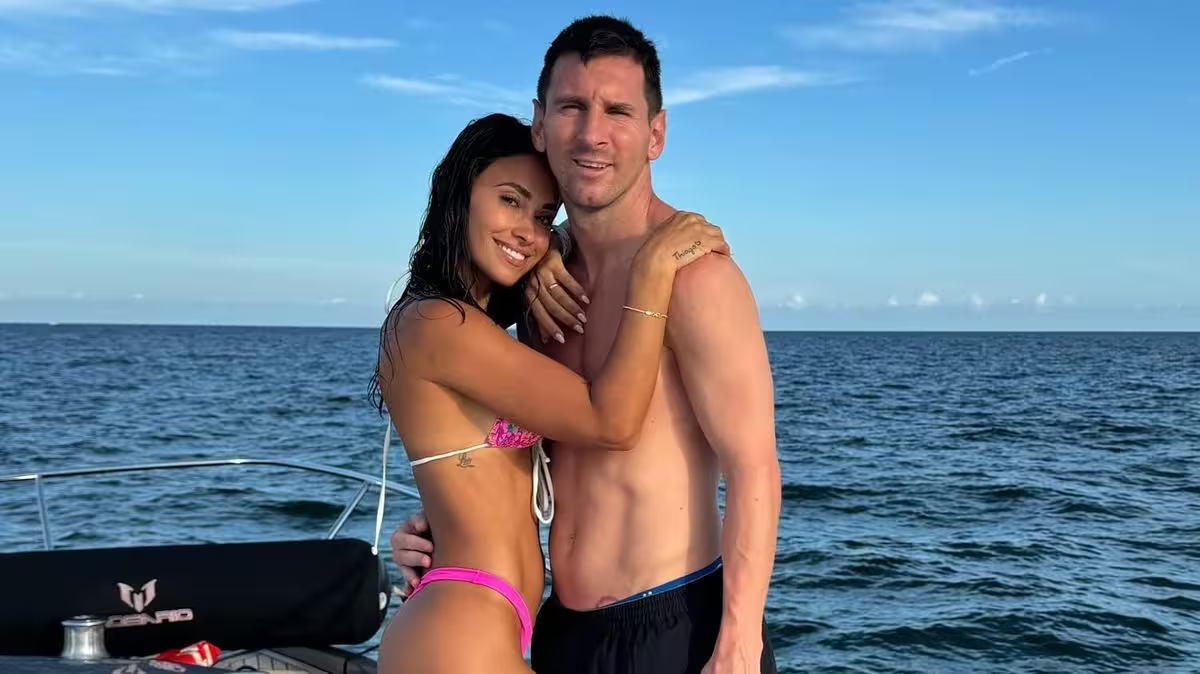
Lionel Messi is heading to the 2026 World Cup for a record sixth finals appearance and will lead Argentina as they defend the title they won in Qatar in 2022, but injury problems in the build-up have cast doubt on whether he will feature in every match.
At 38, Messi arriving for a sixth finals is itself the headline: no player has appeared at that many World Cups. His selection puts Argentina’s title defence under the shadow of a familiar variable — the fitness of its most important player. His recent struggles with injury mean Argentina may have to decide how often to start him and how much action he should see across the tournament.

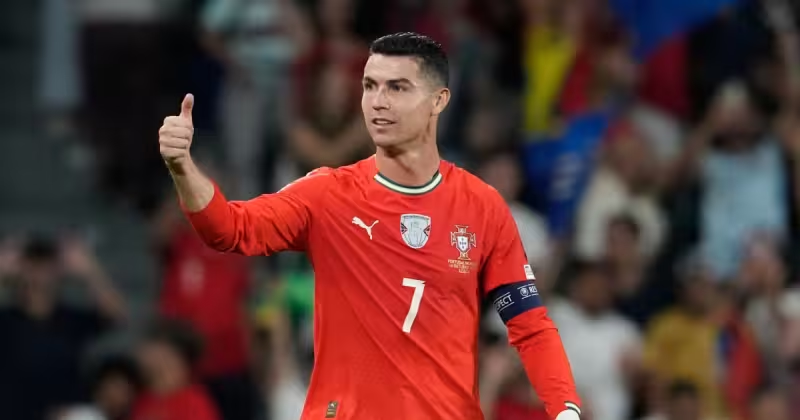
The 2026 finals are shaping up as one of the last stands for a constellation of long careers. Cristiano Ronaldo, 41, is also headed to a record sixth World Cup; he finished the domestic season with 30 goals in 37 matches for Al-Nassr and carries 143 goals for Portugal. Luka Modric, 40, is ready for a fifth and final appearance after undergoing cheekbone surgery ahead of the tournament. Neymar, 34, is on course for a fourth World Cup that could be his final act at the tournament. Manuel Neuer, 40, has come out of retirement to be Germany’s first‑choice goalkeeper, having played a key role in Germany’s 2014 triumph.
Those facts matter because the World Cup in 2026, staged in North America, arrives as many of the game’s most storied careers near their endpoint. Experience will be abundant; reliability will not. For Argentina, the calculus is straightforward: Messi’s presence on the pitch changes how opponents defend and how teammates move, but the team must also manage the risk his injuries present over the course of the competition.
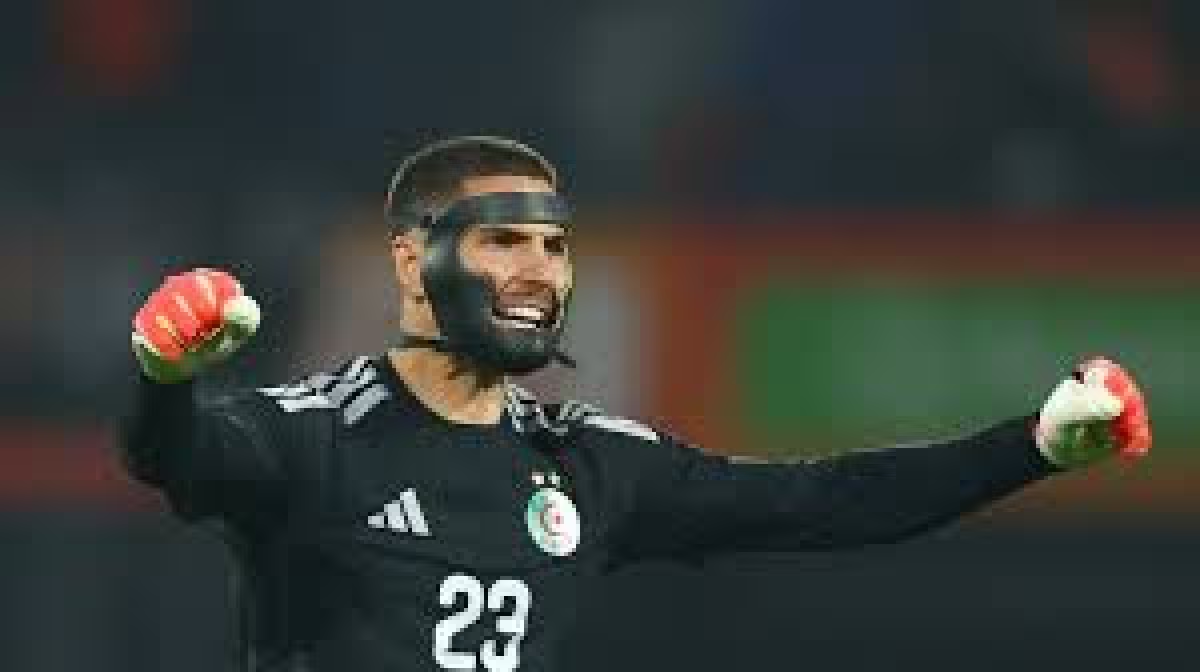

The immediate friction is simple and concrete. Messi has been carrying injury concerns into the tournament, and that reality separates selection from aspiration. At his age and with recent physical issues, there is a credible question about whether he can — or should — be expected to play every match. That question is not unique to Argentina; Modric’s cheekbone surgery and Neuer’s return from retirement are parallel reminders that availability is now as consequential as form.
For supporters asking directly, "is messi playing in the world cup 2026," the blunt answer is yes in the sense that he will be part of Argentina’s squad and will lead the title defence. The important qualifier is match-by-match availability: injuries have made it uncertain whether he will start or even appear in every game, and Argentina’s coaching staff will face choices about rotation and minutes that were less urgent four years ago.
What to watch when the tournament begins: team announcements and training reports will be decisive. Lineup declarations ahead of group matches will show whether Argentina plans to protect Messi with limited starts, substitute appearances, or a full slate of minutes. Across other camps, Ronaldo’s scoring form for Al-Nassr and Modric’s recovery from surgery will be the indicators of whether the veteran narratives play out on the field or in the press box.
The single most consequential unresolved question is how Argentina will deploy Messi if his fitness remains fragile: will they rely on him as a starter in every game, or treat him as a decisive but intermittent weapon? The coaching choices that answer that question will shape not only Argentina’s title defence but how the tournament remembers Messi’s sixth World Cup.



