



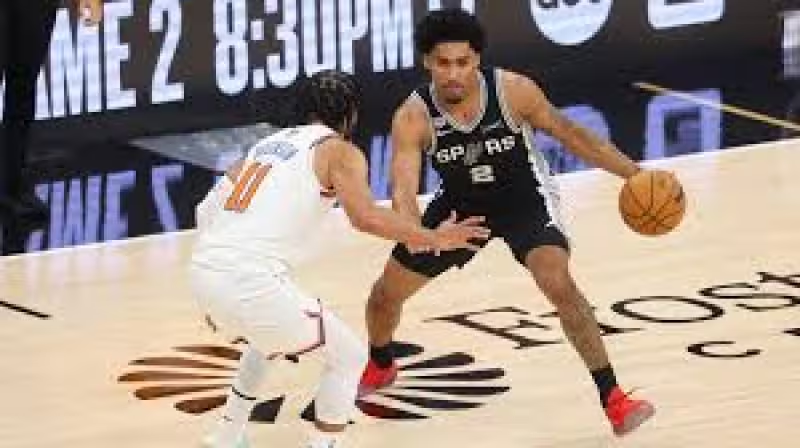
"A long time ago," Ron Harper said when asked when he first realized his son could play at this level — then added that by about 12 he could tell Dylan loved the game, and that the boy had a ball in his hands since he was two.
That memory landed under a bright light Monday after Dylan Harper, a 20-year-old rookie with the San Antonio Spurs, scored 16 points in Game 1 of the 2026 NBA Finals, including 12 in the first half, grabbed six rebounds and finished with a plus‑minus of plus‑12.

The numbers carried records: Dylan became the youngest player to score double digits in a Finals game and only the third rookie in Finals history since play‑by‑play tracking began in 1998 to reach 10 or more points in a quarter. His playoff total this postseason reached 251 points, surpassing David Robinson’s rookie playoff mark for the Spurs.
Those figures are the weight of the story: not a single hot quarter or a lucky stretch, but sustained production across the postseason that pushed a 20‑year‑old into a box score on the biggest stage and into a handful of historical footnotes.
Ron Harper’s resume hangs behind his assessment — five NBA championships with the Chicago Bulls and the Los Angeles Lakers — and he used it sparingly, pointing to his son’s appetite for the game and a rounded skill set rather than medal counts. "He loved to play, always had a basketball in his hands since he was two," Harper said, and that early habit, he suggested, explained the feel and composure Dylan showed in Game 1.
That composure showed up in more than scoring. At 6‑foot‑6, Dylan’s line mixed points and rebounds in a way that left Spurs coaches and the franchise’s recent history taking notice: he was still a teenager at the All‑Star break this season, yet his playoff totals have already eclipsed franchise standards set by a Hall of Famer.
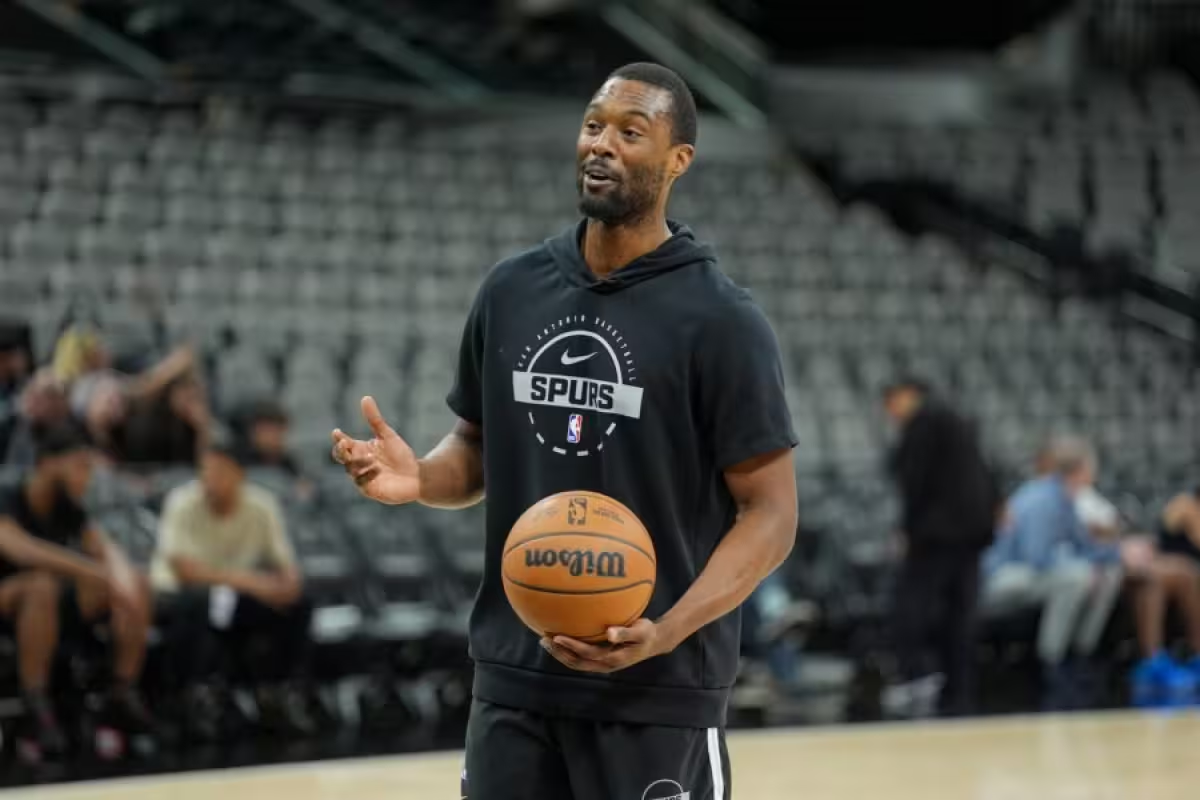
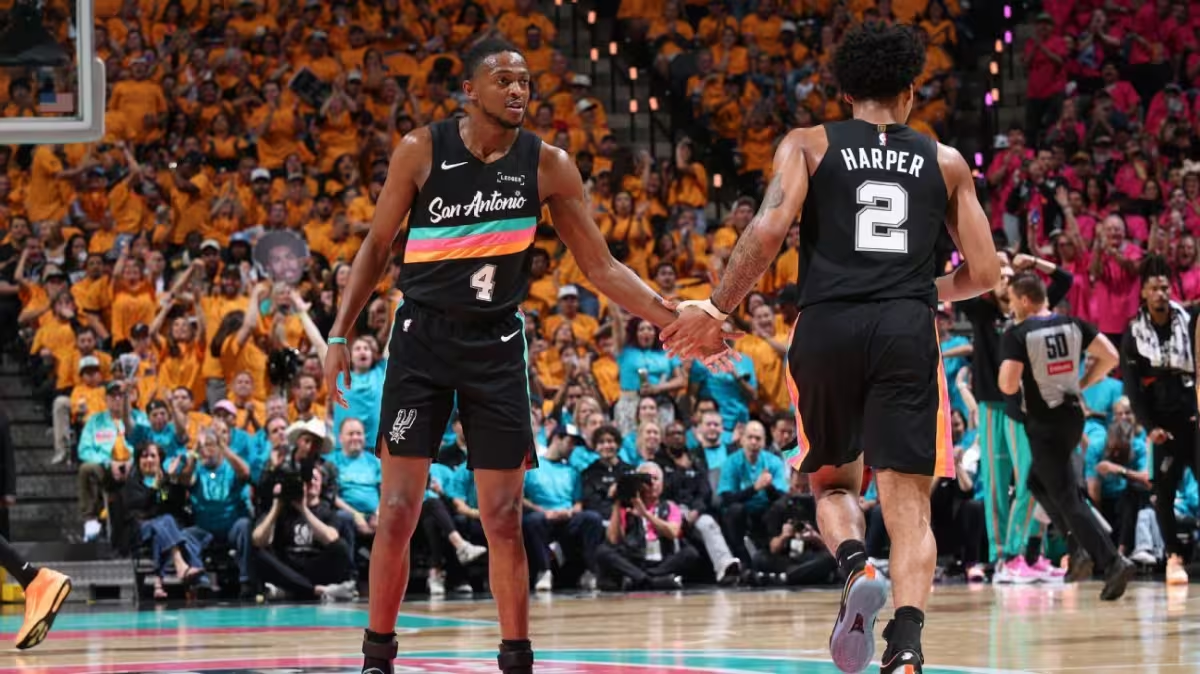
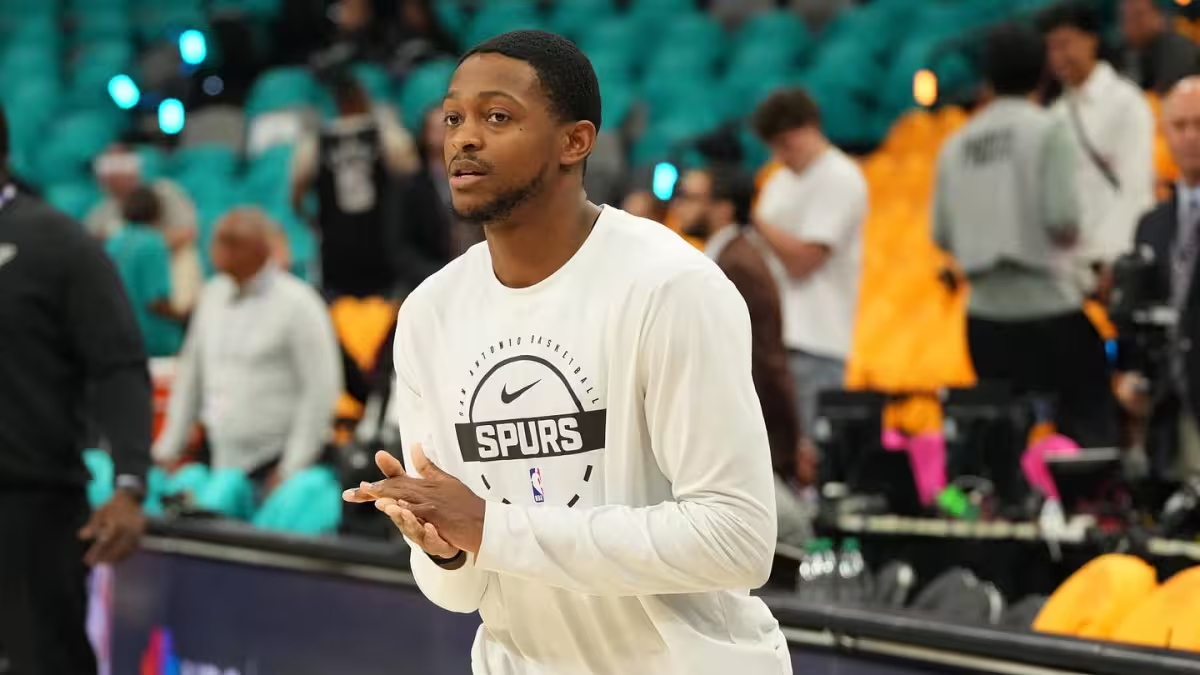
There is a clear friction here. Rookies make rosters; rookies rarely change Finals games. Magic Johnson remains the only rookie Finals MVP in league history, and the presence of a first‑year player like Dylan shifting the flow of Game 1 forces a recalculation of what a Spurs rotation can ask of him across a series.
Ron Harper, asked to evaluate that friction, did not dismiss it as a coincidence. He described Dylan’s skill set as "not weak," saying his son plays hard, knows how to play and combines offense with a defensive seriousness that stands out as much as his scoring. "He’s just as proud of being a defensive player as he is a scorer," Harper said, adding that Dylan simply needs more repetition.
The Spurs have a rookie whose halftime totals, playoff accumulation and historic notches in the record books now shape the matchup narrative. That changes how opponents plan and how rotations are managed; it also changes the questions coaches must answer about trust and exposure for a 20‑year‑old entering series play at an elite level.
For Ron Harper, the moment is personal and factual: a father who watched a toddler with a ball become a teenager in the league and now a rookie who is delivering on a Finals night. He framed the arc in ordinary terms of work and love of the game rather than prophecy — the sign he noticed at 12, the constant ball at two — and left the rest to performance.
The sharper open question after Game 1 is straightforward: can a rookie who was still a teenager at the All‑Star break and who has already piled up 251 postseason points sustain this impact across a seven‑game Finals series? The Spurs will have to decide how much of the game to put on his shoulders; their opponent will have to decide how much to game‑plan around him.
Whatever the answer, Ron Harper’s certainty about the early signs of Dylan’s gift — and the rookie’s rare effect on a Finals game — are now part of the series’ story. The next game will tell whether Monday night was a finishing touch on a fairytale start or the opening chapter of an unexpected postseason run.



