



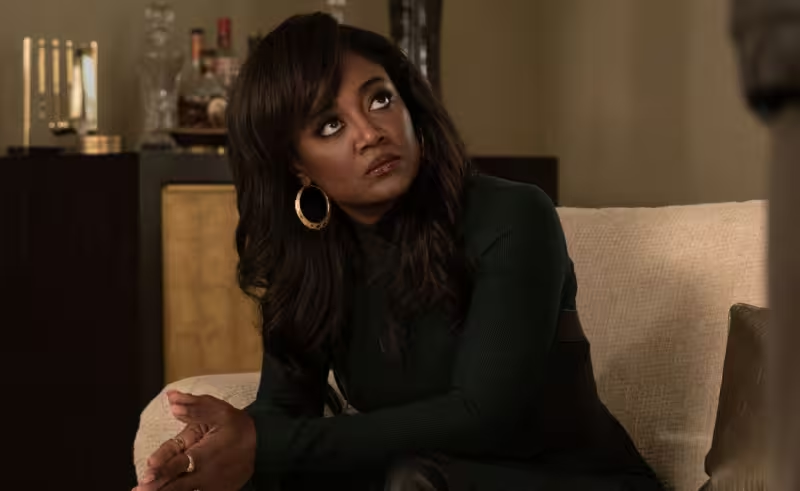
"I think that it’s just because she is relatable in a lot of ways," Patina Miller said, naming the simplest reason audiences keep watching Raquel "Raq" Thomas in Raising Kanan.
Miller did not list single traits as a checklist so much as a cluster of pressure points that make Raq immediately recognizable: "The pressure that she’s under, her being a mom and wanting to protect her family and her son more than anything. Her being a really strategic person. Her being an entrepreneur. There’s so many different traits that she has that people can identify with."

That bundle of obligations—mother, protector, strategist, business operator—carries a blunt honesty, Miller said: "There is an honesty to the character. She’s not perfect. She knows she’s not perfect. Things happen, and I think that is what makes her relatable" and, she added, "People see the bits and pieces of themselves in her, people that they know."
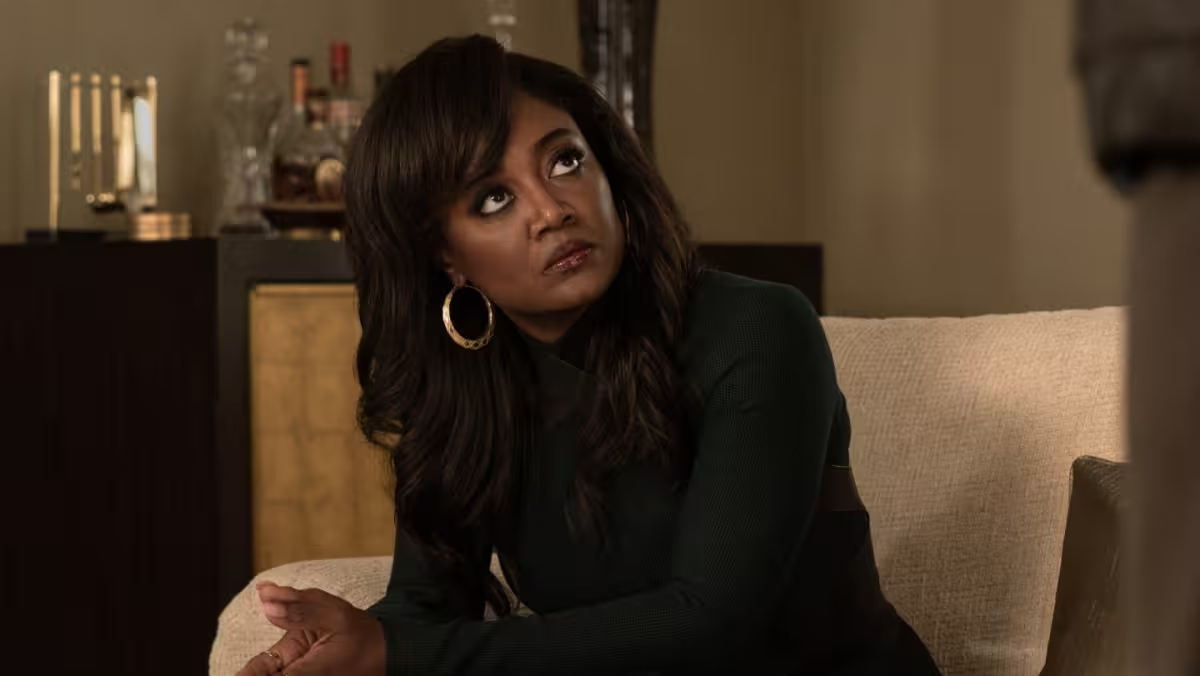
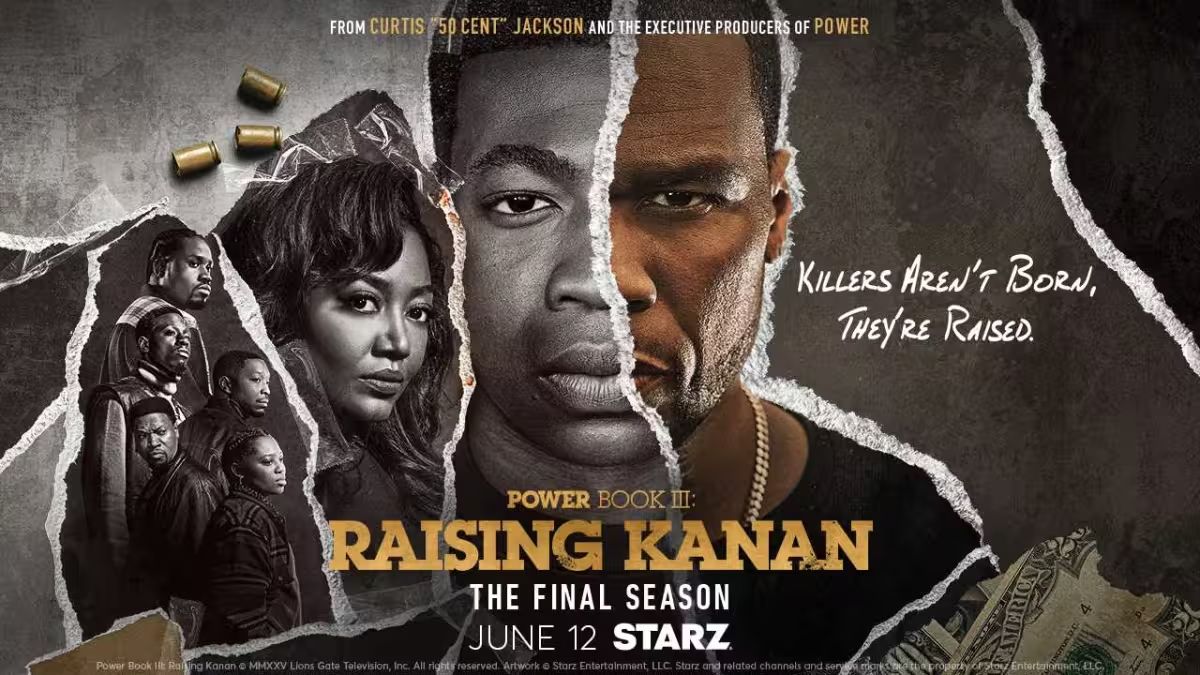
On screen, Raq functions as the glue of a family: a matriarch bearing legacy, survival and ambition in equal measure. Raising Kanan sits inside the messiness of family life and the Power universe, and the show leans into that domestic chaos even as it stages criminal stakes—details highlighted in the network’s upcoming June slate for the series and related programming here.
The character’s moral ambivalence is the friction that gives the role texture. Miller framed it plainly as a woman’s calculus: protection of kin that requires hard choices and often ruthless tactics. She also connected that burden to real-world gender dynamics, saying, "I know what it feels like to be in a room with men and have to constantly explain yourself, or men who think they know better" and noting sharply, "Being questioned because you’re a woman. You would never do that to a man."
Miller pushed back against any narrow reading that would make Raq only a criminal archetype. "Family is messy. It can be… nobody’s perfect. Not just Black families, white families. It’s all families, right? These archetypes are so real, and they’re raw, and they’re human. And that’s why they can cross the boundary, and that’s why people of all colors watch this show and feel something," she said, underscoring the emotional realism the series aims for.
Raq’s contradictions—the protective mother and the morally complicated crime boss—are not a flaw of the writing so much as its engine: Miller said those tensions are precisely what make the part relatable and electric. The interview offered no new plot spoilers or release dates; instead it sharpened the central dramatic question going forward: will Raq’s strategic moves to secure and shield her family ultimately preserve them or prove the very thing that consumes them? That contradiction is the performance’s point and, likely, the series’ next act.



