



Vince Staples’ new album Cry Baby arrives as a deliberate swerve: essentially his first rock record, built on raw, wiry guitars and fuzz bass and anchored by blunt, slogan‑style politics — out 6/5 on Loma Vista and timed to a sold‑out record‑release show in Los Angeles on Thursday.
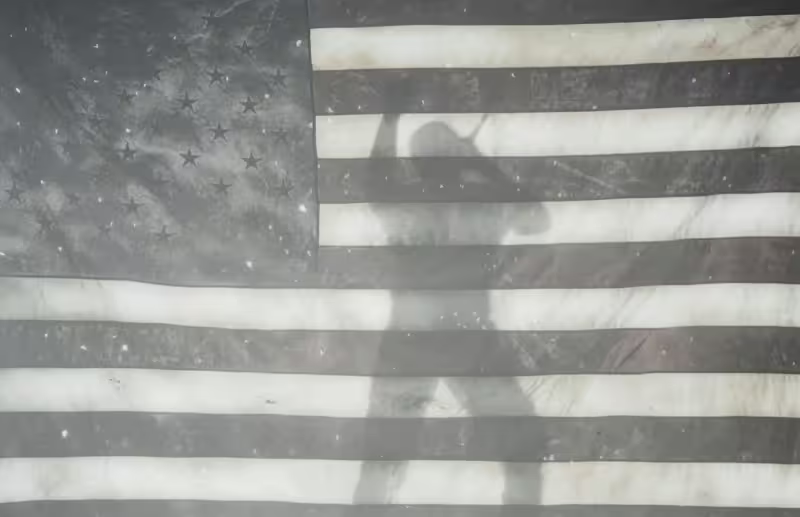
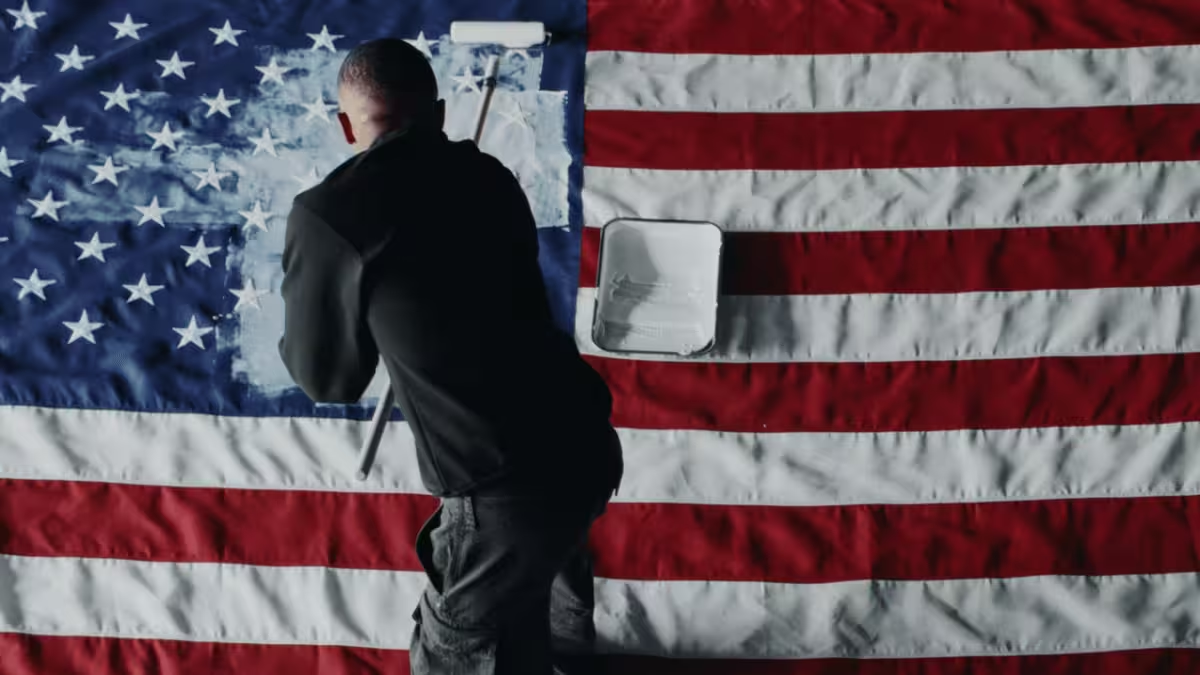
The sound is immediate and unvarnished. Cry Baby trades the layered beats and measured cadences that framed much of Staples’ past work for a guitar-driven attack that critics liken to The White Stripes at their grooviest and The Beastie Boys in their mid‑90s fusion mode. Production leans toward grit rather than polish: hooks that jolt, bass that buzzes, and a song like “Cotton,” which Staples co‑produced with Mike Hector and Oh Gosh Leotus and centers on a repeated, plaintive refrain—Vince Staples sings, "Music make me feel just like cotton/ Pick me up when I’m falling down." Staples and Bradley J. Calder co‑directed the “Cotton” video, which layers an American flag shot full of holes over a montage of Black American history.

Where the instrumentation turns loud, the lyrics turn blunt. Cry Baby includes lines that function like rallying cries: "Cops are bad!" "Television tells you lies!" "Black men get stereotyped!" and "America is complicated!" The record’s politics are rousing by design but unapologetically unsubtle — slogans set to jagged guitar riffs rather than the elliptical, tightly woven observations that characterized much of Staples’ earlier work.
That earlier work is the relevant contrast. Staples, a Los Angeles native who came up in gang‑dominated Compton and who has been affiliated with the Odd Future collective since 2010, built a reputation for mixing social commentary with nihilistic and sorrowful depictions of American life; critics have long noted intensity and nuance in his takes on greed, hope, violence and race. He has flirted with guitar signifiers before on songs like "Blackberry Marmalade" and "White Flag," but Cry Baby commits to the form and the rhetoric in equal measure.
The shift carries an internal friction: louder music amplifies message, but louder messaging flattens complexity. Moving to Loma Vista and releasing an album that foregrounds chest‑thumping lines over layered argument marks both a stylistic expansion and a gamble — Staples is no longer in business with Def Jam or Netflix, and Cry Baby is his first release on Loma Vista. The immediate question is not whether he can play punk — he can — but whether the bluntness at the album’s center will land with longtime listeners who prized his earlier nuance or attract a broader audience ready for a more cinematic, confrontational form of protest.
The near‑term answer will arrive fast: Cry Baby hits streaming and stores 6/5, and Staples will test the record’s power at a sold‑out Los Angeles show on Thursday. If the guitar attack and sloganized politics translate live — if the room takes the hooks as connective tissue rather than reductive slogans — the album will read as a successful reinvention that enlarges what Staples can do. If the bluntness makes the message feel one‑note on stage and in playlists, Cry Baby will more likely be remembered as a provocative detour rather than a durable new direction.



