At the Leicester Square premiere of Disclosure, Steven Spielberg told the audience his view of extraterrestrial life has shifted — he said he now takes the possibility more seriously and is increasingly hopeful that people will be able to uncover things that have been kept hidden. He framed the idea of discovery as a unifying moment, arguing that learning the truth about life beyond Earth could draw humanity closer.
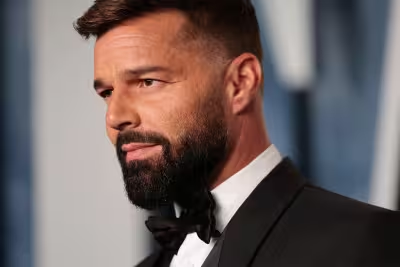
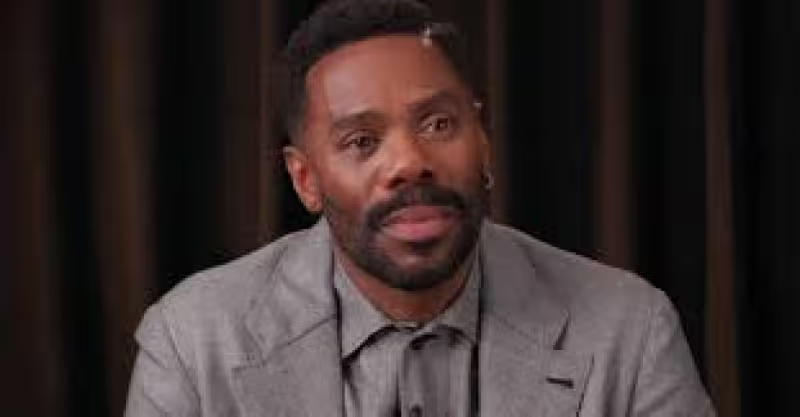
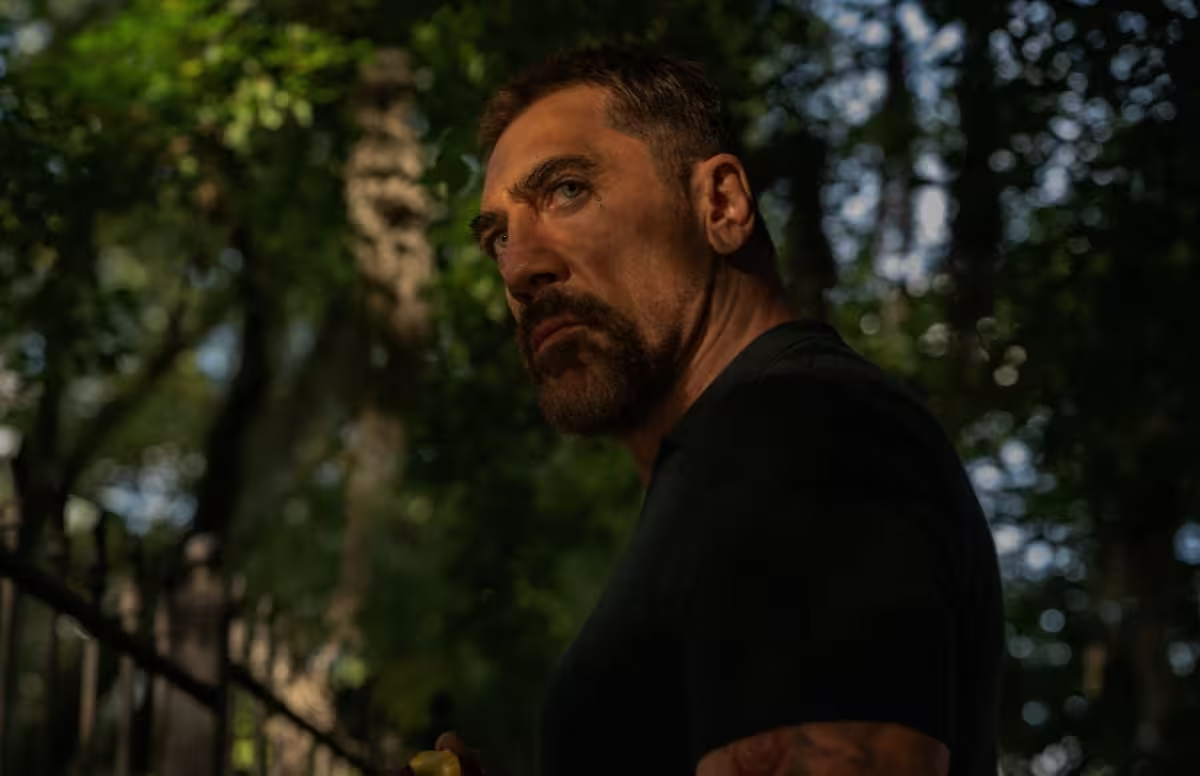
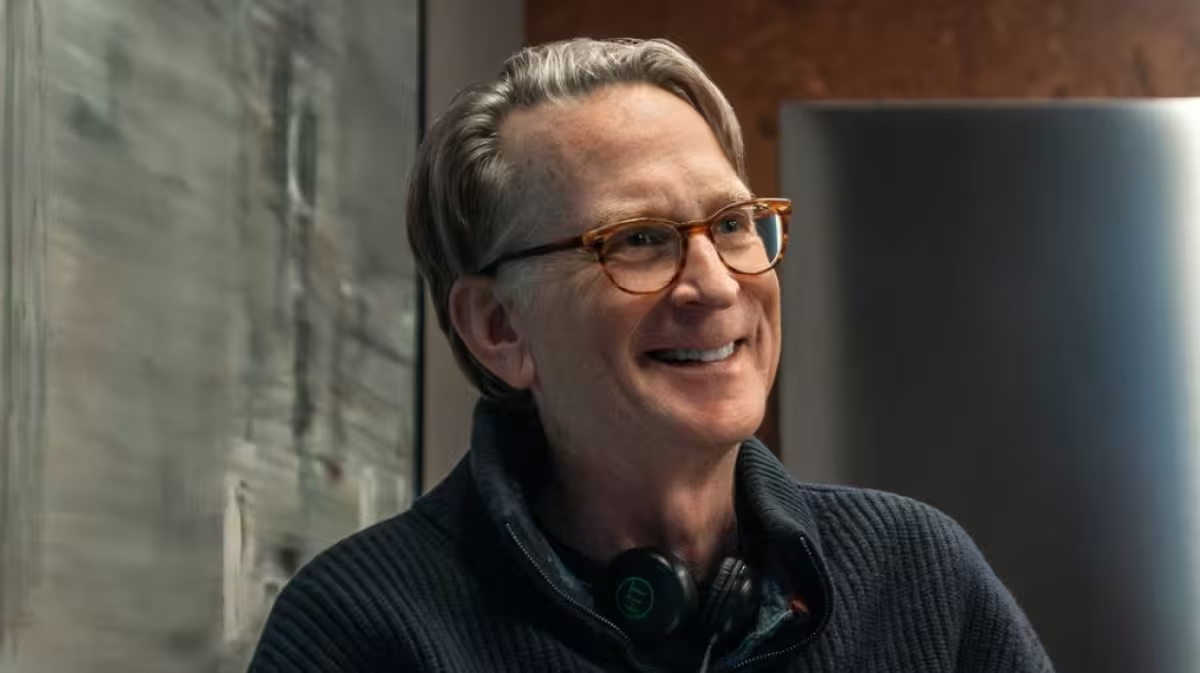
Spielberg made the remarks while promoting Disclosure, a sci‑fi thriller that imagines the world on the verge of proof that non‑human intelligence exists but has been concealed. The film stars Emily Blunt as meteorologist Margaret Fairchild, Josh O'Connor as cybersecurity specialist Daniel Kellner, and features Colman Domingo, Colin Firth and Eve Hewson. On screen, governments and powerful corporations scramble to contain whatever Kellner uncovers; off screen, Spielberg said the story is about empathy and connection.

O'Connor, who plays the man who finds evidence of a long‑running cover‑up, said the script landed on him and he read it in one sitting, exhilarated. He described Disclosure as a necessary film about hope and understanding, and added that he personally thinks something beyond Earth is likely. Those comments arrived as early press reaction began to coalesce: a market bet that opened May 12 on Kalshi predicted critics would reward the film, and within a week the Rotten Tomatoes estimate moved from about 80% into the high 80s; by early June the modeled range had climbed to roughly 87%–93%, centering on a high‑90s expectation.

The studio has set a review embargo for June 9 at 9 a.m. PT / 12 p.m. ET; the nationwide release follows on June 12. The movie’s reported production budget is $115 million. Industry watchers note that a Rotten Tomatoes score of 75% or above qualifies a film for Certified Fresh status — a threshold Disclosure appears likely to meet, according to the Kalshi‑tracked prediction and the early press buzz that called out Blunt’s performance (see:
Spielberg’s premiere statements landed on a theme he has returned to for more than 40 years, tracing back to E.T. and Close Encounters of the Third Kind: the fascination with life beyond Earth and what it reveals about us. Disclosure arrives amid broader public discussion about unidentified aerial phenomena, government transparency and the role of new technologies — debates that the film explicitly taps as it stages a contest between truth‑seekers and institutions that prefer secrecy.
That contest is the film’s friction. Spielberg argued that a confirmed discovery would knit people together, yet the story he’s promoting centers on the opposite impulse: powerful actors moving to withhold and manage information. That contradiction — hope for a unifying revelation versus a plot built on concealment and control — is precisely the tension O'Connor said drew him in. He suggested that, in the film’s logic, an external revelation might force humans to reckon with themselves and possibly abandon the divisions they create.
Disclosure raises a pointed narrative question the premiere could not answer: what, specifically, does Daniel Kellner find that proves non‑human intelligence exists? The film positions that discovery as the tectonic event that could move society, but until reviews surface after the June 9 embargo and audiences see Disclosure on June 12, the nature of the evidence — and whether it supports Spielberg’s optimistic view that revelation will bring people together — remains the story’s central unresolved fact. For readers tracking both the movie and the larger debates around disclosure and public records, Filmogaz’s recent pieces on the filmmakers’ reunion ( and the recurring use of disclosure in political reporting ( put the premiere comments into a wider frame.