
“Thy kingdom come, thy will be done,” Reese Atwood said, the short line of prayer she recites before stepping into the batter’s box — a private cue that cameras followed all season and that she leaned on again as Texas stood one win from a second straight national title.
Atwood, a senior catcher for Texas, described the phrase as a momentary reset. "My faith is huge," she said, then explained how those words help her take her mind off the game, trust the preparation and be completely present for the next pitch. It is not a superstition about results; "I’m not one to believe that God wants me to hit a home run in those moments," she said. Instead, she frames the at-bat as a chance to be present and "use this platform to spread my faith to others."

The practical weight of Atwood’s routine is visible in one clear snapshot: last year she was hitless in the Women’s College World Series until Game 1 of the championship series. With two outs and two runners on, after Texas Tech’s NiJaree Canady attempted to walk her intentionally, Atwood lined a single through the left side; the two runs that scored proved to be the difference in Texas’s 2-1 win on the way to the program’s first national championship.
That memory helps explain why broadcasts tracked the small gestures in the box. Networks repeatedly showed Atwood talking to herself during at-bats throughout the season, and the visual became part of how viewers understood Texas’s approach under pressure. Atwood says she purposefully tries not to think about softball while in the batter’s box — sometimes deliberately picturing something with "zero relation to softball" — so she can react instead of overthinking. Yet the same moments intended to clear her head have been scrutinized by cameras and replayed for a national audience.

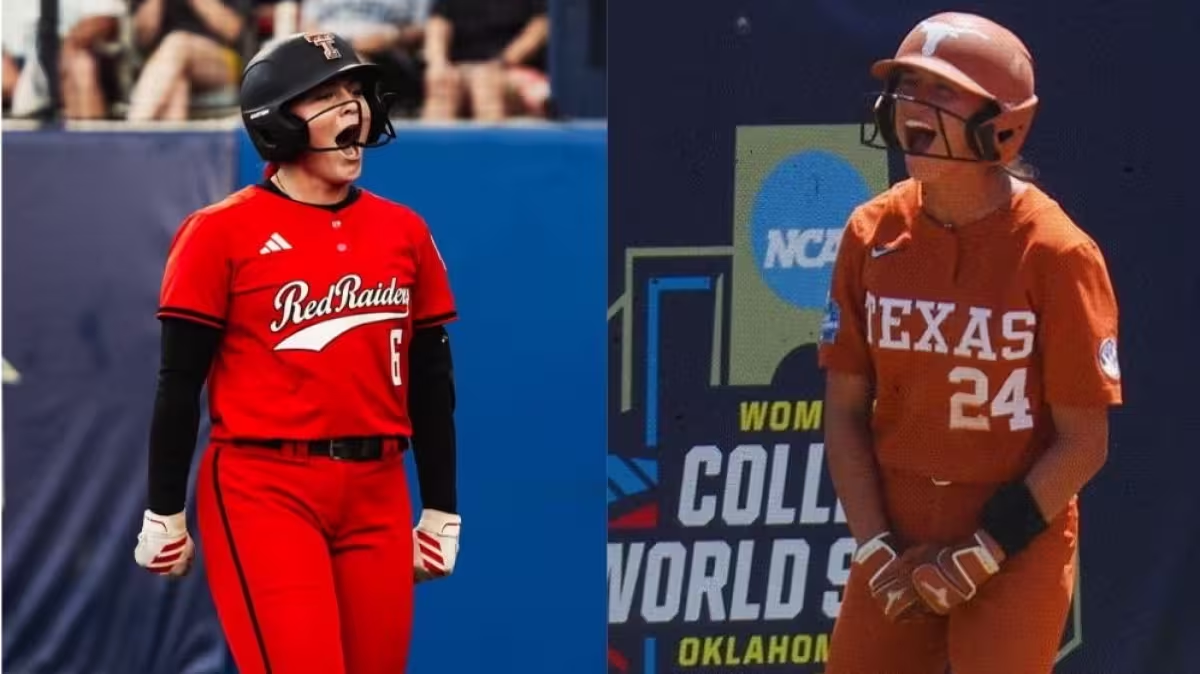
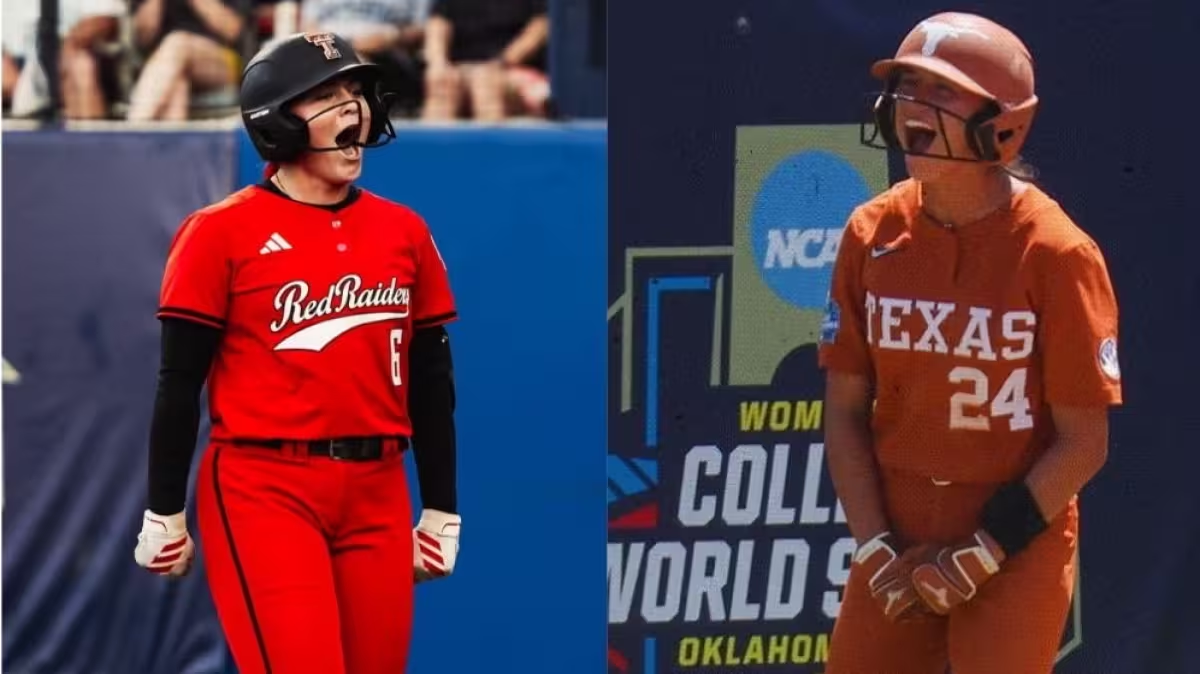
Her pre-pitch routine is not solo work. Atwood named teammates she turns to when the game tightens: Teagan Kavan is her best friend, and Vivi Martinez and Citlaly Gutierrez are "huge people in my game" she goes to under pressure. Those voices remind her to be present, "trust the process, trust her preparation, and not worry about stats," she said. The routine becomes both an inward practice and a shared language inside Texas’s dugout.
Atwood described a simple mental architecture: prepare relentlessly, then make the plate a place for reaction, not revision. She said she likes to think of something unrelated to softball before a pitch so the mechanics she has drilled take over. The phrase she whispers serves the same function as her teammates’ reminders — it is a cue to stop adding pressure to an already prepared body and to use the moment as a platform for faith, not as a demand for a particular outcome.
There is an unresolved question beneath those mechanics: how often, in measurable terms, does a prayer or a line of self-talk change a game? Beyond last year’s decisive single, there is no ledger that credits runs or wins to a phrase on the lips. The ritual’s value lives in discretion and repetition, not in a season-long statistic.
With Texas now one victory from repeating as national champion, Atwood’s routine arrives at its clearest test. If she walks to the plate and the result validates the ritual, the narrative will cement: an athlete who marries faith with focus, supported by teammates, found a repeatable way to steady under pressure. If the final outcome goes the other way, the routine remains an unquantified comfort — deeply meaningful to the player and her circle, and no less true for resisting measurement.
Either outcome leaves a plain conclusion: Atwood’s prayer and self-talk are not performance for the cameras; they are a chosen method of presence she has practiced into the biggest moments. How often that method alters the scoreboard cannot be counted beforehand, but on the next pitch in the final game it will be clear whether presence and preparation together hold up under the last and loudest scrutiny.