
Groundwater pumping moved Earth's rotational pole by about 31.5 inches between 1993 and 2010, according to a 2023 study that put a measurable human fingerprint on a part of the planet many people never think about. The same loss of water was estimated to have added about 6.24 millimeters to global sea level.
The finding matters because the pole is not fixed. It drifts and wobbles as mass shifts around the planet, and water has mass with leverage. When enough groundwater is moved from aquifers onto farms, into cities and eventually into the ocean, Earth's spin changes by a measurable amount. In this case, researchers estimated that humans depleted about 2,150 gigatons of groundwater over the study period, with much of the pumping tied to irrigation and human use.

The study, published in Geophysical Research Letters, tested observed changes in the rotational pole against different water-redistribution scenarios. The scenario that best matched the drift included those 2,150 gigatons of groundwater depletion. Ki-Weon Seo, one of the researchers, said groundwater redistribution has the largest impact on the drift of the rotational pole among climate-related causes, and he called it concerning and surprising that pumping groundwater is also another source of sea-level rise.

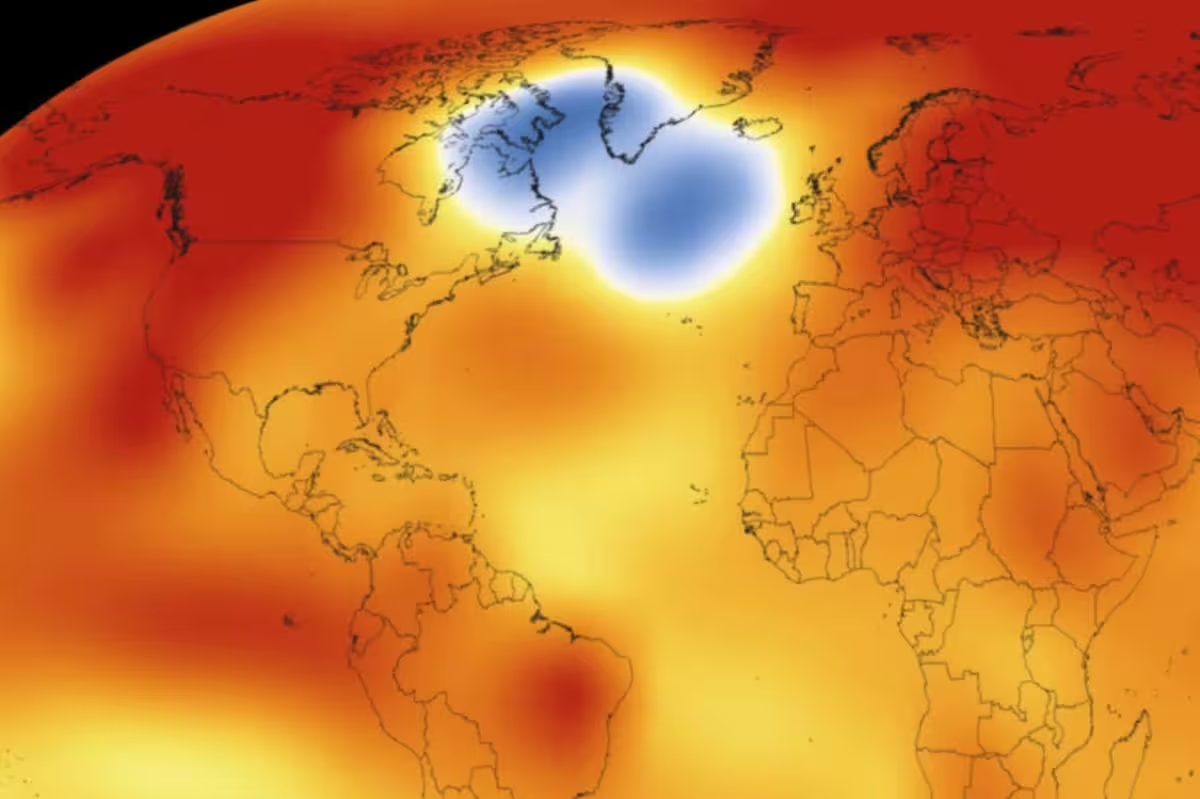
The science is not as simple as a before-and-after picture of pumps yanking Earth off balance. The pole motion reflects shifting water and other mass across the globe, and the study looked for the scenario that best fit the observed drift rather than claiming groundwater was the only force at work. Even so, the modeled impact stood out. Heavy groundwater depletion in western North America and northwestern India was singled out as especially important to the drift.
That broader picture fits earlier explanations of how the planet behaves. NASA described the effect in 2016 by comparing Earth to a spinning top with added weight on one side. A 2026 Journal of Geodesy reappraisal using the WaterGAP hydrological model also found that terrestrial water storage plays a significant role in polar motion across different timescales, underscoring that water movement can reshape the planet in ways that are large enough to measure but not always simple to separate.
Surendra Adhikari said the additional research quantified the role of groundwater pumping on polar motion and that it was pretty significant. The open question now is not whether groundwater matters, but how much of the observed drift belongs to pumping versus other water-redistribution processes. On the evidence available so far, groundwater depletion is a major part of the answer, and it is part of a larger story about how human water use reaches all the way from aquifers to sea level and even to the planet's rotational pole.