



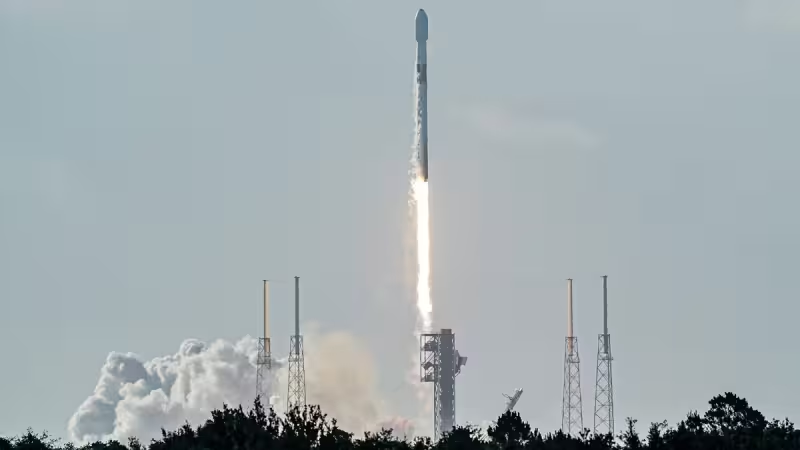
SpaceX is set to send a Falcon 9 rocket from Cape Canaveral on Friday morning, beginning a launch day that could pack two rockets into the same Florida sky. The Starlink 10-53 mission is scheduled to lift off at 8:03 a.m. EDT from Space Launch Complex 40, carrying 29 broadband internet satellites into low Earth orbit.
The flight is SpaceX’s penultimate planned launch of May, and the booster on this mission, tail number B1085, will be flying for the 16th time. About 8.5 minutes after liftoff, it is slated to land on the drone ship A Shortfall of Gravitas, a recovery that would mark the vessel’s 152nd touchdown and SpaceX’s 616th booster landing if it succeeds.

The launch window opens with good weather on its side. The 45th Weather Squadron is forecasting an 80 percent chance of favorable conditions for the morning attempt, and SpaceX’s rocket will head north-east after clearing the pad. That trajectory can make the launch visible far beyond the Space Coast, with possible views as far north as Jacksonville Beach, about 160 miles away, while southeast flights have been seen as far south as West Palm Beach, roughly 150 miles away.

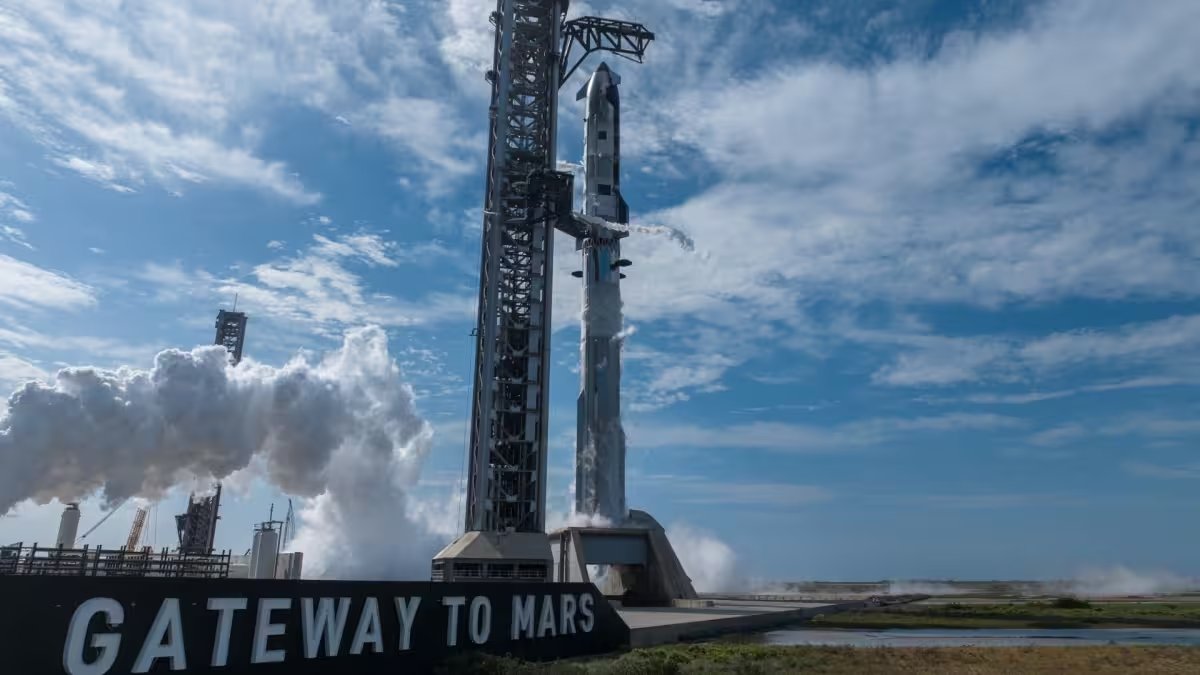
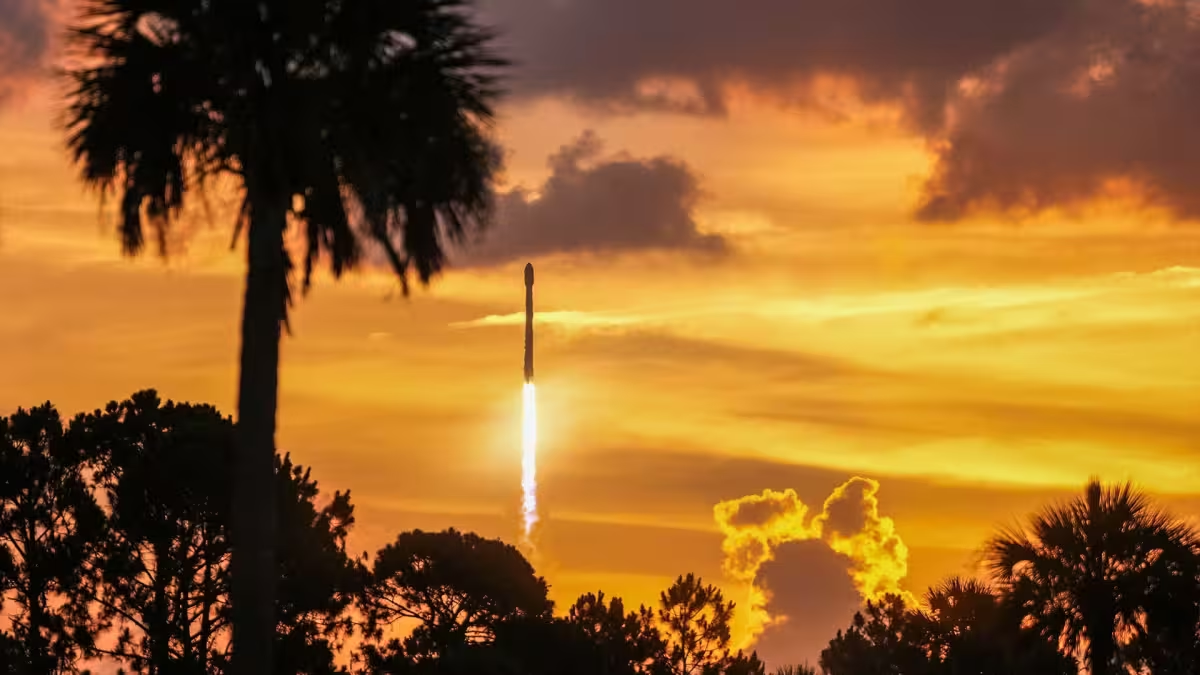
The morning liftoff also fits into a busier-than-usual day for Florida’s space launch hubs. About 12 hours after the SpaceX mission, United Launch Alliance has an Atlas V rocket scheduled to leave Cape Canaveral as well, setting up a rare doubleheader for a state that is already well known for its rocket launches. On Florida’s Space Coast, the main launch sites are NASA’s Kennedy Space Center and Cape Canaveral Space Force Station, where the sky is often the best spectator stand in the country.
That is one reason the coming hours matter to launch watchers across central Florida: there is a good chance of one visible Falcon 9 flight in the morning and another rocket before the day is over. Spaceflight Now plans to begin live coverage about an hour before liftoff. For anyone tracking the Starlink network, Friday’s mission is another step in a system that already includes more than 10,000 spacecraft, with 29 more headed to orbit before the day is done.
Because the rocket is leaving on a north-easterly track, the closest and clearest views will still be from the Space Coast itself. Playalinda Beach and Canaveral National Seashore are among the nearest places to watch, sitting almost parallel to Launch Pad 39A, while the farther reaches of visibility depend on weather, distance and the angle of ascent. By Friday afternoon, SpaceX will either have extended its Starlink constellation again or be waiting for another try, but the plan on the books is plain: launch first, land the booster, then hand the day to the next rocket in line.



