



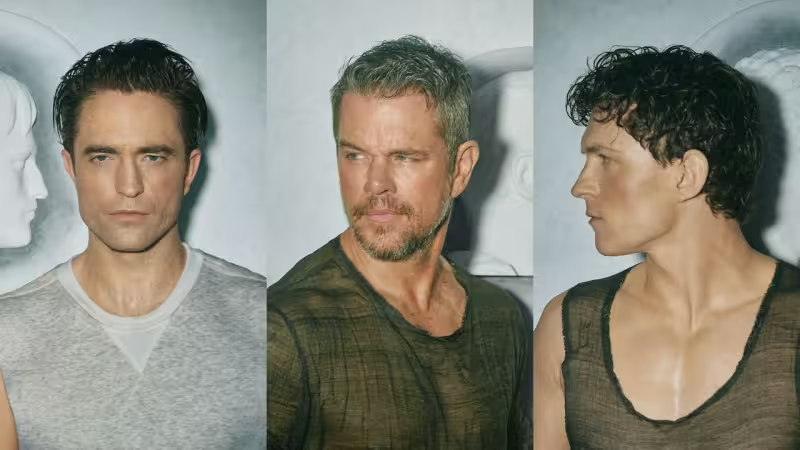
“Some moment of magic in a real place — a real sunset, a real castle,” Christopher Nolan told visitors after hiking up to Castello di Santa Caterina one day in late 2024, and then set about proving it. He is shooting The Odyssey on that mountaintop in western Sicily, and the choice forced the production to reimagine how hundreds of people and tons of kit reach a 900‑foot high location with a barely walkable path.
The facts are blunt: the castle sits 900 feet above sea level, the trail to the top takes about 45 minutes to summit, and although the path is paved it was not wide enough for the armada of people, equipment and trucks Nolan’s set required. When widening proved impossible, and a new back road that the line producer discussed with local authorities “was never going to materialize,” the production pivoted to helicopters and heavy scaffold.

Helicopters ferried some crew and equipment up and down the mountain while crews built a scaffolded platform on the side of the rock to serve lunch and respite — a structure rated to carry the combined weight of 200 crewmembers. On some days the call was simple and brutal: start at the bottom of the path, then climb 900 feet at whatever pace each person could manage.
That improvisation follows a familiar Nolan pattern of solving logistics with on‑the‑spot invention rather than studio facsimile. Nolan said of the site, “We would have used 4x4s to get the whole crew up,” and then acknowledged the concession: “And then fairly late in the process, it started to become apparent that this road was never going to materialize.” With the road off the table, helicopters and the mountain platform became the working arteries of the set.

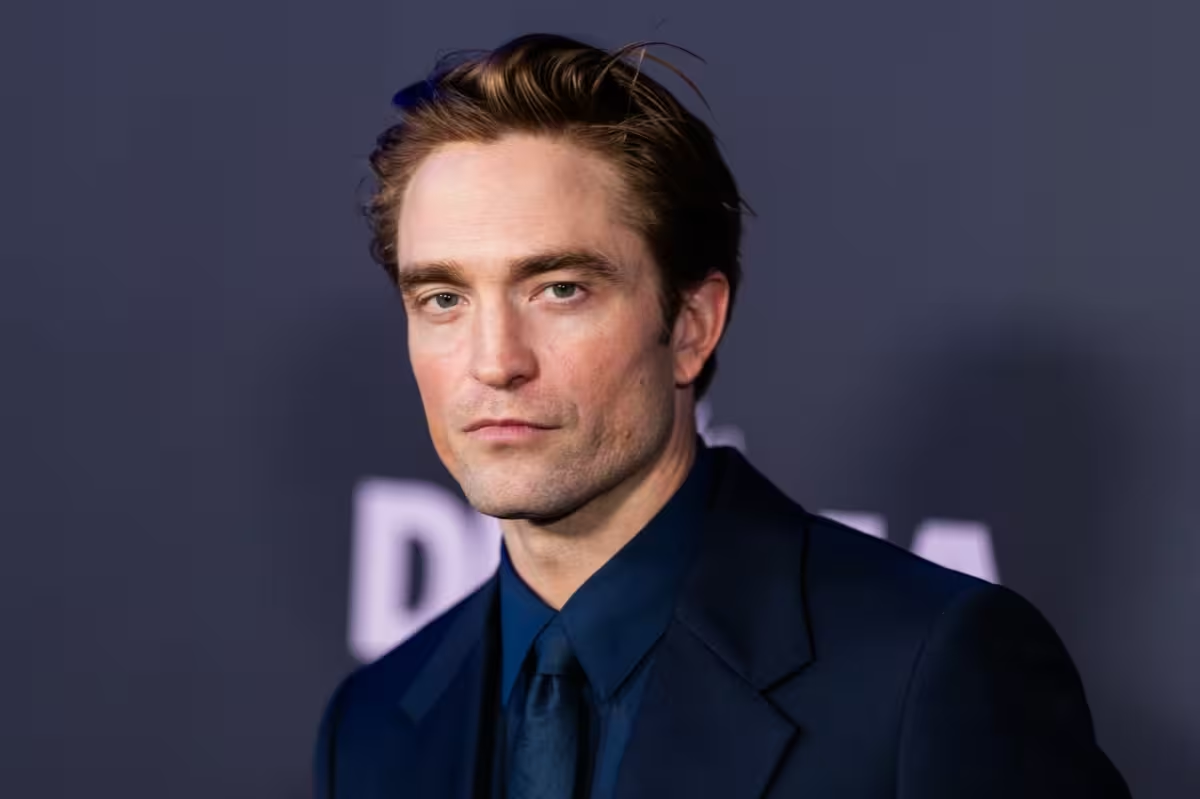
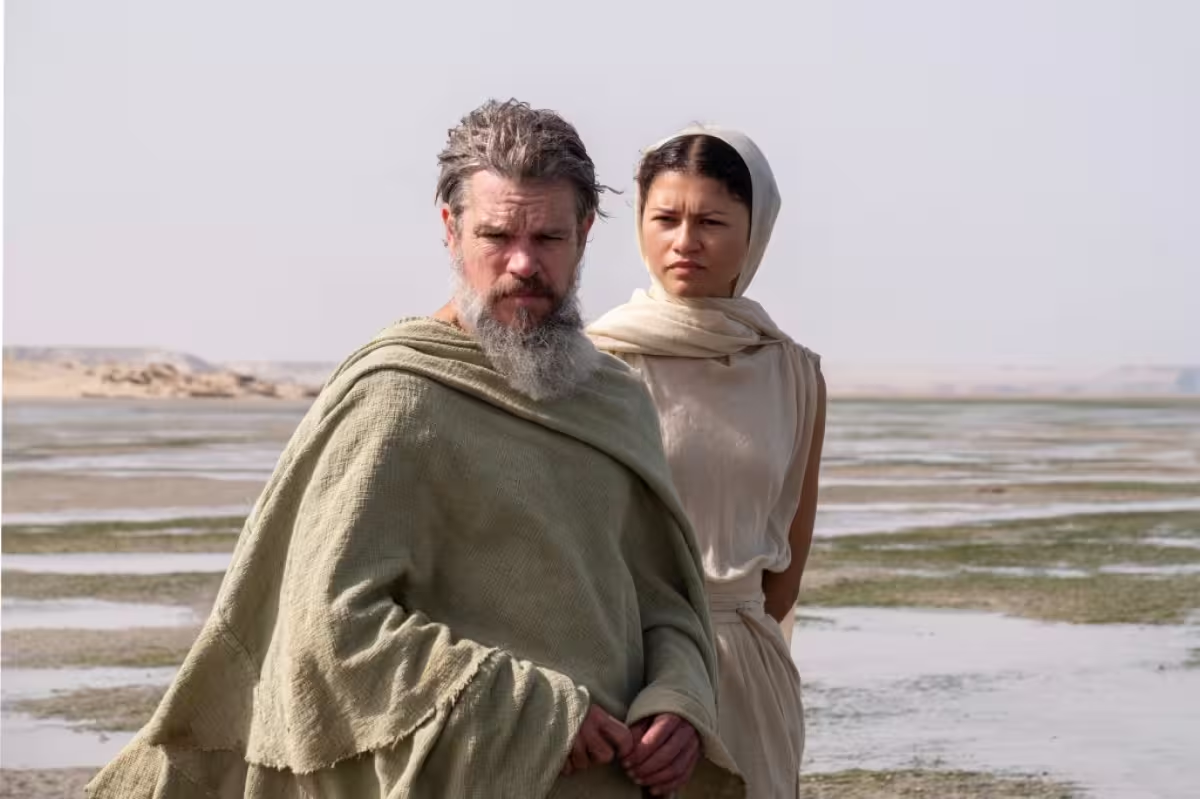
Robert Pattinson, who plays Antinous in The Odyssey, offered a shorthand for how Nolan shoots through such problems. Recalling a moment on Tenet, he said: “Well, I’ve used BMWs before with these pods, so let’s just go to the BMW dealership, just buy two BMWs right now, and we’re going to shoot,” and added, “We only lost, like, 45 minutes.” Pattinson’s anecdote — “After all this planning and we just bought them, and that’s it—done.” — landed like a production vignette about making choices fast when locations bite back.
The decision to use the real Castello di Santa Caterina ties the film to local geography and myth. Favignana, the island in western Sicily where the castle is located, was once called Aegusa, or goat island, and tradition holds that Odysseus and his crew may have stopped there before their encounter with the Cyclops. Nolan’s insistence on “a real sunset, a real castle” is also an aesthetic: he prefers the imprecision and rewards of actual places over constructed sets.
The friction in this shoot was not theatrical but logistical. The path to the castle could not be widened; a separate road proposal was floated with local officials but collapsed, leaving the production to accept the mountain’s limits. That constraint produced visible workarounds — helicopters for freight and personnel, scaffolded dining for 200, and a daily routine that sometimes began with a 45‑minute climb — and it reshaped scheduling and movement on set.
What happens next is less tidy: the production has not announced a finish date for shooting at Castello di Santa Caterina, but the choices made show how it will proceed there. With the new road abandoned, helicopters and the scaffolded platform are the practical systems that will have to carry the remainder of filming at the site. Nolan’s gamble is clear: rather than remake the mountain to suit the camera, he has remade his logistics to suit the mountain — accepting awkward, physical work in exchange for the kind of real place that, in his words, can deliver a moment of genuine magic.



