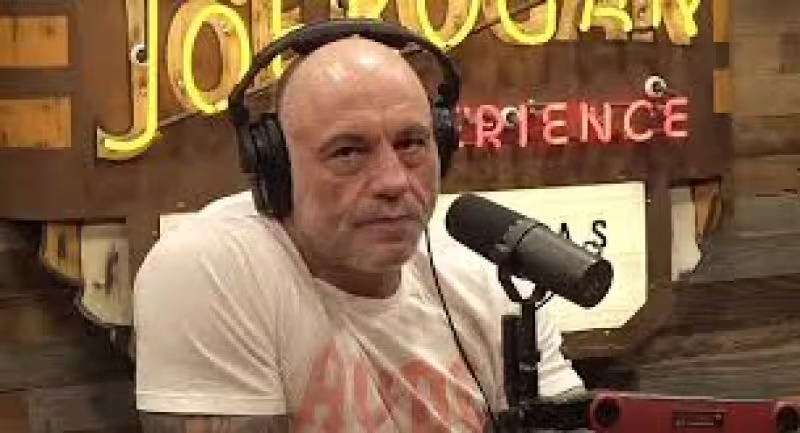
Joe Rogan publicly blasted fellow comedians for condemning jokes at the Kevin Hart roast, saying any comic who criticizes the event is a "traitor" and arguing roasts exist to push boundaries. Rogan's words landed as the debate over what a roast is — and who gets held responsible for its jokes — turned into a public quarrel inside comedy.
Rogan said comedians should know that roasts are about controversial jokes, and that attacking the material after the fact amounts to betrayal of the form. Those lines — blunt and absolutist — are the strongest detail in a row that now separates performers who defend traditional roast license and peers who say some targets or lines cross a line.

The roast itself has been described broadly as featuring controversial, edgy jokes, a characterization that underpins Rogan's point: if a show is billed as a roast, edgy material is part of its DNA. The dispute deepened when Michael Che publicly questioned why certain writers — described as white writers in his remarks — were responsible for some of the material, adding a second strand to the controversy about authorship and accountability.
Rogan's attack framed the argument as a matter of principle. He positioned roast defenders as guardians of a longstanding comic tradition and cast critics as abandoning the agreed rules of engagement: roasts permit deliberate provocation as part of the performance. That is the claim Rogan leaned on when he used the loaded term "traitor" to describe comedians who had complained about the roast's jokes.
But the exchange exposed the painful friction at the heart of modern comedy. One side treats roasts as a controlled release valve for taboo humor; the other side points to harm, shifting standards, and the responsibility of performers and writers in a media environment where offstage consequences are immediate. Rogan's comment responded to critics with a single sharp assertion rather than a discussion of nuance. Che's questioning of writers pushed the argument in another direction: who writes the lines, and who answers for them?
The clash also raises a narrower, factual gap that goes to the center of Rogan's critique: which comedians did he mean when he called critics "traitors"? Rogan's statement labeled any comic who condemned the roast, but it did not enumerate names. Che's intervention — a critique aimed at writers — complicates the target even more. Is the complaint aimed at onstage performers, offstage writers, or the industry that packages roasts for mass audiences?
For now, the immediate consequence is a louder, more public split within the comedy world. Rogan has forced a framing: you either defend roast conventions or you are abandoning them. What remains unresolved is whether those he attacked will answer in kind and whether the industry will clarify where responsibility lies for controversial material. The single consequential question left by Rogan's charge is straightforward and concrete: which comedians will step forward to say whether they were criticizing the material, the writers who supplied it, or the format itself?
Until someone named in Rogan's broad indictment replies, his remark will stand as both provocation and challenge — a demand for clarity that has so far produced argument but not a public reckoning. That gap, more than any slogan, will determine whether the dispute becomes a momentary quarrel or a lasting debate about the rules of roast comedy.