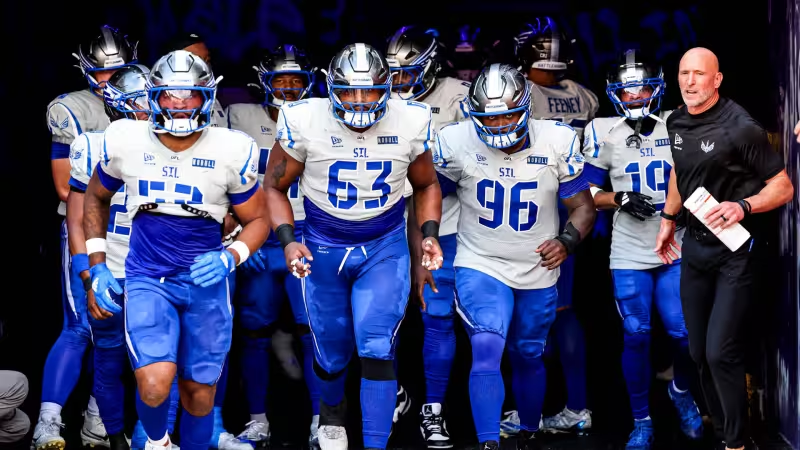
The Orlando Storm will not play the home playoff game they earned on June 7 at their own stadium; the UFL announced the matchup will be staged in Columbus, Ohio, because the Orlando venue is unavailable due to prior commitments connected to hosting an international soccer game.
The relocation upends the home-field advantage the Storm clinched earlier this season. The league confirmed three teams have already secured playoff berths — the Orlando Storm, the D.C. Defenders and the St. Louis Battlehawks — while the Birmingham Stallions and the Louisville Kings remain in the hunt for the final spot. The Columbus Aviators have been eliminated from contention.

The UFL said it worked extensively to identify alternative Central Florida sites but ran into hard limits. UCF’s Acrisure Bounce House was already booked and Camping World Stadium is under renovation, the league said, and other local venues failed to meet broadcast requirements or posed operational and logistical constraints that made them nonviable for a postseason game.
League officials framed the move as a necessary accommodation driven by an overlap between summer soccer and football calendars: the Storm had secured the right to host before the playoff schedule was finalized, but the home venue cannot be used on the postseason date because of commitments tied to the international soccer game. That created the blunt friction at the heart of the decision — a clinched home playoff stripped of its location by an unrelated event.



Staging the game in Columbus turns what would have been an Orlando home game into a neutral-site matchup. Because the Columbus Aviators are out of playoff contention, the local team will not act as the Storm’s opponent or host; the matchup will simply be played in a stadium in Columbus on June 7. The league said it evaluated other venues in Central Florida but could not satisfy the technical and logistical requirements that accompany postseason television and game-day operations.
The immediate consequence is practical: ticketing, travel and game-day planning shift to a different city less than two weeks before kickoff. Fans who expected a neighborhood playoff night in Orlando will have to rearrange or miss the game. For the Storm, the competitive edge of a home crowd will be reduced by distance and the loss of familiar facilities, even as the team keeps its berth and the date on the calendar.
The most consequential unanswered question is simple and specific: which international soccer match — and which organizer — booked the Orlando stadium on June 7, forcing the change? The UFL has described the conflict in general terms as tied to hosting an international soccer game but has not identified the opposing event, and that omission leaves a gap in accountability for scheduling that matters to fans, the team and the league’s future calendar planning.
The UFL will stage Orlando’s playoff game in Columbus on June 7; the Storm, their supporters and the league now face the logistical task of moving a postseason fixture across state lines, and the public explanation for the stadium conflict remains the single factual detail most likely to determine whether similar disruptions recur next season.