



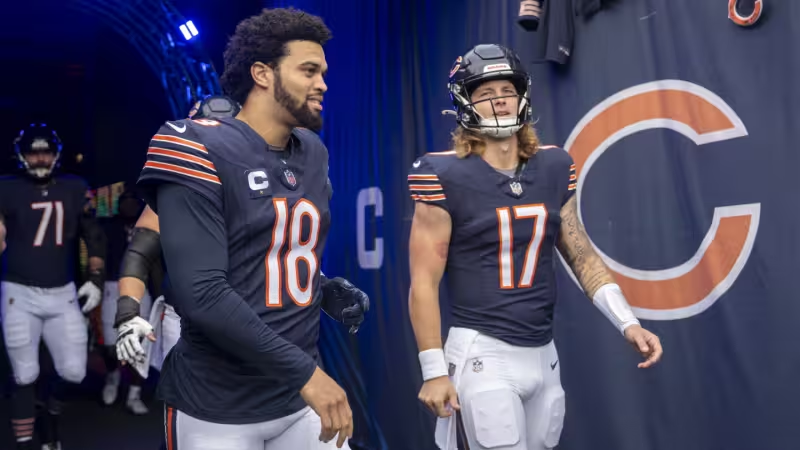
Caleb Williams sits at the center of a draft that will force half a dozen NFL front offices to choose between upside and immediate fit, and that choice will reshape at least one franchise the moment a pick is announced.
The simplest weight to the argument is this: the player scouts call the most dynamic quarterback in the class brings a combination of improvisational playmaking and short-area accuracy that offenses prize, and those traits are rarer than any measured speed or height chart. Teams that prize growth and schematic flexibility see a ceiling that can change a franchise; teams that prize plug-and-play stability see a long list of how much tailoring a playbook and coaching staff would need.

Scouts and executives have split their work into two piles: projection and projection risk. Projection is the upside — the plays where a quarterback avoids pressure, extends the pocket with movement and finds a receiver downfield on rhythm routes that weren’t there two seconds earlier. Projection risk is everything that could keep those plays from translating: consistency in beating single-high safety shells, the tendency to try to make a play when a checkdown is the cleaner choice, and the adjustments required when offensive line play is less forgiving than a top college unit.
Context matters here because the draft is not a neutral marketplace. Teams drafting early are operating with a calendar, a roster and a coaching philosophy. A team with an established offensive coordinator and veteran signal-caller will measure Williams differently from a franchise that needs an identity and a face. Put another way: the same characteristics that make him the most exciting prospect also make him the most expensive coaching bet. That contrast is what turns routine draft night drama into a front-office inflection point.
The tension grows when you weigh public statements against private evaluations. On the surface, executive soundbites lean toward patience and development; inside war rooms, comparables — both glowing and cautionary — are being used to justify opposite moves. Some staffers see a future perennial All-Pro; others see a high-ceiling backup until a franchise can reset around a better schematic fit. Those competing narratives are why mock drafts and consensus boards matter less to decision-makers than their own red-zone studies and third-down tape.
Practical fit is the friction every team must reconcile now. A playbook built around quick, rhythm throws and athletic run-game play-action asks different things of a quarterback than a scheme that lives under center and asks the passer to get the ball out on scheduled drops. Installing an entire offense around one young player is possible, but it costs time and often personnel. For teams under a shorter championship window, that cost can be prohibitive; for teams in rebuild mode, it is the point.
What happens next is straightforward and decisive: draft night will compress months of film study, medical checks and interviews into one limited resource — a pick. The franchises that pick earlier face the hardest version of the decision because there is less available help through free agency. For teams drafting later, the calculus shifts to whether another franchise will reach — and whether they can live with the player still available at their slot.
The single clearest unanswered question is not purely about talent. It is about environment: which franchise is willing to accept the short-term friction of retooling a roster and staff for a player whose best version requires architectural changes? Whoever makes that choice will not simply be picking a quarterback; they will be choosing a strategic course for the next coaching cycle.
On draft night, a single name flashed on a screen will provide clarity. Until then, the debate will persist in meetings, mock exercises and scouting reports. That debate matters because the outcome will not only decide where Caleb Williams lands; it will decide which franchise is prepared to bet everything on potential rather than immediate predictability.



