Guyana's oil production has surpassed 900,000 barrels per day, a milestone driven by an Exxon-led consortium and arriving at a moment of rising global oil prices and geopolitical tension that amplify its economic impact.
The immediate effect is already visible: GDP has surged as export volumes climb and foreign investment accelerates. The 900,000 barrels-per-day figure is the clearest measure yet of how quickly the country's oil sector has expanded, and it underpins the growing scale of government revenue and industry activity.

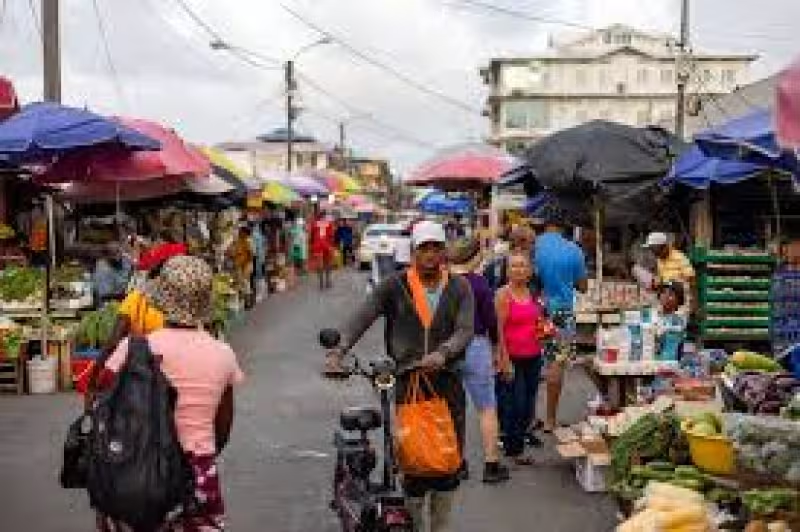
That surge follows a dramatic shift in a country that was once among the least affluent in South America. The oil boom, empowered by new offshore development, has rewritten Guyana's economic profile practically overnight. Higher international crude prices and geopolitical pressure on other suppliers mean Guyana’s output carries outsized value right now, which is why production milestones matter more than they would in quieter markets.
The mechanism is straightforward: rapid production growth led by the Exxon-led consortium has translated into strong national income gains. But the gains expose the limits of an economy still building the institutions and infrastructure required to absorb sudden wealth. Citizens and businesses are pressing the government to use the windfall to improve roads, ports, public services and local employment—demands that come with the same urgency as the revenue inflows themselves.

The core friction is financial and political. Oil revenues are swelling, creating both room for large public investments and the risk that those resources concentrate benefits. Guyana is grappling with maintaining economic stability and with ensuring that wealth distribution benefits its population rather than boosting only a narrow set of actors. At the same time, policymakers are confronting questions about foreign corporate control of the sector and how much of the value chain—and the jobs that come with it—will stay inside the country.
To address those pressures, Guyana plans to bolster local content laws and to tackle foreign corporate control, steps intended to lock more activity and revenue into the domestic economy. Officials have also framed a longer-term aim to sustain growth beyond the energy sector, signaling an awareness that oil alone cannot be the foundation of stable prosperity. Those plans represent the policy response; the production milestone is the economic trigger forcing action.
Practically, the choices now will determine whether the boom translates into broad-based development. If legislation on local content is enforced and infrastructure receives prioritized funding, private firms may find it easier to expand domestic supply chains. If revenue management remains unclear, or if investment focuses too narrowly on short-term projects, the country risks repeating the common pattern of resource-led volatility rather than achieving diversified growth.
What remains unresolved is both precise and consequential: how much additional revenue Guyana will actually collect from the higher output and when promised diversification measures and local-content rules will be implemented and enforced. Those timings matter because global prices can shift and geopolitical pressures can alter export dynamics, so delays in policy and investment translate directly into lost windows of opportunity.
The production milestone proves that Guyana is no longer a marginal producer. The single most consequential unanswered question now is whether the government can convert that near-term windfall into durable gains—through binding local-content laws, public investment in infrastructure, and credible steps to spread wealth—or whether fast-growing oil receipts will leave the broader economy exposed to future shocks.