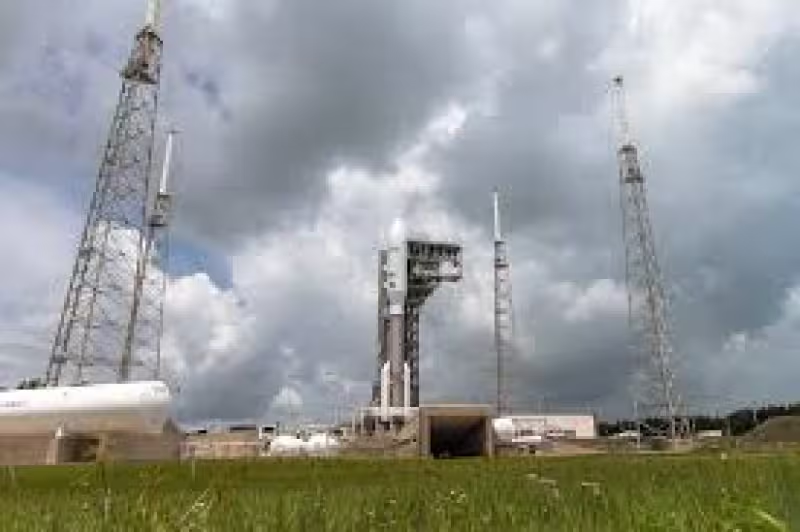
United Launch Alliance is set to send 29 Amazon Leo broadband satellites into orbit Friday evening from Cape Canaveral Space Force Station, with liftoff scheduled for 7:33:30 p.m. EDT if the weather cooperates. The Atlas 5 rocket, designated AV-113, is lined up for a 29-minute window from Space Launch Complex 41.
The mission matters because it is another step in Amazon’s push to build a first-generation constellation of more than 3,200 satellites, and it is one of the company’s last Atlas 5 flights. After this launch, Amazon will have just one Atlas 5 remaining from the nine it bought from ULA, while ULA’s broader deal with Amazon includes 47 launches split between 38 Vulcan rockets and nine Atlas 5s.




The countdown began Friday at 12:13:30 p.m. EDT, starting at T-minus 6 hours, 20 minutes, and includes two planned 30-minute holds. The first hold comes before fueling begins at T-minus 2 hours. ULA says the Atlas 5 will fly on a north-easterly trajectory after leaving the pad, and Spaceflight Now planned live coverage beginning about an hour before liftoff.
Weather is the catch. The 45th Weather Squadron put the odds of acceptable conditions at 30 percent, a forecast that leaves the launch team working through a narrow opening and a list of rules that could be hard to keep clean. Friday’s attempt comes with the Vulcan rocket still grounded after the USSF-87 mission in February suffered an SRB nozzle burn through, and Amazon’s fallback plan with Blue Origin has already been disrupted by the May 28 explosion of a New Glenn rocket. Amazon said its satellites were at a payload processing facility at NASA’s Kennedy Space Center when that rocket exploded and were not harmed, and ULA said its launch pad infrastructure was not affected.
If the rocket leaves the pad as planned, it will be the 109th Atlas 5 launch overall and the 22nd in the 551 configuration, which uses five solid rocket boosters. For Amazon, the question is no longer whether the company has satellites ready to fly — it had about 300 in orbit Friday afternoon — but whether it can keep pace with a schedule that the Federal Communications Commission says must reach half the constellation by the end of July 2026. After this mission, the next confirmed step is simple: one Atlas 5 left.