



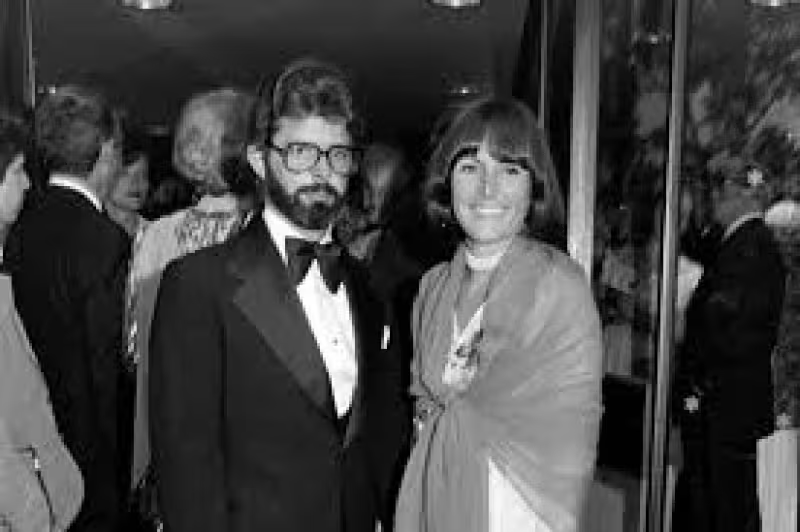
A recent online clip has revived a long-overlooked turning point: Marcia Lucas helped take a somewhat jumbled collection of shots and storylines and craft them into Star Wars: Episode IV – A New Hope before its May 1977 release.
The renewed attention follows a RocketJump YouTube clip titled "How Star Wars was saved in the edit," which replays footage from a rough cut screening and lays out how the film’s salvage happened in the cutting room — a sequence that has put george lucas back in the conversation about authorship while shifting fresh focus onto the editors who rebuilt the movie.

The rough cut shown to close friends a few months before the film opened was, by several measures, unfinished: placeholder visual effects, stock footage and temporary sound and music. It also undercut the story. Test audiences did not respond especially well. When George Lucas invited directors including Steven Spielberg and Brian De Palma to the screening, De Palma blurted the bluntest verdict: "What? This makes no sense! Nonsense!"
Inside that mess, Marcia Lucas — joined by editors Richard Chew and Paul Hirsch — set to work. The three reorganized and pared down material, rebuilt a bloated first act and cut scenes that diluted forward momentum. Their process created clarity, sharpened tension and rebuilt sequences to propel the story toward the film that reached theaters in May of 1977.
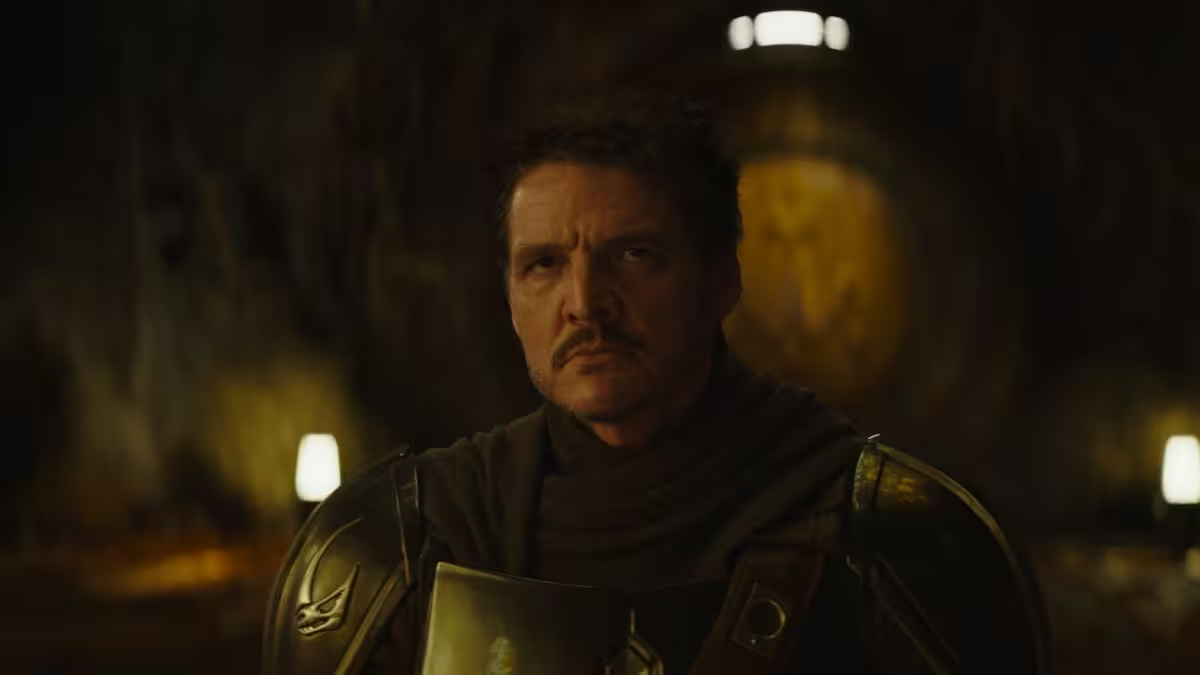
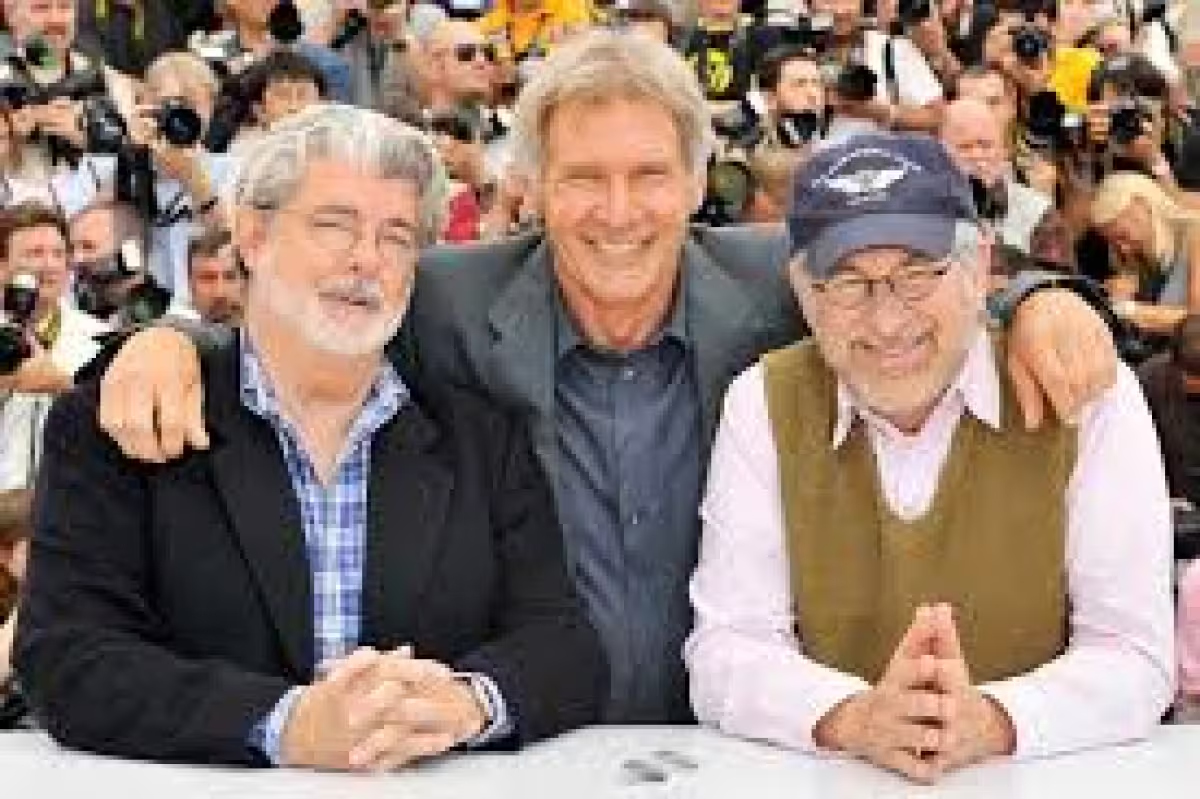
The opening crawl that now frames the film had always existed, but early drafts wandered into dense lore about the Republic Galactica, Siths and political backstory. George Lucas brought in Brian De Palma and Jay Cox to rewrite the crawl; elsewhere, Marcia Lucas and her colleagues rebuilt the narrative by cutting and reshaping what was on film rather than rewriting it on paper.
That collective rescue is precisely why the new clip matters: it reframes the finished film as the product of an editing team as much as a director’s vision. Some viewers and historians call Marcia Lucas the heart who made the film come alive. Yet public memory still often places George Lucas alone at the center, the unquestioned auteur of a franchise he created. The edit-room record complicates that tidy line of credit without erasing his role as writer-director.
There is a visible tension between credit and craft. The footage of the rough cut and the testimony about what was changed point to specific editorial moves that altered pacing and emotional beats — choices made at the splice point by Marcia Lucas, Chew and Hirsch. At the same time, the narrative that smiths the film to a single mastermind persists: George Lucas conceived and directed the project, invited peers to critique it and ultimately steered the revisions that followed.
The immediate consequence is interpretive: the Star Wars that premiered in May 1977 exists because the edit rebuilt it. What remains unresolved is arithmetic and attribution. The record shows who did the cutting and what was cut; it does not—and cannot easily—assign percentages of influence between Marcia Lucas and her fellow editors or between the editors and George Lucas's original vision.
The clearest conclusion is also the sharpest correction to the usual story: the movie that millions remember was saved and sharpened in the editing bay by Marcia Lucas alongside Richard Chew and Paul Hirsch, even as George Lucas keeps his place in the public’s imagination as the film’s mastermind. Determining exactly how much of the final film is specifically attributable to Marcia versus her colleagues will require more granular archival evidence — cutsheets, contemporaneous notes or recorded interviews that simply do not appear in the clip — and that gap is the next task for historians who want to settle the authorship question for good.



