



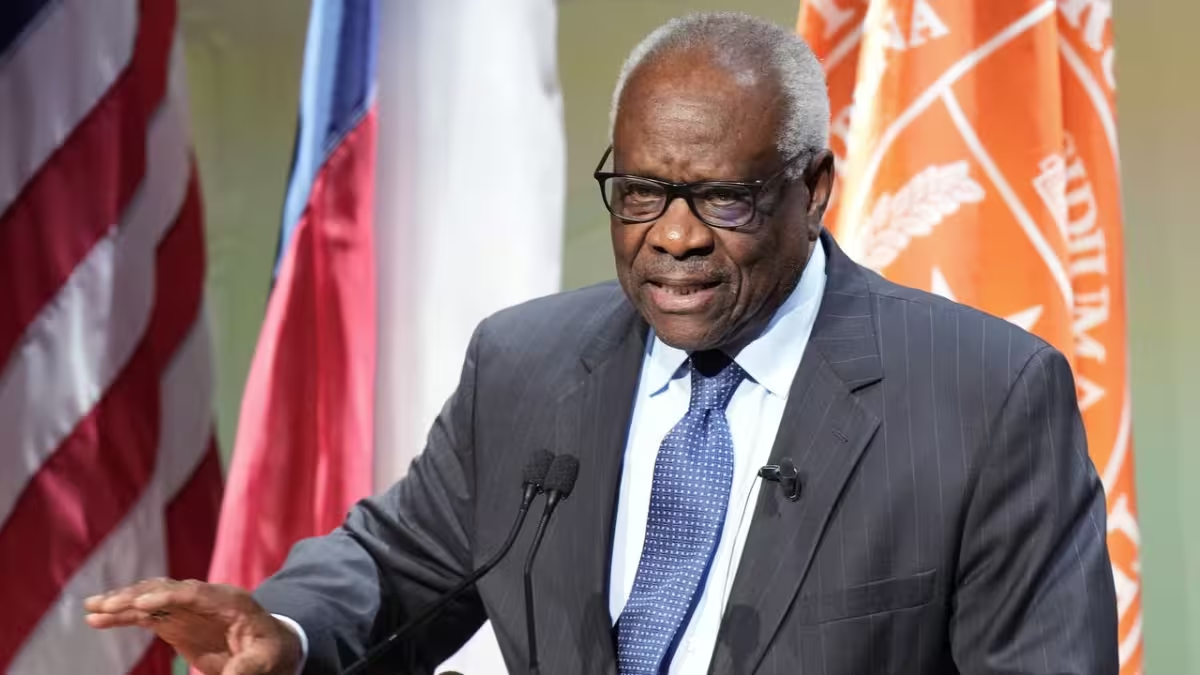
Justice Clarence Thomas on Wednesday refused to immediately block a lower court order that stopped Alabama from using its newly drawn congressional map, leaving the state’s 2026 election plans in limbo for now. Alabama officials had asked the U.S. Supreme Court for urgent relief after a federal three-judge panel ruled on Tuesday that the map could not go forward.
The move matters because primaries had already been planned around the new districts, and the state was looking to move ahead under a map that could shape the balance of power in Washington. At stake, according to one report, is one House seat that could help Republicans, making the fight about more than lines on a page.

Steve Marshall, Alabama’s attorney general, announced the challenge on Wednesday and cast the dispute as a question of voter choice rather than courtroom management. “The extent to which there is confusion about the maps which Alabama uses for congressional districts seems to be with the three-judge panel, not the voters. The fact that our State’s conservative electorate has conservative representation is democracy, not an attack on it,” he said.

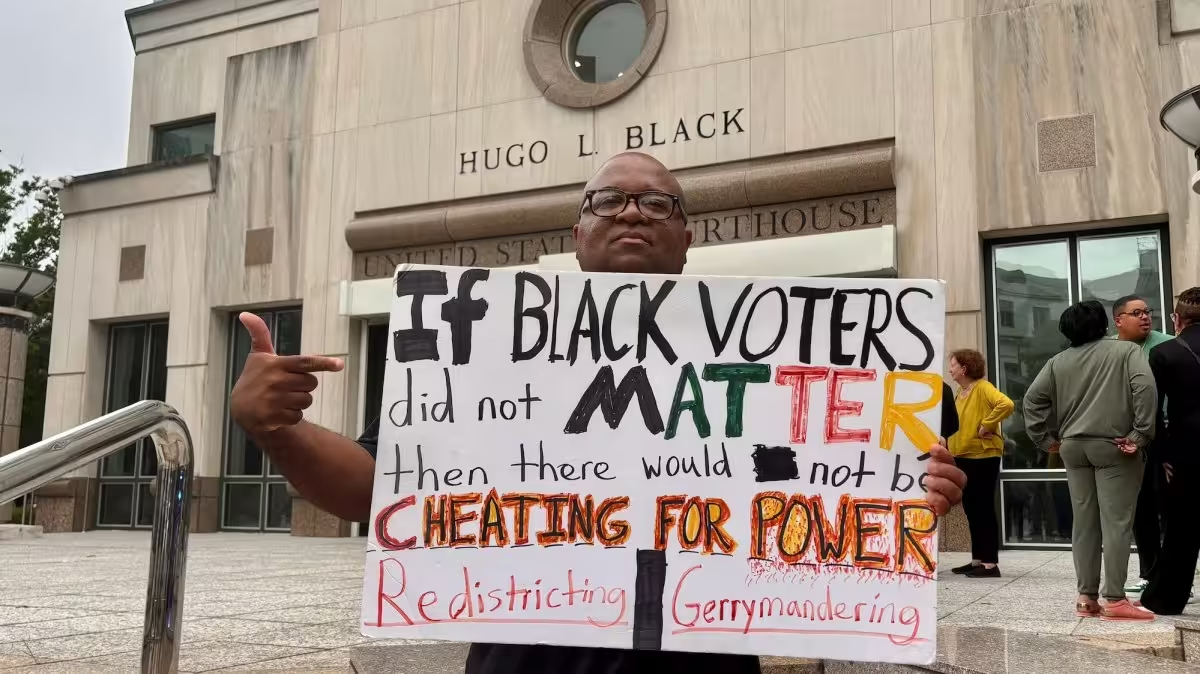
The judges saw it differently. They ordered Alabama to use the same court-ordered districts that were used in the 2024 election and wrote that they could not “see our way clear” to requiring Alabamians to vote in the 2026 elections under a districting plan tainted by intentional race-based discrimination. Lawyers for Black voters said the state’s planned map was intentionally discriminatory against them.
The clash is the latest turn in a fight that has moved from the legislature to the district court and the Supreme Court multiple times since 2021. The court issued a landmark ruling in 2023 that affirmed the ban on Alabama’s new map under the Voting Rights Act, then reopened the case after its April ruling in Louisiana v. Callais reinterpreted how Section 2 should be applied. Just a few weeks ago, the justices sent the case back to the district court.
That history explains why Wednesday’s order landed so sharply. Thomas has long been skeptical of using the Voting Rights Act in redistricting cases, and the state had already been counting on a map it said reflected its conservative electorate. The Trump administration’s solicitor general, D. John Sauer, backed Alabama’s appeal and argued that district courts should not be able to interfere with election rules at the eleventh hour, especially after what he called “only lip service” to the calendar while the case moved “deep into the election calendar.”
For now, the immediate answer is that Alabama cannot use the blocked map unless the full Supreme Court steps in. If it does not, the state will head toward the 2026 midterms under the court-ordered districts used last year, keeping the redistricting fight alive and delaying any final say on who gets to draw Alabama’s lines.



