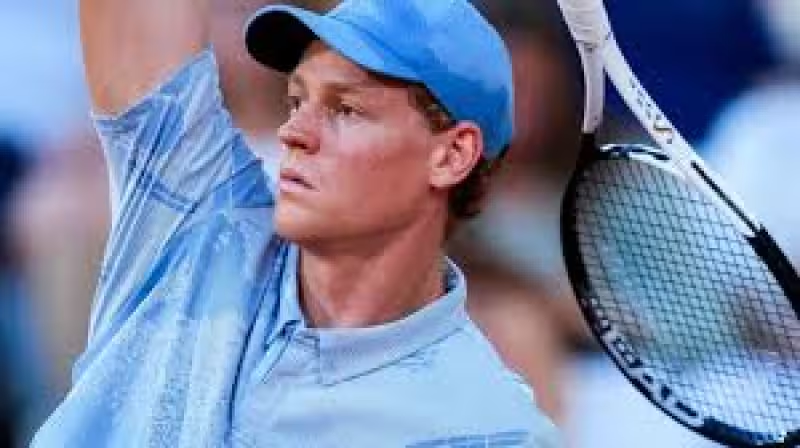
Jannik Sinner, the world No. 1, was eliminated from the French Open on Thursday when Juan Manuel Cerúndolo, the world No. 56, rallied to beat him in the second round after Sinner grew dizzy and began cramping four points from the third round.
The upset is why searches for the french open bracket spiked: the top seed’s sudden exit reorders a draw that had been counting on Sinner’s deep run and ends a 30-match winning streak that had made him the man to beat this clay-court fortnight.

Sinner had steamrollered into the match, leading 6-3, 6-2, 5-2, and appeared on the verge of a routine passage to the third round before his level fell away as dizziness set in and cramps ran up his legs. At that moment — four points short of advancing — the match flipped and Cerúndolo completed the comeback.
The numbers underline the strain: temperatures around 90 degrees at Roland Garros framed the scene, but a French Tennis Federation spokesperson said the heat was not sufficient to trigger the tournament’s heat rule, which uses Wet Bulb Globe Temperature. That rule allows 10-minute breaks between the second and third sets for women and between the third and fourth sets for men if the WBGT reaches 86 degrees, and play is suspended if outdoor air hits 90 degrees; there have been no suspensions this year.
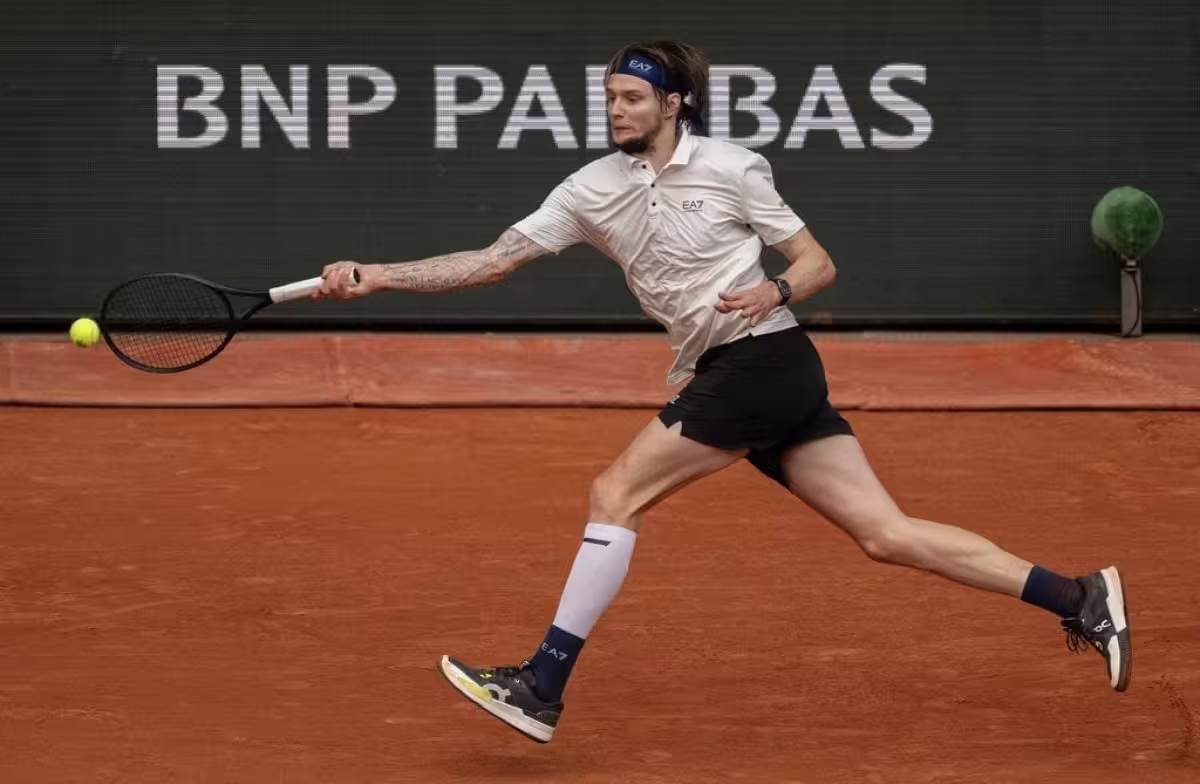
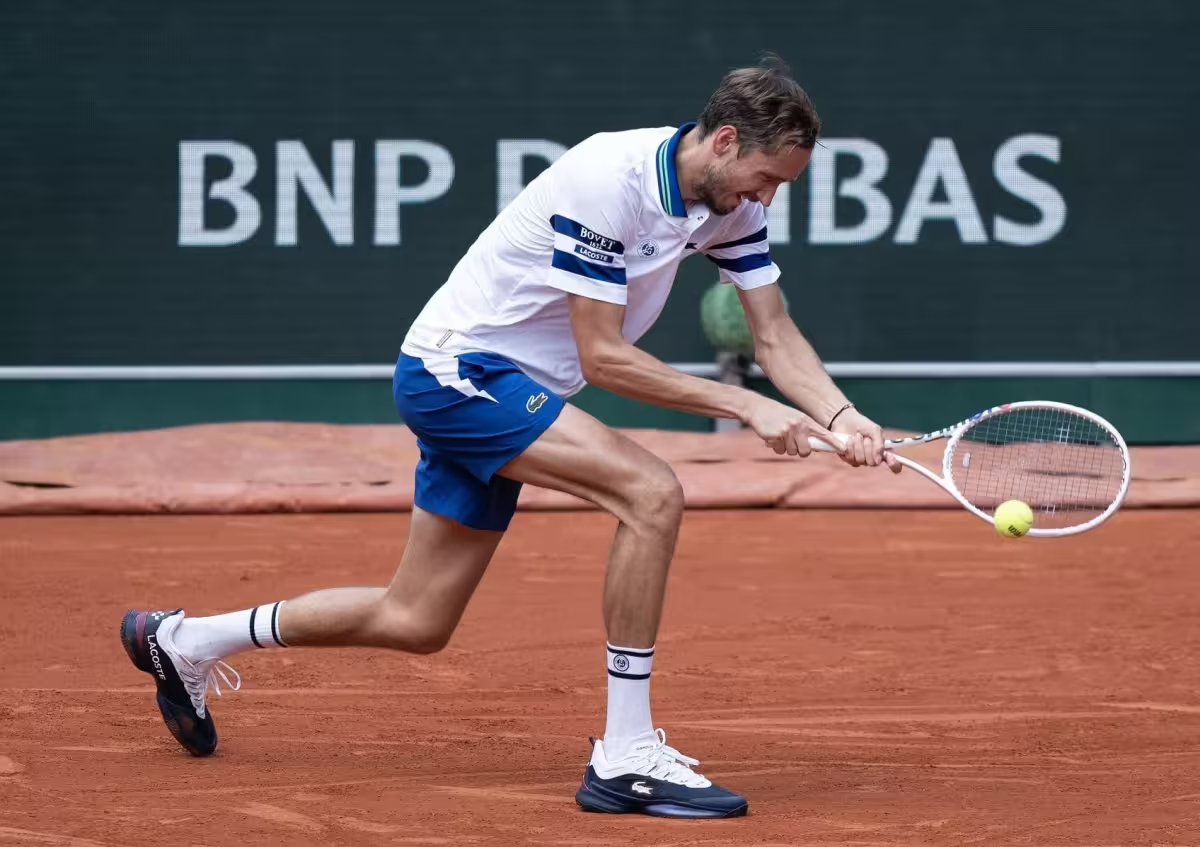
Sinner left the court and told reporters he had “woke up not feeling very well.” About an hour later, he pushed back on the idea the heat had beaten him, saying bluntly, “It was warm, but not crazy warm.” The comment framed the simplest friction in the story: conditions were hot enough to be noticed, yet Sinner refused to accept that heat alone explained a collapse that erased two sets and a double break lead.
That pushback matters because Sinner’s recent form shows he can thrive in extreme heat; he trained in hot weather before the BNP Paribas Open and in March won the Indian Wells title, beating Daniil Medvedev on a baking hot day. The contradiction — a player with proven heat training suddenly felled while leading comfortably in Paris — leaves a gap no scoreboard can fill.
Cerúndolo’s victory is the immediate consequence: the Argentine advances and the men’s draw opens without the tournament’s top seed. For Sinner, the loss ends the 30-match streak that had defined his spring and removes him as a favorite from Roland Garros.
What remains unresolved is the cause. The match did not settle whether the dizziness and cramps were driven primarily by external heat, a transient illness, nerves, conditioning limits or some combination. That unanswered question will be the decisive one for Sinner’s short-term plans and for anyone trying to read the rest of the season: organizers, rivals and fans now need clarity on whether this was a one-off medical blip or a sign of vulnerability under pressure and heat.
For now, Cerúndolo moves on in Paris and the bracket reshuffles around him; Sinner’s next steps have not been confirmed, and the most consequential detail left is simple and specific — what made him collapse when he was four points from the third round.