



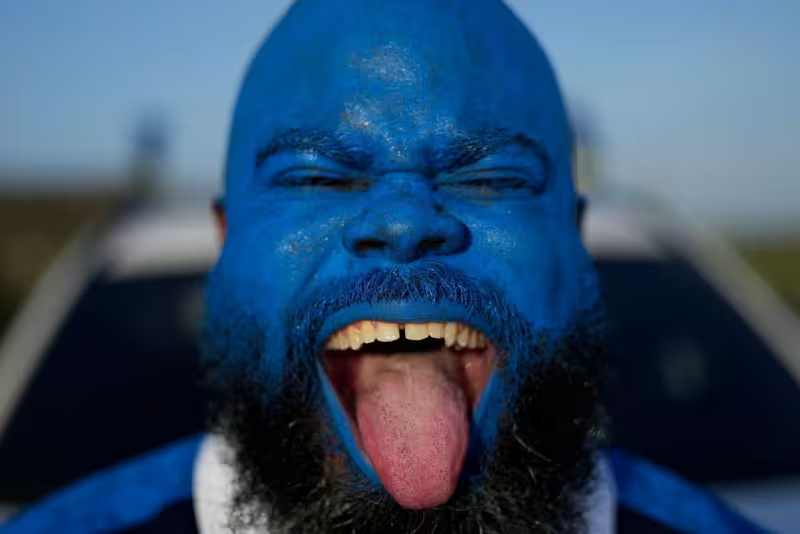
Curaçao has qualified for the World Cup.
Sherel Floranus, one of the players who lived through the final qualifying push, said plainly: "We have made history."

The accomplishment is sharp in the numbers. The Caribbean island of about 156,000 residents earned one of three available World Cup qualifying spots from a pool of 32 teams across North America, Central America and the Caribbean, advancing after a 4-0-0 run against Haiti, Saint Lucia, Aruba and Barbados and a 3-0-3 record against Jamaica, Bermuda and Trinidad and Tobago.
That combination of results turned a long shot into a real trip to the finals. Odds posted by some sportsbooks listed Curaçao at +250000 before qualification, a figure that underlines how unexpected this was for many bettors and observers.
Coach Remko Bicentini kept the mood steady and blunt after qualification, saying, "We know there is a big chance that we don’t win the World Cup, but that we (made it) there... for Curaçao, a very, very, very good moment" and adding simply: "We are proud of that."



The island’s first match will be a baptism by fire: Curaçao faces Germany on June 14 in Houston. The stadium for that match could hold about one-half of Curaçao's entire population — a scale that makes the fixture both symbolic and logistical: fans who travel will be stepping into a venue that, on paper, dwarfs the island’s own crowds.
Preparations for the tournament are under way in the Netherlands this week; the team was greeted there with welcome-home signage as staff and players trained away from the Caribbean. The move fits a constitutional reality: Curaçao became a more autonomous constituent country of the Netherlands in October 2010 and still relies on the Netherlands government for defense and foreign affairs.
The broader context that made this possible includes the expanded World Cup field. The larger tournament increased the number of qualifying opportunities and left room for smaller nations to break through; the three host nations — the U.S., Mexico and Canada — were exempt from qualifying, leaving open the remaining slots that Curaçao seized.
Tension now rides in plain view. Dick Advocaat, 78 years old, is set to become the oldest coach the tournament has ever seen; his age is an unusual headline-grabber at a competition that prizes stamina and long travel schedules. Praised for steadying players, he also embodies a question many will ask in Houston: can an unconventional staff and a tiny player pool sustain a run against the world’s best?
On the island, ordinary fans framed the night differently. Michael Stokkel said he had long watched other countries at the World Cup and now expected to back his own team rather than a foreign favorite. For players and coaches, the achievement already feels larger than sport: "We are writing our own history, for this island," Floranus said.
What happens next is clear and consequential: Curaçao travels to Houston for the June 14 opener against Germany, a match that will test whether the island’s improbable qualifying story can survive the first, very public examination on football’s biggest stage. Win or lose, the island has already altered the tournament’s story line by arriving—smallest by population and land mass among competitors—and by doing so, reshaping expectations for what comes from outside the traditional power centers.



