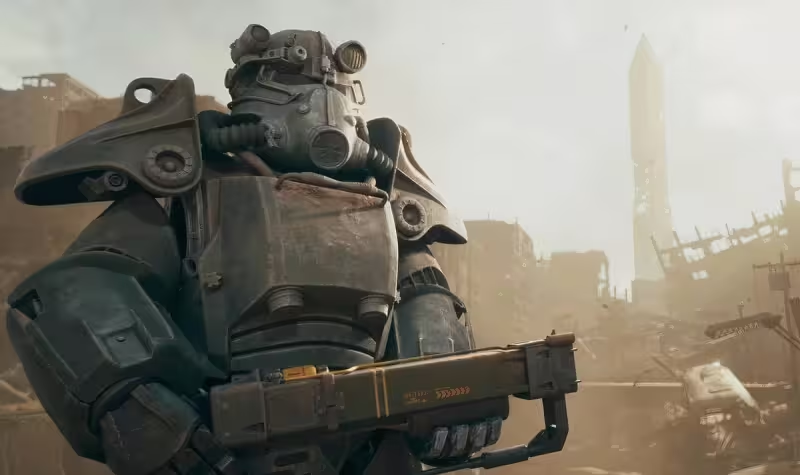
Microsoft has officially greenlit Fallout 5, a formal approval that turns long-standing talk into company record. A Reddit user posted a thread this week voicing frustration at the lack of visible movement on a new Fallout game, crystallizing a fandom impatient for a follow-up to FO4.
The reaction on the forum was not uniformly angry; it was mostly resigned and analytical. One unnamed commenter wrote, "Bethesda focuses on one main project at a time. After FO4 was Starfield, then it's Elder Scrolls 6, then Fallout. So be prepared to wait until like 2033. Regardless of my feelings on Starfield or my desire to have a new Fallout more than a new Elder Scrolls, this is perfectly logical." Another added, "Game developers are only human and a rushed project is no good. Just look at Fallout 76 and Cyperpunk." A third interjected a different tone: "Bro, you're not entitled to another Fallout game. If they decide they never want to make another one again, that's their choice. They're allowed to do that." A fourth commenter praised the studio: "Bethesda Entertainment is a brilliant developer."

The numbers and names in that thread underline why the greenlight matters but is not an immediate promise. FO4 remains the last major single-player Fallout primarily developed by Bethesda, Fallout 76 and Cyberpunk are frequently cited as cautionary examples of troubled launches, and the date one commenter tossed out—2033—has quickly become a shorthand among fans for how long patience might be required.
Context is simple and unavoidable: Bethesda is heavily focused on The Elder Scrolls VI. That priority was the central explanation offered in the Reddit thread for why Fallout 5, even with Microsoft's approval, remains a long way off. The greenlight from Microsoft puts Fallout 5 on the corporate slate, but it does not displace the company’s declared development roadmap or the finite resources and time that studios need to make a polished, large-scale RPG.
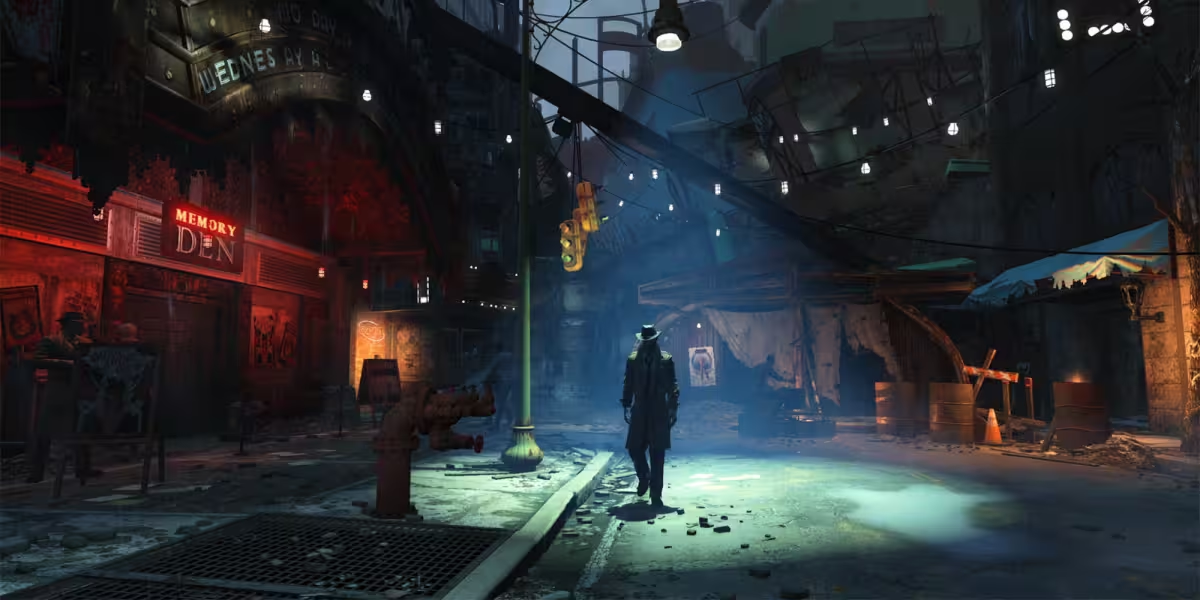

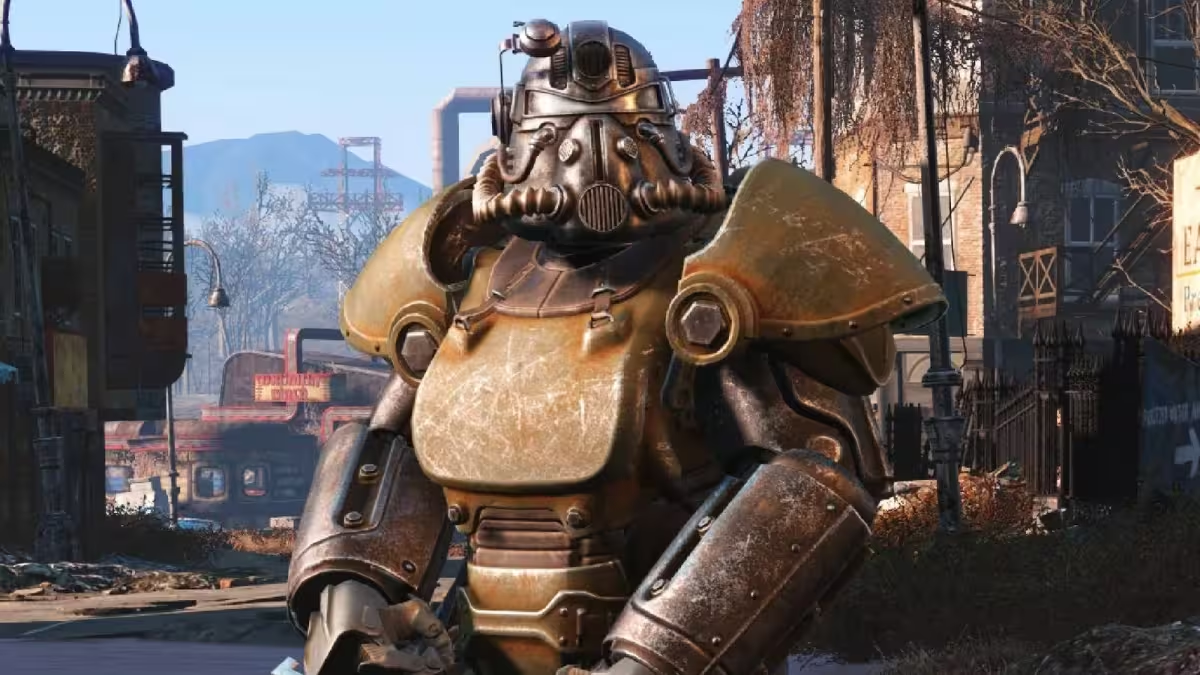
The tension is between corporate confirmation and practical timelines. A greenlight often appears on a public record well before staffing, preproduction and a full development cycle ramp up. Fans read the word "greenlit" as a guarantee of immediacy; developers and publishers treat it as an administrative milestone. That gap fuels the forum ire: one side points to the official blessing as cause for excitement, the other points to Bethesda's stated priorities and the messy history of rushed releases to urge caution.
Complicating the fan calculus is the franchise's broader presence. The Fallout universe has already migrated into other media—most notably a new series on Amazon Prime—so the brand is active even while the next core game remains in planning. That visibility softens some of the argument that nothing is happening, but it also sharpens expectations; a successful streaming adaptation only intensifies appetite for a high-profile game follow-up.
What happens next is predictable and slow: Bethesda will continue to concentrate resources on The Elder Scrolls VI, Microsoft’s greenlight gives legal and financial clearance but not a public timeline, and the community will keep debating how long is too long. Given the studio’s stated priorities and fans’ own estimates, the most realistic expectation is that Fallout 5 will not be a near-term release—the 2033 estimate offered on Reddit, while speculative, reflects the practical sequencing many players now accept.
The conclusion the facts support is stark: the greenlight is real and welcome to fans, but it does not mean Fallout 5 is coming soon. Until Bethesda shifts its primary development focus away from The Elder Scrolls VI, a major new Fallout title is likely to remain years away—an outcome that will test patience even as the franchise expands on screen.