



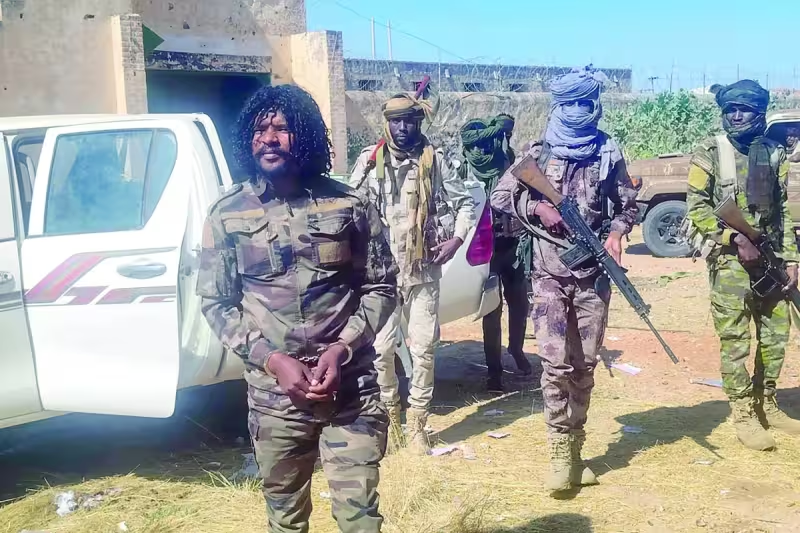
Sudan’s Rapid Support Forces on Tuesday denied reports that al‑Fateh Abdullah Idris, known as Abu Lulu, had been released, saying he was arrested late last year after videos of him executing unarmed people in al‑Fashir sparked international outrage. The RSF said the detainees "They remain in prison and have never left."
The denial came after a news agency reported it had spoken with 13 sources who said Abu Lulu had been freed or seen back with RSF fighters. Those 13 sources included three RSF commanders, an RSF officer, a relative of Abu Lulu, a Chadian military officer close to RSF command, and seven other people with contacts in RSF leadership or access to intelligence on RSF field operations. Two of those sources, including a Sudanese intelligence official and an RSF commander, told the agency they personally saw Abu Lulu on the battlefield in Kordofan in March.

The RSF issued a forceful rebuttal on Tuesday, saying it "categorically" denied the reports, calling them "baseless" and part of "campaigns of incitement." The RSF reiterated that Abu Lulu and others accused of violations against civilians in al‑Fashir were detained after their arrest in October and "They remain in prison and have never left," the statement said.
The single sharp number that gives weight to the dispute is 13: the number of sources the news agency said it reached who believed Abu Lulu had been released. That tally included active RSF commanders and regional military contacts, and it is the core reason the denial has not quieted the controversy.
The arc of events is clear on paper. The RSF imprisoned Abu Lulu in late October 2025, a few days after its takeover of al‑Fashir, after multiple videos surfaced showing him executing unarmed people during the offensive. The United Nations Security Council sanctioned Abu Lulu on February 24 for human rights abuses and noted the nickname "the butcher of al‑Fashir." The RSF‑led coalition government separately denied on Monday that it had released him.
That sequence sets up the tension now at the center of coverage: eyewitness and intelligence reports that place Abu Lulu back with RSF units in Kordofan in March conflict with RSF statements that he has been detained continuously since October. The RSF’s argument rests on custody records and public statements; the reporters’ case rests on multiple, named sources and battlefield sightings. Both sides point to different kinds of evidence and neither has produced material that definitively resolves the contradiction for outside observers.
The broader backdrop sharpens the stakes. Sudan’s army and the RSF have been locked in a civil war for three years, a conflict aid groups say has produced the world’s largest humanitarian crisis. Abu Lulu’s alleged crimes during the al‑Fashir offensive made him a focal point for international condemnation and one of the few individual figures singled out by the U.N. Security Council for sanctions.
The next concrete step for accountability, according to Ahmed Tugud Lisan, is judicial: a special court will try Abu Lulu and others accused of violations during the al‑Fashir offensive. That announcement places the question of custody into a legal frame — if the RSF’s detention claim holds, the court process will proceed on paper; if the reports of his release and battlefield activity are true, the court will face a new set of credibility and jurisdictional questions.
What happens next will test both the RSF’s public denials and the reporting that relied on a web of commanders, relatives and foreign contacts: whether the special court convenes and whether it can carry out an accountable process while Sudan’s broader war—and competing claims about who holds prisoners—continues to rage.



