
























Bridgerton Cast Shifts Into a New Center of Gravity as Season 4 Puts Benedict Front and Center

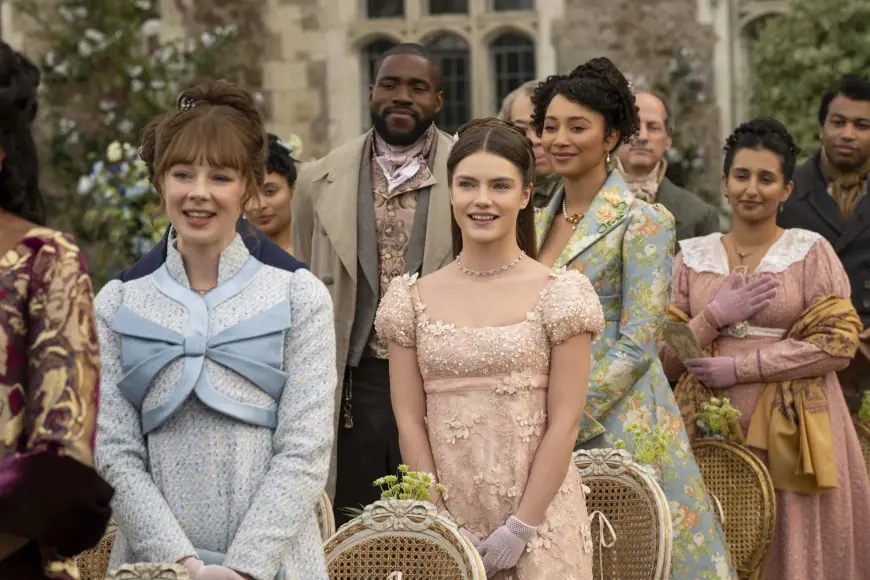
Four seasons in, the most telling thing about the latest chapter of Bridgerton isn’t the ballroom spectacle or the winking needle drops. It’s the way the cast list quietly signals a change in what the series wants to be.
Season 4—released in two parts, with the second arriving on February 26, 2026—hands the romantic spotlight to Benedict Bridgerton, played by Luke Thompson, and introduces Yerin Ha as Sophie Baek, the season’s new axis point. The pairing matters less as a plot turn than as a structural one: the show has now moved deep enough into the Bridgerton siblings that it can’t rely on novelty alone. It needs a fresh emotional engine, and it’s using Sophie to reframe the series’ familiar question—who gets to be seen, and by whom—through class as much as courtship.
The ensemble around them reflects that recalibration. Ruth Gemmell remains the show’s steady core as Violet Bridgerton, the matriarch whose private anxieties often carry more weight than the public festivities. Claudia Jessie continues as Eloise, a character who has become a kind of internal pressure valve for the narrative, refusing to let romance be the only lens through which the ton can be understood. And Julie Andrews’ voice returns as Lady Whistledown, a reminder that, even after romantic resolutions, reputation remains the currency everyone spends.
Several returning figures keep the series anchored to its earlier seasons: Jonathan Bailey as Anthony Bridgerton and Simone Ashley as Kate Bridgerton remain important precisely because they’re no longer chasing the central love story. Their job now is to show what “happily ever after” costs in practice—duty, compromise, and the slow realization that marriage doesn’t end the negotiations; it changes their terms. Nicola Coughlan also continues as Penelope Bridgerton, whose role after her own season’s arc is less about longing and more about influence. That shift—from yearning to agency—is one of the show’s more strategic moves, because it widens what a leading lady can do once she’s no longer the object of pursuit.
Season 4 also expands the cast in a way that feels designed to create friction, not just color. Katie Leung joins as Lady Araminta Gun, with Michelle Mao as Rosamund Li and Isabella Wei as Posy Li—new additions who bring a sharper edge to the season’s social architecture. The series has always thrived on its villains being plausible in their own minds; Araminta’s presence is a signal that the show is leaning into antagonists who wield etiquette and inheritance like weapons, rather than simply sneering from the sidelines. That choice raises the stakes for Sophie, whose position in the story is defined as much by vulnerability as by romance.
The broader ton remains crowded with familiar power brokers and emerging players. Adjoa Andoh’s Lady Danbury is still the character most likely to say, with a single look, what everyone else is afraid to admit. Golda Rosheuvel’s Queen continues to serve as both spectacle and sovereign, a figure who can elevate a romance—or crush it—depending on whether it amuses her. Daniel Francis appears as Lord Marcus Anderson, and the season keeps threading in the Stirling branch of the world: Hannah Dodd returns as Francesca Stirling, alongside Victor Alli as John Stirling and Masali Baduza as Michaela Stirling, adding another layer of intrigue as the show quietly lays track for future seasons.
What happens next, cast-wise, will depend on which tensions the series chooses to keep alive.
One scenario is an expanded ensemble approach, where Benedict and Sophie remain central but the show treats multiple households as co-equal engines—giving Penelope, Eloise, and Francesca larger, parallel arcs rather than supporting beats. Another is a tighter pivot toward the next sibling’s story, using Season 4’s newcomers primarily as catalysts before moving on. A third possibility is that the show doubles down on the “power players”—the Queen, Lady Danbury, Violet—turning them into the connective tissue that makes each new romance feel like a chapter of a single long political novel rather than separate love stories.
The cast list, in other words, isn’t just a roster. It’s a map of the show’s intent: to keep the romance at the center, while widening the world enough that marriage stops being the finish line and becomes, instead, the beginning of a different kind of plot.