
























Anthropic Stock Drawn Into White House–Pentagon Clash After Trump Bans Agency Use

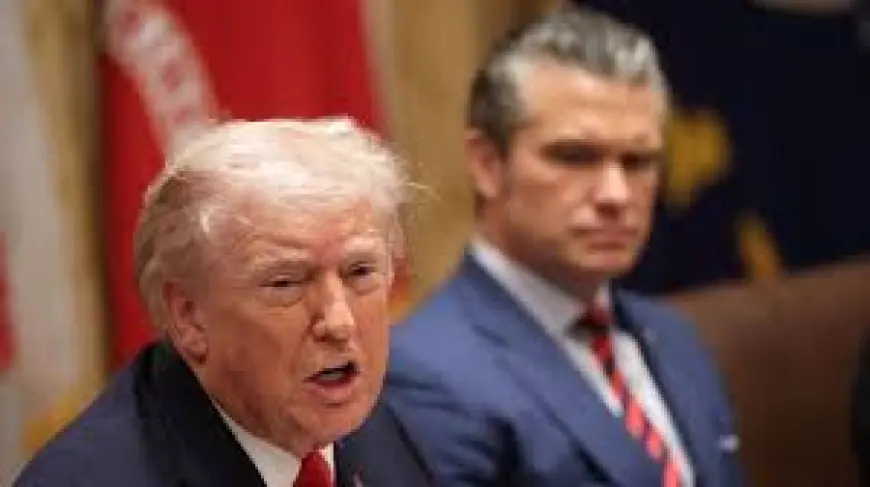
anthropic stock has entered the national debate after President Donald Trump ordered federal agencies to "IMMEDIATELY CEASE" using Anthropic technology, and OpenAI said it had struck a deal with the Pentagon to supply AI to classified US military networks. The moves set the stage for negotiations over how government agencies can use advanced AI and which safety limits companies can insist upon.
OpenAI says it will supply AI to classified Pentagon networks
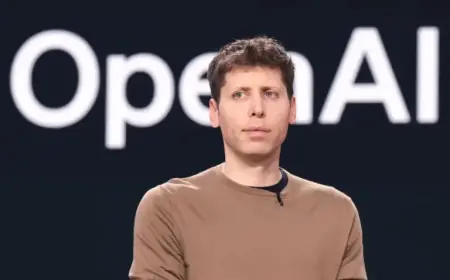
OpenAI announced the agreement on Friday night, with CEO Sam Altman saying the company had reached terms that include explicit prohibitions on domestic mass surveillance and on autonomous weapon systems that can kill without human input. Altman wrote on X that "Two of our most important safety principles are prohibitions on domestic mass surveillance and human responsibility for the use of force, including for autonomous weapon systems. " He added that the Pentagon "agrees with these principles, reflects them in law and policy, and we put them into our agreement. "
Trump orders agencies to stop using Anthropic tech
The announcement came hours after the president said he would direct all federal agencies to "IMMEDIATELY CEASE" all use of Anthropic technology. The Pentagon had demanded that Anthropic loosen ethical guidelines on its AI systems or face severe consequences. Anthropic had sought assurances that its technology would not be used for mass surveillance or for autonomous weapons systems that can kill people without human input.
Anthropic Stock and industry reaction
Industry responses were immediate. Nearly 500 OpenAI and Google employees signed an open letter declaring "we will not be divided, " and the letter warned: "The Pentagon is negotiating with Google and OpenAI to try to get them to agree to what Anthropic has refused. They're trying to divide each company with fear that the other will give in. " Observers noted that if OpenAI's deal truly forbids those applications, it would appear OpenAI secured assurances where Anthropic could not.
Altman’s public statements and internal memo
Altman used both a public X post and an internal memo to lay out OpenAI's stance. In his X post he said he hoped the Pentagon would "offer these same terms to all AI companies" to move "away from legal and governmental actions and toward reasonable agreements. " In a memo sent Friday night and obtained by a news outlet, Altman sought to reassure OpenAI staff. He wrote: "Regardless of how we got here, this is no longer just an issue between Anthropic and the [Pentagon]; this is an issue for the whole industry and it is important to clarify our stance. "
Altman added in the memo: "We have long believed that AI should not be used for mass surveillance or autonomous lethal weapons, and that humans should remain in the loop for high-stakes automated decisions. These are our main red lines. " He also said: "We are going to see if there is a deal with the [Pentagon] that allows our models to be deployed in classified environments and that fits with our principles. We would ask for the contract to cover any use except those which are unlawful or unsuited to cloud deployments, such as domestic surveillance and autonomous offensive weapons. "
Anthropic’s posture and unresolved threads
Anthropic, which presents itself as the most safety-forward of the leading AI companies, had been mired in months o (unclear in the provided context). President Trump added a personal rebuke on social media, writing: "The Leftwing nut jobs at Anthropic have made a DISASTROUS MISTAKE trying to STRONG-ARM the [Pentagon], and force them to obey their Terms of Service instead of our Constitution. "
It remains unclear in the provided context how OpenAI employees will react and how formal negotiations between the Pentagon and AI firms will proceed. Altman said OpenAI will seek a contract that forbids domestic surveillance and autonomous offensive weapons; the next confirmed step described by company leaders is to "see if there is a deal with the [Pentagon]" to allow model deployment in classified environments.