

























Is Dubai Airport Closed as Emirates Suspends Services and Regional Airspace Shuts Down

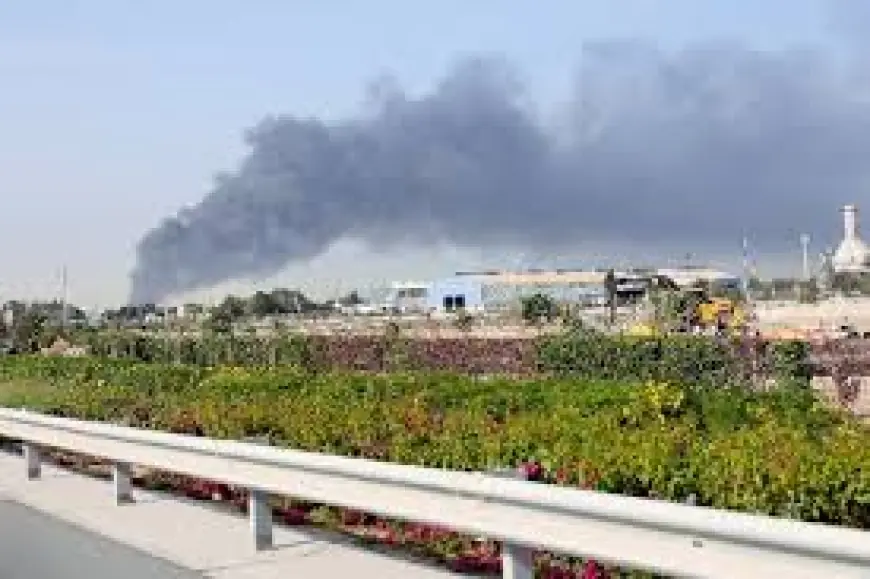
Many travellers are asking is dubai airport closed after Emirates halted all operations and countries across the Middle East closed airspace following US and Israeli strikes on Iran and Iran’s retaliatory attacks. The suspension has triggered thousands of cancelled flights, damaged infrastructure at key hubs and prompted the UK to prepare a large evacuation effort.
Is Dubai Airport Closed — Emirates operations and UAE airspace
Emirates has suspended all operations in and out of Dubai, leaving passengers worldwide stranded, and the UAE announced a temporary and partial closure of its airspace that effectively halted flights over the country. Emirates said its suspension would last until 15: 00 local time on Monday (13: 00 GMT). Flightradar24 recorded that there were no flights over the United Arab Emirates while the closure is in effect.
Emirates, Etihad and Qatar Airways suspend flights
All three major carriers that use the Gulf hubs—Emirates, Qatar Airways and Etihad—have suspended flights. Etihad has paused departures out of Abu Dhabi until 02: 00 local time. Cirium data cited in the disruption notes that the three airlines typically move about 90, 000 passengers a day through those hubs; with the suspensions in place, a large volume of transit traffic has been affected.
Flight cancellations, airport damage and passenger impact
More than 3, 400 flights were cancelled across seven principal Middle East airports on Sunday alone, and major international carriers have cancelled or rerouted long‑haul services. British Airways cancelled services to Tel Aviv and Bahrain until Wednesday and warned services between Heathrow and Abu Dhabi, Amman, Bahrain, Doha, Dubai or Tel Aviv could be affected for several days. Virgin Atlantic suspended services between London and Riyadh and Dubai and cautioned that flights to India, Saudi Arabia and the Maldives may take longer as they are rerouted around closed airspace.
Airports and nearby infrastructure sustained damage during Iran’s retaliatory strikes. Dubai International and the Burj Al Arab hotel were damaged and four people were reported injured at those Dubai sites. An Abu Dhabi Airports post indicated an incident at Zayed International resulted in one death and seven injuries before the post was deleted. Separately, officials have said one person has been killed and 11 others injured at airports in Dubai and Abu Dhabi since the strikes began; four of the injured were staff at Dubai International.
UK Foreign Office guidance and evacuation planning for more than 76, 000 British nationals
The UK Foreign Office has advised against all but essential travel to Bahrain, Kuwait, Qatar and the UAE and against all travel to Iran, Israel and Palestine. Additional advice warns against travel to parts of Pakistan, asks British nationals in Saudi Arabia to stay at home and urges people in Jordan, Oman, Syria, Lebanon, Yemen and Iraq to take precautions. More than 76, 000 British citizens have registered their presence in the affected areas of the Middle East, and UK government officials are formulating plans to potentially evacuate nationals. More than two‑thirds of those Britons are believed to be in the UAE, and most are holidaymakers or other travellers rather than residents.
Officials have described evacuation planning as an enormous logistical task and said timings are unclear because much of the region’s airspace remains closed. Guidance for people already in the region is to follow local instructions, especially where those instructions advise sheltering in place.
Regional airspace closures and timeline
Countries that shut airspace include Israel, Qatar, Syria, Iran, Iraq, Kuwait and Bahrain, producing widespread diversions and stranding passengers. A notice to airmen extended the closure of Iranian airspace until at least 08: 30 UK time on Tuesday. The US‑Israeli strikes on Iran began early on Saturday; Iran’s subsequent attacks on Gulf states have been cited as the cause of the broader disruption. The timing matters because ongoing airspace restrictions and continuing strikes have forced carriers worldwide to reroute long‑haul flights and cancel services while security and air‑traffic authorities assess safe windows for resumption.
Individual travellers stranded and immediate choices
Passengers caught up in the closures describe abrupt changes to plans. Richard and Hannah from London, who had been en route to Oman, were stuck in Bahrain after a drone attack on the airport left them unable to reach their destination; Hannah said the past 24 hours had been uneasy and the couple are now seeking to return home. Airlines and airports are working through cancellations and diversions while advising passengers to check flight status directly with carriers for the latest information.
What makes this notable is the concentration of transit traffic through a small number of Gulf hubs: with airports that link Europe, Africa and the West to Asia closed or damaged, disruptions cascade across global schedules and force governments to consider large‑scale evacuations and alternative routing for long‑haul services.