























Austin Texas shooting leaves three dead and 14 injured after gunfire erupts on West Sixth Street

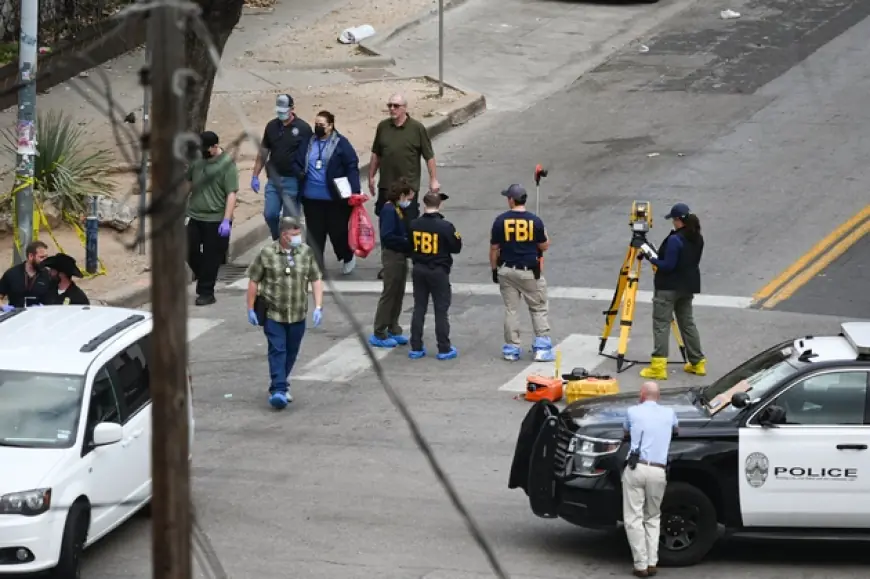
A shooting in Austin’s busy West Sixth Street nightlife district early Sunday, March 1, 2026, left three people dead—including the suspected gunman—and sent 14 others to hospitals, police said. The gunfire began just before 3 a.m. ET outside a popular bar as crowds moved through the area, and officers already stationed nearby confronted the shooter within minutes. Three of the injured were reported in critical condition as the investigation widened quickly from a local crime scene to a federal probe into whether the attacker had any link to terrorism.
What’s confirmed so far is the basic sequence: a male suspect opened fire from a vehicle and then continued shooting on foot before being killed in an exchange of gunfire with police. What remains unconfirmed is motive—why this location, why this moment, and whether any ideology or external trigger played a role.
What happened outside Buford’s in downtown Austin
Police said the attack unfolded in the heart of West Sixth Street, a dense strip of bars and late-night foot traffic where law enforcement presence is typically heavier on weekends. The first calls came in just before 2 a.m. local time (just before 3 a.m. ET). Witnesses described sudden bursts of gunfire and rapid panic as people tried to flee the area, some ducking behind cars and doorways.
Investigators believe the shooter initially fired from an SUV before exiting and continuing on foot. That detail matters because it shapes how police reconstruct intent: firing from a vehicle can resemble a drive-by tactic, while getting out and continuing suggests persistence and a willingness to stay exposed even as officers closed in.
Within a short window, officers encountered the suspect and an exchange of gunfire ended with the suspect dead at the scene. Two other people were pronounced dead, and paramedics treated multiple victims on the street before transporting 14 to hospitals.
The FBI’s “potential nexus” focus, and what it does—and doesn’t—mean
Federal agents joined the case within hours, and investigators said they were examining “indicators” connected to the suspect and inside the suspect’s vehicle that raised questions about a possible terrorism connection. Importantly, that framing is not the same as a confirmed motive. It signals that investigators saw something—items, markings, statements, digital traces, or other evidence—that warranted a Joint Terrorism Task Force-style response.
In practice, a terrorism angle changes three things immediately.
First, it expands the evidence net. Federal investigators can move quickly to track communications, travel history, finances, and associates across state lines.
Second, it hardens the public-information posture. Names and certain specifics can be held back longer to avoid compromising leads, protect witnesses, and prevent copycat behavior.
Third, it raises the stakes for political and public reaction. When a mass shooting is even potentially ideological, officials worry not only about the immediate crime, but about the risk of additional incidents, retaliatory threats, or misinformation that inflames community tensions.
Authorities emphasized it was too early to draw conclusions. That caution is deliberate: early labels have a way of becoming permanent, even when later evidence tells a different story.
Why West Sixth Street policing became a life-or-death variable
Austin’s entertainment districts are often policed with an eye toward fights, intoxication, and crowd control—not a sustained firearms attack. But the reality of modern mass-violence incidents is that proximity can determine the casualty count. In this case, police credited the rapid confrontation with preventing more deaths.
That isn’t a victory so much as a grim metric: minutes matter. A delay of even five to ten minutes can mean more victims, more chaos, and a longer window for the shooter to move through dense crowds. The fact that officers were already in the area—because weekend crowds are predictable—likely shortened that window.
It also sets up the questions city leaders will face next: whether current nightlife security measures are sufficient, whether bars should adopt stricter entry screening or perimeter controls, and how to do any of that without turning a cultural district into something that feels like a checkpoint.
What comes next: five scenarios investigators and the city are watching
The next phase will be driven by a handful of triggers—each pointing toward a different outcome.
One scenario is a straightforward criminal profile: a lone shooter with a personal grievance, mental-health crisis, or history of violence that culminated in a high-casualty attack. The trigger here would be evidence of planning that’s personal rather than ideological—messages, disputes, or a target rationale tied to the location or individuals.
A second scenario is ideological motivation. The trigger would be verified statements, writings, communications, or affiliations that show the attack was intended as political or religious violence rather than generalized rage.
A third scenario is an attempted attack on a symbolic public space rather than a specific person. West Sixth Street, packed at closing time, offers maximum exposure and maximum media impact. The trigger would be evidence that the attacker chose the spot for crowd density and visibility.
A fourth scenario is that the “indicators” prompting federal involvement turn out to be non-operational—provocative symbols, online consumption, or ambiguous material that looks meaningful at first glance but doesn’t translate into a directed plot. The trigger would be investigators publicly narrowing the case back to a local criminal investigation once initial leads are exhausted.
A fifth scenario is operational concern about additional threats. The trigger would be any credible evidence of coordination, accomplices, or pre-attack reconnaissance involving others—something authorities have not confirmed at this stage.
The White House said President Donald Trump had been briefed on the incident as the casualty count and investigative posture became clearer Sunday.
For Austin, the immediate focus is the victims—triage, surgeries, family notifications, and a city trying to absorb another mass-casualty shock. The bigger question—what this shooting was meant to accomplish—will take longer. And the answer will determine whether West Sixth Street is treated as the site of a horrific, isolated attack, or the front edge of a broader security recalibration for public nightlife across the country.