
























Bones Hyland’s fit with Ayo Dosunmu is changing the Wolves’ bench — Finch faces a rotation test

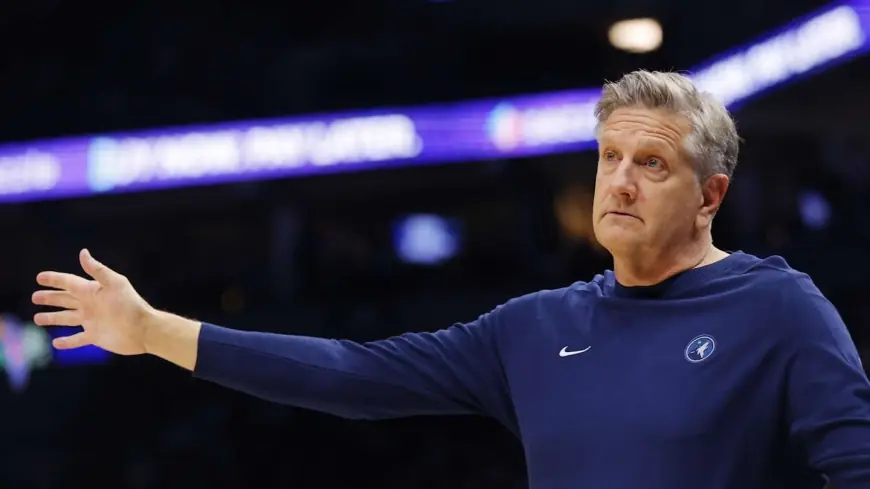
The immediate victims of the current Wolves rotation are the second-unit rhythms and Ayo Dosunmu’s full offensive scope. bones hyland has shared a heavy chunk of Dosunmu’s minutes, and that pairing’s on-court profile is producing sharply different outcomes than lineups where Dosunmu plays without him. That split matters now because the bench was a known weakness before the deadline and the coach must balance depth gains against lineup effectiveness down the stretch.
Bones Hyland and Ayo Dosunmu: who feels the impact and how
The most tangible effect is on Dosunmu’s role. He’s spent a large share of minutes alongside Bones Hyland, and those minutes have a notably poor net rating, while possessions with Dosunmu and not Hyland look better statistically. When Hyland assumes lead ball-handling duties, Dosunmu often shifts into a spot-up role rather than operating downhill as a finisher. That usage tradeoff constrains the player whose defensive versatility and downhill finishing are distinct from Hyland’s profile.
Here’s the part that matters: coaches and rotation-builders are choosing between two concrete gains — bench depth and complementary skill sets — and those choices already show divergent results on the court. What’s easy to miss is that a successful bench infusion can still produce negative lineup-level outcomes if minutes and roles are not staggered carefully.
- Ayo spent a substantial portion of his minutes with Bones Hyland; those shared lineups have a sharply negative net rating.
- In a meaningful sample of possessions without Hyland, Dosunmu’s lineups register a positive net rating.
- Dosunmu’s three-point accuracy this season is strong, which makes a spot-up role tolerable but not necessarily optimal given his downhill finishing strengths.
- Both players bring rim pressure and pace, but overlapping strengths can conflict when one player becomes the primary ball-handler.
- Staggering minutes would preserve bench scoring and pace while letting Dosunmu play the roles where he shows better net outcomes.
Trade context, rotation choices and what Finch can change
The roster move that brought Dosunmu into the fold was explicitly intended to deepen the bench; early assessments of the Dosunmu–Hyland second unit highlight added scoring and pace. At the same time, usage patterns have yielded contrasting team outcomes: significant minute-sharing correlates with a negative net rating for those specific lineups, while Dosunmu’s minutes without Hyland produce better on-court results.
Coaching adjustments under consideration include reducing the overlap between the two guards, letting Hyland handle primary ball duties in some subunits while deploying Dosunmu in lineups tailored for his downhill finishing and defense. The argument for staggering minutes rests on preserving the bench’s improved scoring while preventing role compression that forces Dosunmu into less effective spot-up-only minutes.
The decision is also a front-office signal: the trade that exchanged a prospect for an experienced guard was explicitly aimed at urgency — addressing a thin bench immediately rather than waiting for a developmental timeline. That creates pressure on coaching to blend the new pieces without sacrificing lineup efficiency.
The real question now is whether Finch will accept short-term disruption in rotation patterns to chase better matchup-driven minutes or continue leaning on the newly formed bench duo as a packaged option. Any adjustment that staggers them more will change both who plays together and which skills get prioritized in second-unit possessions.
It’s easy to overlook, but the bench upgrade succeeds only if role definitions follow; otherwise, depth becomes overlap and pace becomes clutter.