
























Jim Carrey now: Paris honor sparks 2026 “new face” rumors, plastic surgery talk, and clone claims

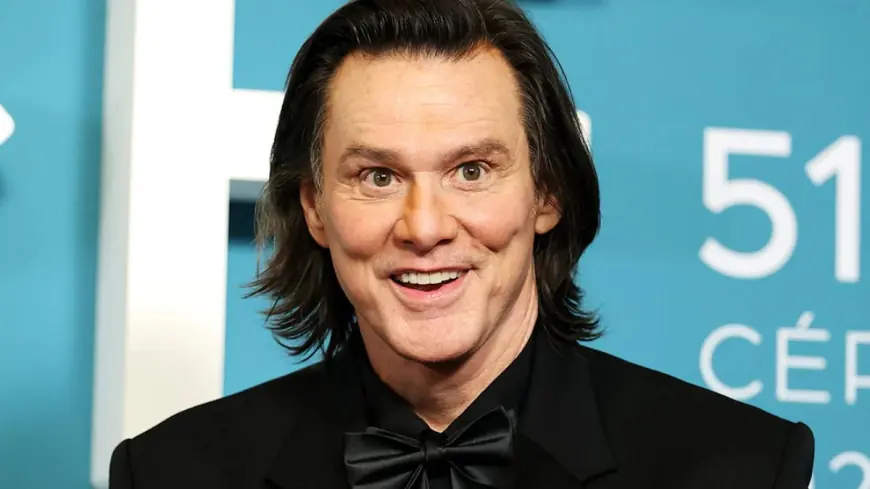
Jim Carrey is alive, in public, and newly back in the spotlight after a rare, high-profile appearance in Paris in late February 2026. He accepted a major career honor at France’s César Awards on February 26, 2026 (ET), delivered remarks in French, and publicly acknowledged his partner, Min Ah. Within hours, clips and still photos began ricocheting across social media—less about what he said than how he looked—kicking off a familiar cycle: “Jim Carrey new face” posts, “what happened to Jim Carrey” searches, and a wave of unverified claims ranging from cosmetic work to the outright “Jim Carrey clone” conspiracy.
What’s confirmed is limited but solid: Carrey attended the ceremony, gave a speech, and has been seen in public in Paris since. Everything else—the cause of any perceived facial changes, the eye-color chatter, and the more outlandish identity theories—sits in the realm of inference, lighting, styling, and internet pile-on dynamics rather than verified fact.
Jim Carrey 2026 and Min Ah: a rare personal detail goes public
For someone who has periodically talked about stepping back from Hollywood’s grind, Carrey’s choice to accept an international lifetime-style honor was itself a statement: he’s not invisible, he’s not “gone,” and he’s still willing to show up for moments that frame his legacy. The emotional core of the night wasn’t a movie announcement or comeback tease. It was that he thanked family members and also singled out Min Ah as his “sublime companion,” a line that effectively confirmed the relationship in a public setting.
That matters because it reshapes the “Jim Carrey now” narrative. For years, his public persona has been a tug-of-war between the elastic comedian audiences remember and the more withdrawn, introspective figure who occasionally reappears to promote a project or offer a philosophical aside. A public partner acknowledgment doesn’t solve the internet’s curiosity, but it does answer one big question: he is living his life, selectively, on his own terms—and he’s willing to let that be seen when the context feels right.
The incentive structure here is also worth noting. Award-week appearances are built for images, not nuance. A single freeze-frame can outrun a five-minute speech. And once the algorithm detects a “before/after” hook, it tends to reward the most extreme interpretation—because shock travels faster than plausibility.
“Jim Carrey new face” and Jim Carrey plastic surgery rumors: what’s actually known
The “Jim Carrey plastic surgery” chatter appears to be driven by side-by-side comparisons: older red-carpet shots versus current Paris images that show different hair, different facial hair, different angles, and a different level of camera harshness. That’s a perfect recipe for mistaken certainty. A longer hairstyle changes perceived head shape. A fuller beard changes the jawline. High-contrast lighting exaggerates under-eye texture. Certain lenses subtly distort faces, especially in candid street shots taken from below. Even hydration, travel fatigue, and swelling from routine health factors can change a face for a day.
Could Carrey have had cosmetic work? It’s possible—many public figures do—but there is no verified statement from him confirming procedures, and no definitive evidence from a single event photo that can separate ordinary aging and styling from medical intervention. What viewers are reacting to is the mismatch between a memory of a hyper-expressive comic star and the reality of a man in his mid-60s whose face has naturally changed. The internet doesn’t process that gently.
There’s also a second layer: the “new face” obsession often becomes a proxy conversation about control. Fans feel they “own” a version of a celebrity frozen in time. When the celebrity diverges—by aging, gaining weight, changing hair, changing demeanor—the audience experiences it like a betrayal, and cosmetic-surgery speculation becomes the story people tell themselves to explain the discomfort.
Is Jim Carrey still alive, and what happened to Jim Carrey?
Yes—Jim Carrey is still alive. The Paris appearance is not an archival clip resurfacing; it’s a current, verifiable public event from late February 2026, followed by additional sightings and discussion tied to the same trip.
So what happened to him? The simplest answer is: nothing mysterious. He has been less publicly visible than during his peak years, has talked at times about stepping back from acting, and has chosen selective projects and selective appearances. That kind of ebb-and-flow is common for major stars who reached saturation decades earlier. They don’t vanish; they recalibrate. When they reappear, the contrast feels dramatic because the public’s last “baseline” image may be from years ago.
The “what happened” framing also feeds on a modern expectation that celebrities must continuously broadcast. When someone opts out, the vacuum gets filled—first with curiosity, then with rumor, then with conspiracy.
Jim Carey, Jim Carey, Jim Carry: the search storm, left-handed claims, and the “Jim Carrey clone” theory
Spelling variants—jim carey, jim carry—often surge during viral moments because people type what they hear, not what they’ve verified. The same wave is now pulling in odd micro-questions, including “is Jim Carrey left handed.”
On handedness: there isn’t a universally accepted, authoritative public record that settles it cleanly. Much of the online “proof” comes from short clips of signing or gesturing, which is weak evidence because some people sign autographs with a non-dominant hand out of habit, injury, convenience, or simple inconsistency. The most responsible conclusion is modest: there’s no reliable basis to treat his handedness as a meaningful “tell” about identity, and it certainly isn’t evidence for anything more dramatic.
Which brings us to “Jim Carrey clone.” The clone claim is not credible. It’s a conspiracy pattern that reliably appears whenever a public figure looks different: pick a few superficial discrepancies (hand used in a clip, lighting-driven eye-color confusion, a momentary facial expression), then leap to a totalizing explanation (“replaced”). The human brain loves a single-story solution—especially one that turns ordinary aging into a thriller.
If you want a grounded way to evaluate the next claims that pop up, use three filters:
-
Is the claim based on one image or a short clip? If yes, assume distortion is likely.
-
Does the claim require a secret operation involving many people, yet no hard evidence leaks? If yes, it’s almost certainly narrative, not reality.
-
Is there a simpler explanation—angle, styling, age, fatigue, camera processing—that fits the facts? There usually is.
What to watch next is not a “reveal,” but a timeline. If Carrey remains publicly active—another appearance, a new project confirmation, a longer interview—the rumor cycle will cool because continuity kills conspiracy. If he disappears again, the internet will keep inventing reasons. That says more about the audience than about Jim Carrey.