






















Dow Futures Plunge Sunday Night as War in Middle East Rattles Wall Street

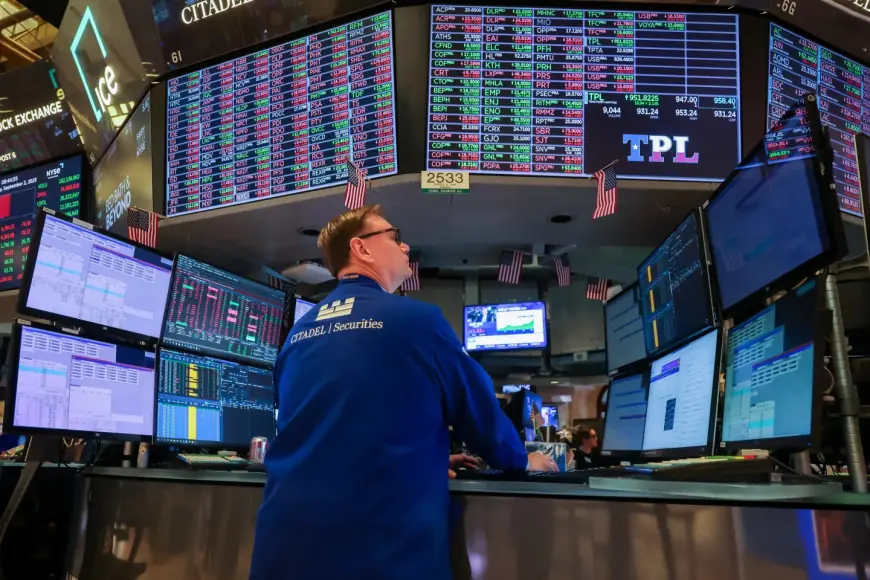
Dow Futures are set to open sharply lower at 6:00 p.m. ET on Sunday, March 1, 2026, as investors brace for what could be the most turbulent market open since the COVID-19 pandemic. The catalyst is a weekend of open military conflict — U.S. and Israeli strikes on Iran, retaliatory Iranian missile attacks across the Gulf, and the temporary closure of the Strait of Hormuz — all colliding with a Dow Jones that was already under heavy pressure heading into the week.
Dow Futures Tonight: War Shock Sends Markets Into Crisis Mode
Dow Jones futures, S&P 500 futures, and Nasdaq futures are all set to open sharply lower at 6:00 p.m. ET tonight after a weekend of war — U.S. and Israeli strikes on Iran, Iranian missile attacks on Dubai, Bahrain, Qatar, Saudi Arabia, and Abu Dhabi, and the Strait of Hormuz's temporary closure.
The timing could not be worse for Dow futures. The Dow Jones Industrial Average dropped 1.3%, the S&P 500 dropped 0.4%, and the Nasdaq dropped nearly 1% last week as investors were driven by geopolitical risk and inflation concerns — before the strikes even began.
Wall Street now faces a compounding crisis: a hot inflation environment, ongoing AI disruption fears, tariff uncertainty, and a full-blown military conflict in one of the world's most critical energy corridors, all arriving simultaneously at Monday's opening bell.
Dow Futures and Oil: Strait of Hormuz Closure Sends Energy Prices Surging
The Strait of Hormuz closure is the single biggest commodity shock embedded in Sunday night's Dow futures collapse. The strait handles roughly 20% of global oil flow daily, and any prolonged disruption sends energy prices — and inflation expectations — spiraling in a direction the Federal Reserve cannot ignore.
Gold, which has had a record run and is already up 22% so far in 2026, is trading around $5,300 per ounce with analysts expecting further safe-haven buying if the conflict continues. Silver is trading above $93 per ounce and could test $95, with a clear breakout potentially pushing it toward $100.
Bitcoin has been the outlier, no longer seen as a safe haven. It fell 2% on Saturday and has shed more than a quarter of its value in two months. The flight to quality is going directly into gold and Treasuries — not crypto.
Dow Futures Technical Levels: Where Support Could Hold or Break
Even before the geopolitical shock, Dow futures technical signals were flashing caution. RSI sits near 45.7, ADX near 11.5 shows no clear trend, and CCI around -127 flags near-term oversold conditions. ATR near 606 points to wide swings ahead. On Bollinger Bands, the middle sits around 49,481, upper 50,300, and lower 48,662.
Dow Jones futures ranged from 48,699 to 49,396 on Sunday, with the current price around 49,000 before the war-driven sell-off deepened in evening trading. The 50-day moving average near 49,083 is now the critical line in the sand — a sustained break below that level could accelerate selling pressure into Monday's cash session open.
What Dow Futures Traders Are Watching Monday Morning
The SEC is already being flagged as a potential factor in Monday's trading environment. Onchain analytics firm Bubblemaps identified six wallets that collectively netted $1.2 million in profit by betting on a U.S. strike on Iran by February 28 — the exact day the strikes occurred. The largest single wallet turned roughly $61,000 into over $493,000 in profit, and the SEC is expected to investigate when U.S. markets open Monday morning.
Beyond regulatory headlines, Dow futures traders are watching oil price prints, any Strait of Hormuz reopening signals, Federal Reserve commentary on inflation risk, and whether Middle Eastern equity markets — which traded Sunday — signal a broader regional panic or a measured repricing. Ryan Lemand, CEO of Neovision Wealth Management, put it plainly: "I suspect markets will be down if these hostilities continue through the day." Monday's open at 9:30 a.m. ET will answer that question in real time.