
























Naturalized Citizen Ceremonies Spotlight Immigrant Journeys in Pittsburgh, Dayton and Knoxville

Naturalized citizen ceremonies in multiple cities this month highlighted personal stories and family milestones as new Americans took the Oath of Allegiance. Events in Pittsburgh and Dayton, and a larger swearing-in in Knoxville, underscored both the intimate meaning of citizenship for individuals and the broader context of a volatile immigration climate.
Naturalized Citizen ceremonies: Pittsburgh, Dayton and Knoxville
In Pittsburgh, 28 immigrants representing 18 nations across Latin America, Asia, Europe and the Middle East were sworn in at the federal courthouse in Downtown Pittsburgh. Chief U. S. Bankruptcy Judge Gregory Taddonio welcomed the group beneath a large mural depicting the Mon Valley steel works, a historic symbol of immigrant labor.
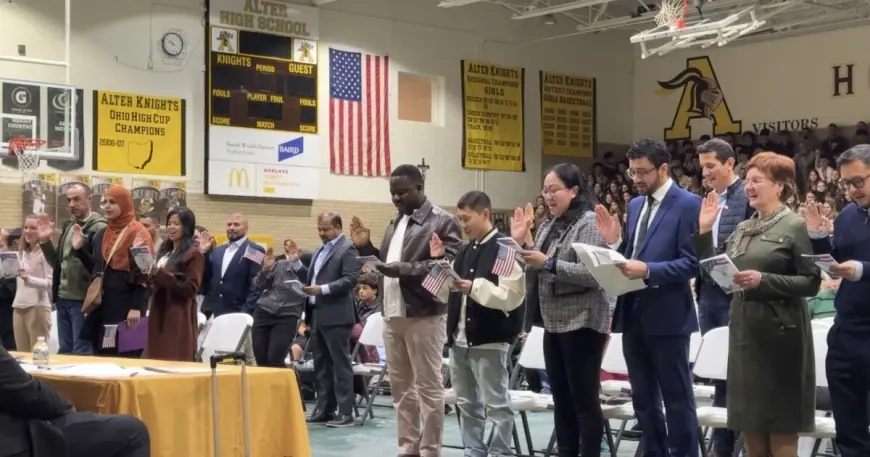
In the Dayton region, the U. S. District Court held a ceremony at the gym of Archbishop Alter High School in Kettering. Hundreds of students packed the bleachers while a group of 27 people from 21 countries became citizens in that event. The court has held ceremonies in community spaces like this school for years, and this marked the third consecutive year the event took place at that location.
A separate event in Knoxville naturalized 150 people, reflecting a larger swearing-in in that city.
- Pittsburgh: 28 new citizens from 18 nations, ceremony at the federal courthouse.
- Dayton (Kettering): 27 new citizens from 21 countries, ceremony at a high school gym with a large student audience.
- Knoxville: 150 people naturalized in a larger ceremony.
Personal journeys and family moments
The Pittsburgh ceremony featured multiple personal stories that traced long paths to citizenship. One attendee left Colombia at 18 on a student visa to attend college in Texas, later earned an advanced degree, and worked for an employer that sponsored a work visa and then a green card. She relocated for work, married in 2023, attended the ceremony with her husband, in-laws and their young daughter, and said the moment felt amazing and almost surreal. She planned to obtain an American passport immediately to ease travel and re-entry to the United States.
At the Dayton ceremony, newly sworn citizens carried small American flags and held new citizen packets. One new citizen from the Philippines described moving to the United States after time abroad to marry a U. S. citizen, then living and working in Dayton while holding a green card. She said she applied for naturalization to gain the right to vote and to travel more freely; her process took about six months, though others face much longer waits. The atmosphere combined relief and celebration with palpable anxiety about the future for some attendees.
Ceremonies amid a shifting immigration landscape
These swearing-in events took place against a backdrop described as a volatile period for immigrants. Changes to the citizenship process and heightened immigration enforcement have been part of that context: Homeland Security introduced a citizenship test with more questions and a higher correct-answer threshold; Immigration and Customs Enforcement has occasionally made arrests in federal or immigration courtrooms; and the number of countries whose nationals are barred from immigrant visas has increased to more than 90. Details of these policy shifts remain evolving.
Despite these pressures, federal courts and community partners have continued to host naturalization ceremonies in formal and community settings. The decision to hold events in schools and courthouses reflects an effort to make the process visible to local communities and to mark naturalization as both a civic milestone and a public occasion.
As new citizens leave the courtroom or gymnasium with certificates, passports and family photos, the ceremonies underscore a consistent thread: for those who complete the process, naturalization is a powerful, personal transition. The events in Pittsburgh, Dayton and Knoxville turned individual histories of migration, education, work sponsorship and family ties into a collective moment of citizenship, even as the broader policy environment continues to shift. Details may evolve as policy and practice develop further.