

























Dubai Airport Disruption and Hotel Fires Jolt Gulf Travel as Iran Retaliation Fears Spread

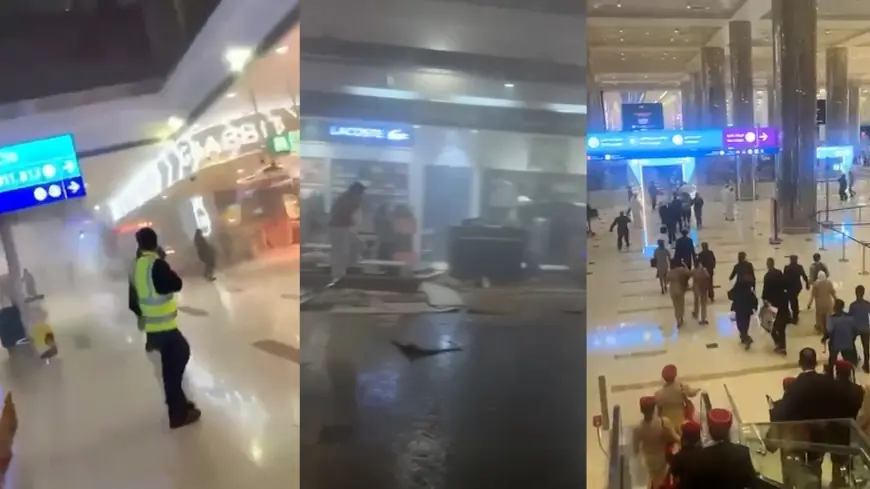
Dubai’s status as the Gulf’s most reliable transit hub was shaken late Saturday evening ET after an aerial incident near Dubai International Airport sent debris into airport grounds, triggered emergency responses, and forced parts of the operation into disruption. UAE authorities described the damage as limited and said injuries were reported. Even so, the immediate effect was unmistakable: flight schedules buckled, passengers were stranded mid-journey, and airlines began rerouting traffic away from parts of the region as a precaution.
The wider regional context is fueling the anxiety. Claims circulating across the Gulf tie the incident to Iran’s retaliation against U.S. interests and partners, with some posts alleging direct strikes on landmarks and hotels. Several of those claims remain unverified. What is confirmed is that the episode has pushed a simple question to the center of travel planning and markets alike: is Dubai under attack, or was this a contained spillover from a military confrontation elsewhere?
Dubai International Airport hit claims expose how fast a global hub can seize up
Dubai International Airport is more than a local gateway; it is an intercontinental switching point that connects Europe, Asia, and Africa on tight connection windows. When an airport like this experiences even a short interruption—whether from debris, an intercepted drone, or a security response—the disruption multiplies quickly.
Airlines must protect crews and aircraft first. That often means holding departures on the ground, diverting inbound flights to alternate airports, or re-timing arrivals so planes don’t stack up over constrained airspace. The invisible problem comes next: aircraft end up in the wrong cities, pilots and cabin crews “time out” under duty-hour rules, and cargo misses its handoffs. For travelers, the pain is immediate—missed connections, hotel vouchers, long rebooking queues. For businesses, it becomes a supply-chain issue: high-value electronics, pharmaceuticals, and just-in-time components move through Dubai precisely because it is predictable.
Dubai airport news also travels faster than official updates. In the first hours after an incident, rumors fill the information vacuum: “Dubai airport hit,” “Dubai airport attack,” “Dubai airport bombing.” Some of those phrases get repeated because they’re emotionally efficient, not because they’re accurate. That matters because perception shapes behavior: people cancel trips, insurers review coverage, and corporate travel managers freeze approvals until they see stability.
Burj Al Arab, Burj Khalifa, and Palm Jumeirah claims collide with verification reality
Luxury landmarks became part of the story almost immediately. Social posts claimed a Burj Khalifa attack, while others said a Burj Al Arab hotel was damaged. The most credible public statements have emphasized limited impacts, including small exterior fires attributed to debris in at least one high-profile area. Claims of a direct strike on the Burj Khalifa have not been consistently supported by official confirmation, and they should be treated as unverified unless authorities or on-site evidence clearly substantiate them.
Palm Jumeirah, meanwhile, is uniquely vulnerable to rumor because it concentrates iconic hotels and residences along a narrow, high-profile strip. Posts alleging a “Dubai hotel bombed” or naming specific properties—including references to a Fairmont hotel Dubai or a Fairmont Palm Dubai—have circulated widely. The problem is that “hotel” is an easy label to attach to any visible fire in a resort corridor, and early images can be misleading without time stamps and precise locations.
What is clear is the economic and psychological sensitivity of that corridor. Even a contained incident near the Palm, or a brief emergency response around a waterfront property, can ripple into cancellations and a risk premium on future bookings. Dubai’s hospitality model depends on confidence—families, conferences, and luxury travelers choosing it over alternatives because it feels orderly and insulated from regional conflict. When that insulation looks thinner, the blow lands before the physical damage is fully assessed.
Bahrain navy base and US Navy 5th Fleet posture raise the stakes for Manama and Doha
The phrase “Iran bombs US base” has been attached to multiple locations in regional chatter, but the strategic focal point is familiar: Bahrain hosts major U.S. naval infrastructure and is closely associated with the US Navy 5th Fleet. Any escalation involving a U.S. naval base Bahrain—or even credible threats against it—creates a tight political bind for Bahrain’s leadership. They must reassure residents, protect critical facilities, and prevent panic, all while avoiding steps that make the country appear like an active launchpad in a widening conflict.
For Washington, the logic is deterrence and force protection: defend assets, preserve freedom of navigation, and prevent adversaries from establishing a pattern of successful attacks. For Tehran, the logic—at least as framed in regional messaging—is to impose costs on the network that supports U.S. military reach. The danger is that “military target” and “civilian impact” blur in a dense urban environment. A base-related incident can still disrupt surrounding roads, ports, and commercial districts, and it can amplify sectarian and political tensions inside Bahrain.
Qatar sits in a parallel bind. It is both a major aviation hub and a key node in regional diplomacy. If Qatar is pulled into an escalation narrative, even indirectly, the cost may show up first in airspace restrictions and second in its diplomatic bandwidth. Saudi Arabia, including Riyadh, also has to calibrate—balancing regional security concerns with economic modernization plans that rely on investor confidence and uninterrupted travel.
What happens next: containment, rolling disruption, or a broader Gulf airspace shock
Several plausible paths are now in play, and each has distinct triggers:
One scenario is quick containment: no follow-on strikes, airspace stabilizes, and authorities can demonstrate that defenses and emergency response worked. In that case, the travel disruption becomes a short, sharp shock—days of rebooking and delays rather than weeks of uncertainty.
A second scenario is rolling disruption: intermittent drones, missiles, or debris events that keep airports and resorts on edge. Even without mass casualties, the repetition would be corrosive. Airlines would bake in larger buffers, passengers would avoid tight connections, and tourism would take a reputational hit that outlasts the last siren.
A third scenario is escalation around Bahrain’s naval facilities or other U.S.-linked sites. That could provoke more forceful responses and widen the geography of risk. The most immediate civilian impact would be airspace: broader avoidance corridors, longer routes, higher ticket prices, and more frequent diversions.
A fourth scenario is diplomatic deconfliction led by Gulf states. Backchannel messages, security assurances, and quiet constraints on military activity could reduce the chance of miscalculation—but only if each side believes restraint brings tangible benefit.
For travelers and residents, the practical guidance is straightforward. Expect schedule volatility at Dubai International Airport and be prepared for reroutes through alternative hubs. Confirm hotel policies in writing, keep documentation for insurance claims, and treat early claims about specific landmarks—whether the Burj Khalifa, Burj Al Arab, or properties on Palm Jumeirah—as unverified until confirmed by officials. The region’s infrastructure was built for speed and certainty; this episode shows how quickly it can be pulled into the logic of deterrence and retaliation.