

























Air India mention: Middle East airspace shutdown strands travellers and forces emergency UK evacuation planning

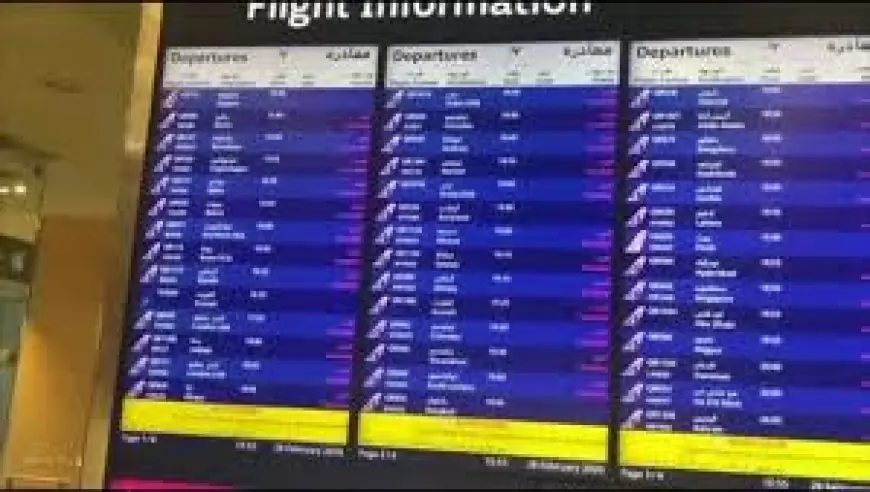
The immediate impact falls on passengers transiting the region: with airports in Dubai, Abu Dhabi and Doha closed and major carriers grounded, travellers — including those booked with air india — are facing cancellations, diversions and sheltering orders. The disruption has already triggered large-scale evacuation planning and warnings that long-haul itineraries will be disrupted for days.
Who is affected first and how networks are collapsing
Here’s the part that matters: key transit hubs that connect Europe, Africa and the west to Asia have halted operations, creating knock-on effects for global schedules. Airports that normally concentrate huge daily flows are now emptied of regular routes, leaving passengers stranded, flights diverted and carriers scrambling to reroute long-haul services around closed airspace.
Event details embedded: strikes, retaliation and widespread airspace closures
US and Israeli strikes were launched against Iran, after which Iran launched attacks on the Gulf states as part of its retaliation. Countries across the region closed their airspace: Israel, Qatar, Syria, Iran, Iraq, Kuwait and Bahrain shut airspace, and there were no flights over the United Arab Emirates following a temporary and partial closure of its airspace. As a result, airports in Tel Aviv, Dubai, Abu Dhabi, Doha and other international hubs in the region have been suspended.
Airline suspensions, cancellations and the passenger toll (Air India referenced)
Emirates suspended all operations in and out of Dubai, leaving passengers round the world stranded, and paused services until 15: 00 local time (13: 00 GMT) on Monday because of airspace closures. Etihad suspended flights out of Abu Dhabi until 02: 00 local time. The three major carriers that operate at the affected hubs — Emirates, Qatar Airways and Etihad — typically handle about 90, 000 passengers a day through those airports and have all suspended flights. British Airways cancelled services to Tel Aviv and Bahrain until Wednesday and warned services between Heathrow and Abu Dhabi, Amman, Bahrain, Doha, Dubai or Tel Aviv could be affected for several days. Virgin Atlantic suspended services between London and Riyadh and Dubai over the weekend and warned that flights to India, Saudi Arabia and the Maldives may take longer due to rerouting around the closed or restricted airspace. Many passengers and bookings associated with other international carriers, such as air india, are now facing delays, cancellations or substantial reroutes; the scale of individual carrier impacts is unclear in the provided context.
Casualties, airport damage and personal stories
Major international airports in the region became targets in the strikes and retaliation. One person has been killed and 11 others injured at airports in Dubai and Abu Dhabi since the strikes began. Four of those injuries were among members of staff at Dubai International. Dubai’s international airport and the Burj Al Arab hotel sustained damage and four people were injured. Abu Dhabi Airports posted that an incident at Zayed International Airport resulted in one death and seven injuries, and that post was later deleted. On the human side, travellers Richard and Hannah from London were en route to Oman but became stuck in Bahrain; Hannah described an "uneasy 24 hours" and said a drone attacked the airport in the early hours, leaving them unable to continue their journey and now looking to return home.
Scale of disruption, UK response and travel advice
The disruption created uncertainty for hundreds of thousands of travellers. More than 3, 400 flights were cancelled across the seven main airports in the Middle East on Sunday. The UK is planning one of the biggest evacuations in its history: more than 76, 000 British citizens have registered their presence in affected areas of the Middle East and that number is expected to rise. British government officials are formulating plans to potentially evacuate UK nationals, but the timings remain unclear as much of the airspace in the region remains closed.
- Travel advice and sheltering: the UK Foreign Office advises against all travel to Iran, Israel and Palestine and against all but essential travel to the UAE, Qatar, Kuwait and Bahrain; there are further instructions to avoid parts of Pakistan, to stay at home in Saudi Arabia for British nationals there, and to take precautions in Jordan, Oman, Syria, Lebanon, Yemen and Iraq.
- Passenger concentration: more than two-thirds of the 76, 000 Brits in affected areas are believed to be in the UAE, with most there as holidaymakers or other travellers rather than residents.
Travel disruption indicators and brief timeline:
- Early Saturday: US and Israeli strikes began; Iran launched retaliatory attacks on the Gulf states.
- Sunday: widespread airspace closures led to the halting of operations at Dubai, Abu Dhabi and Doha, and more than 3, 400 flights were cancelled across seven main Middle East airports.
- Through Monday and into Tuesday: Emirates paused operations until 15: 00 local (13: 00 GMT) on Monday; Etihad paused outbound Abu Dhabi flights until 02: 00 local time; a notice extended closure of Iranian airspace until at least 8: 30am UK time on Tuesday.
- Forward signal: evacuation planning and extended airspace restrictions will determine when normal transit flow can resume; timings remain unclear.
The real question now is how long major carriers will keep hubs closed and how quickly alternate routes and evacuation corridors can be arranged. It’s easy to overlook, but the concentration of transit passengers through a few regional hubs means regional closures ripple globally.
Writer's aside: The operational pause at these transit hubs will test airline contingency planning and government evacuation logistics in ways that are often only visible when systems are under strain.