
























Khamenei’s Passing Marks the End of an Era

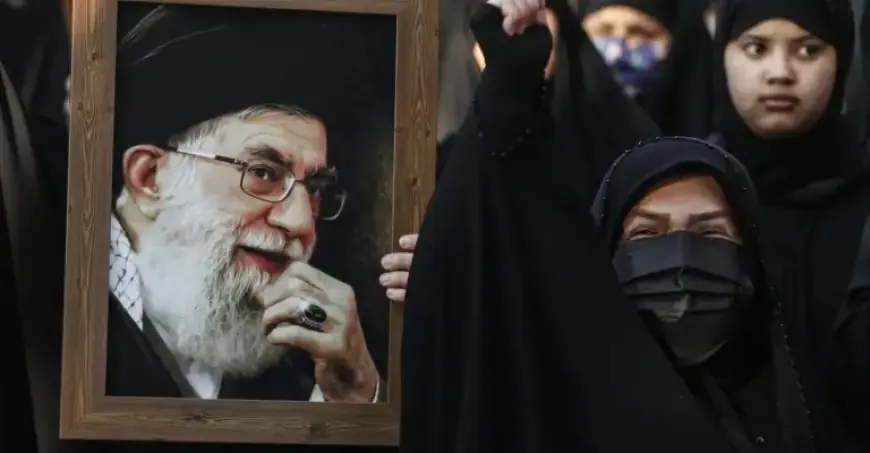
The death of Ayatollah Ali Khamenei marks a significant turning point in the history of Iran’s Islamic Republic. For almost four decades, Khamenei held sway over a nation shaped by the legacy of Ayatollah Ruhollah Khomeini, the architect of the 1979 revolution. This permanence of leadership comes to an end as the regime faces an uncertain future.
Khamenei’s Legacy: An Oligarchical Rule
Khamenei’s role as Supreme Leader was characterized by an unwavering commitment to the revolutionary principles established by Khomeini. The driving ideologies of his governance included a staunch anti-American sentiment and the upholding of the hijab as a symbol of the revolution. He was the last of Khomeini’s original architects, presiding over a government that deviated from its foundational ideals yet clung to power through various means.
- Year of Khomeini’s Death: 1989
- Khamenei’s Rise to Power: Orchestrated by Ali Akbar Hashemi Rafsanjani
- Khamenei’s Background: Son of a poor cleric from Mashhad
The Power Struggle with Rafsanjani
The initial alliance between Khamenei and Rafsanjani unraveled into a rivalry that persisted for thirty years. While Rafsanjani sought to foster better ties with the United States and emphasize economic growth, Khamenei maintained a fixed stance against compromises that could threaten the regime’s existence. This opposition to reform led Khamenei to bolster the Islamic Revolutionary Guard Corps (IRGC) as his primary support base.
- IRGC’s Role: Now Iran’s most powerful institution
- Impact on Governance: Khamenei sidelined multiple Iranian presidents to maintain his authority
Governance and Control
Khamenei adeptly maneuvered Iran’s political landscape, using elected officials as mere facades of legitimacy. His method involved restricting the power of presidents like Mohammad Khatami and Hassan Rouhani, ensuring they could not veer too far from his revolutionary ideology.
Changing Demographics of Believers
An academic’s observation illustrates a significant shift: initially, the regime had 80% ideologically committed members, which shifted drastically to only 20% by Khamenei’s later years. This change highlighted the increasing opportunism surrounding the leadership. Khamenei’s hyper-focus on American antagonism not only stemmed from ideology but was also entrenched in self-preservation, ever wary of the potential for pro-American sentiments to destabilize his regime.
Public Life Under Khamenei
The relationship between the Iranian state and its citizens under Khamenei can be viewed as predatory and controlling. The regime enforced strict regulations on citizens’ personal lives, ranging from dress codes to restrictions on personal freedoms. It also maintained a high execution rate, particularly targeting dissenters.
- Population Managed: Over 90 million Iranians
- Execution Rate: Highest in the world per capita
- Digital Presence: Significant online propaganda campaigns
Turning Points and Future Implications
Khamenei faced a critical conundrum as the integrity of the revolution waned against a backdrop of dissent and modernity. By 2026, following widespread protests, the regime’s violent responses led to one of the deadliest moments in recent Iranian history. His passing signals the end of an era defined by resistance against Western influences and issues of self-preservation.
The legacy of Khamenei is now left in the hands of his successors, as Iran grapples with evolving societal dynamics and potential new leadership directions. Whether this signifies a meaningful change or merely a continuation of past policies remains uncertain.