























Gold Price Today: Metals Near One-Month High as Rally Sets Up Seventh Straight Monthly Gain

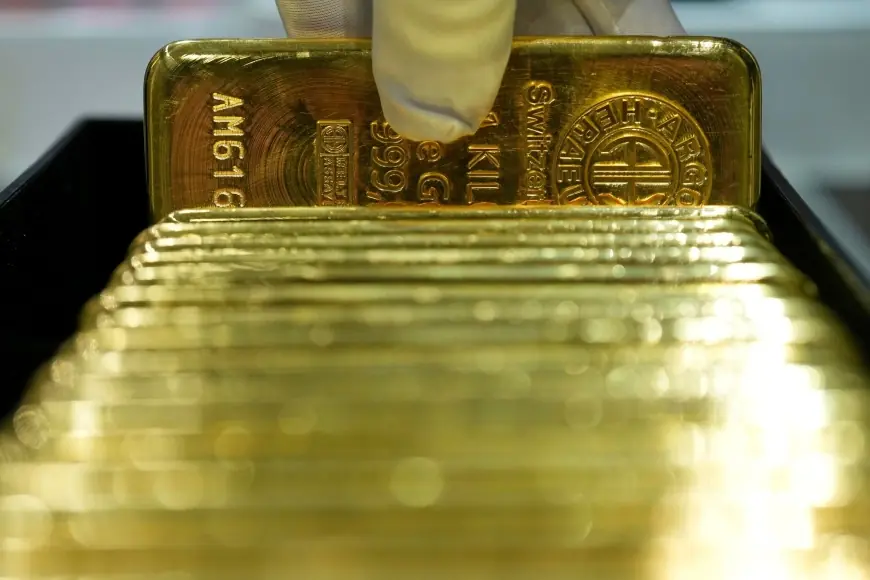
Market momentum is shifting back toward precious metals: gold price today is trading higher as gold and silver hit their strongest levels of February, positioning gold for a seventh consecutive monthly advance and spot gold for a monthly gain of more than 8%. That upward swing follows a steep late-January selloff and arrives while U. S. -Iran nuclear talks remain stalled with no deal yet in sight.
Market-performanc e shift: momentum, rankings and what moved prices
Gold futures rose 1. 3%, settling just above the $5, 260 mark, while silver futures spiked 7. 6%, moving past $94. 25 shortly after 1 p. m. ET. On the spot market, gold was up just over 1% and was trading near an all-time high it had reached before the January slump; spot silver gained about 7. 2%.
Here's the part that matters: the rally is pairing renewed investor demand with a weaker dollar. The U. S. dollar index slipped nearly 0. 2% to $97. 64, sustaining a plateau that has held since mid-February—a backdrop that typically supports higher bullion prices.
Gold Price Today: drivers from geopolitics to the dollar
The immediate catalyst for the upswing was geopolitical uncertainty. The metal rally continued after U. S. -Iran nuclear talks did not produce a deal, though the two sides agreed to extend negotiations. President Donald Trump is reported to be weighing military strikes against Iran, a development that has kept safe-haven demand elevated. An unnamed senior U. S. official described the situation as "Positive, " and Omani Foreign Minister Badr Al Busaidi, who is acting as a mediator, said the talks have shown "significant progress. " Al Busaidi is meeting with Vice President JD Vance and other U. S. officials in Washington on Friday, and negotiations are slated to continue next week.
Event details and the memory of January’s crash
Precious metals are rebounding from a late-January slide that hit both markets hard after Kevin Warsh was nominated as Federal Reserve chair. That nomination sent the U. S. dollar surging and marked a turning point: spot silver plunged 33% to $77 and spot gold tumbled 12% to $4, 722 during the crash. Market commentary at the time suggested Warsh’s nomination could stabilize the dollar and reduce what one analyst called "deep extended dollar weakness. " The president had publicly urged the Federal Reserve’s chair, Jerome Powell, to cut rates aggressively even as the nomination signaled a more disciplined approach to rate policy.
Wider context: last month’s records and year-long pressures
Silver’s recovery still leaves it well below an all-time high it set last month when it exceeded $120. More broadly, precious metals have largely trended higher over the past year amid a series of geopolitical flashpoints tied to the administration, including military threats against Iran, the capture of Venezuelan President Nicolas Maduro, and a public push to annex Greenland. The administration did not rule out military action against the territory involved, which is a self-governed territory under Denmark.
What’s easy to miss is how quickly sentiment can reverse: moves by nominations, policy expectations, and diplomatic developments compressed into weeks have produced outsized price changes in both directions.
Key takeaways
- Gold futures rose about 1. 3%, trading just above $5, 260; spot gold was up just over 1% and nearing its pre-January peak.
- Silver futures jumped roughly 7. 6% past $94. 25 shortly after 1 p. m. ET; spot silver gained around 7. 2% but remains below last month’s over-$120 high.
- U. S. -Iran talks remain out of reach for a deal; negotiations were extended and mediation continues with Omani Foreign Minister Badr Al Busaidi meeting U. S. officials in Washington.
- The U. S. dollar index eased nearly 0. 2% to $97. 64 and has been on a plateau since mid-February, a supportive factor for metals.
- Late-January selling followed Kevin Warsh’s nomination as Fed chair candidate, which briefly strengthened the dollar and drove sharp drops in spot silver and gold.
The real question now is whether continued negotiation progress, or any escalation of tensions, will sustain the current momentum. Signals that would confirm a further turn include renewed dollar weakness or a meaningful diplomatic breakthrough—or the opposite, a spike in risk-off flows if talks falter and military options gain traction.
Timeline (compressed): late January saw a crash after the Warsh nomination; mid-February brought dollar stabilization; this week negotiators extended talks and mediation activity continued, with meetings in Washington slated for Friday and more negotiations next week. Details remain fluid and some points are unclear in the provided context.
Writer’s aside: Market moves this large over short windows underline how policy nominations and geopolitical headlines can outweigh technical patterns—traders and observers should expect quick reversals when those signals change.