























Burger King Whopper Changes: First Makeover in Nearly a Decade Rolls Out Now

Burger King just made its most significant move in years. The fast-food giant announced on February 26, 2026, that it is rolling out Burger King Whopper changes for the first time in nearly 10 years — and the overhaul is already live across all 7,000-plus U.S. restaurants starting this week.
What Are the Burger King Whopper Changes?
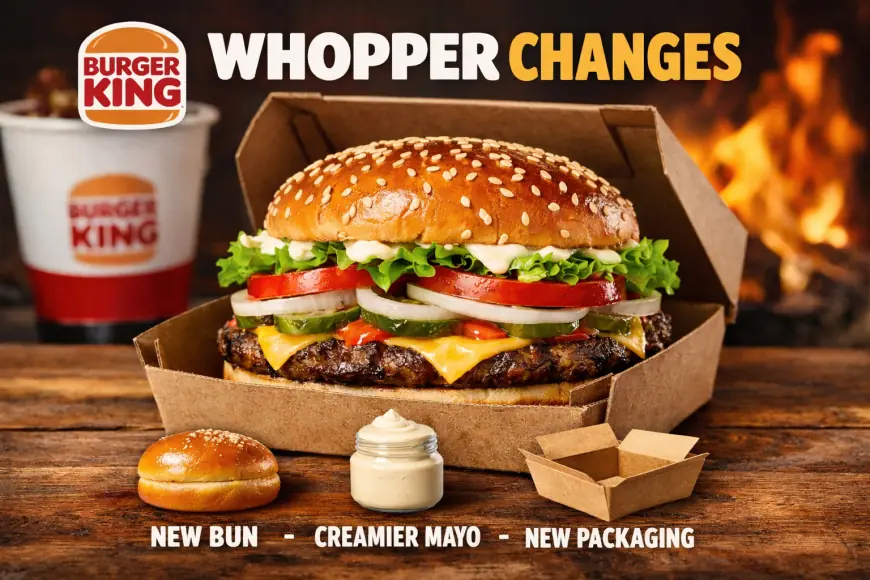
The updated Whopper arrives with three core upgrades driven entirely by customer complaints. Burger King is swapping the original soft bun for a more premium, better-tasting alternative, replacing its standard mayonnaise with a creamier, higher-quality version, and ditching the classic paper wrapper in favor of a box designed to keep the burger intact from kitchen to customer.
The beef patty — a quarter-pound of 100% flame-grilled beef — is staying exactly the same. Freshly cut onions, tomatoes, crisp lettuce, and tangy pickles remain untouched as well. The changes are cosmetic and structural, not a reinvention of what made the Whopper iconic since its debut in 1957.
Customer Complaints Drove Burger King to Act
For years, Burger King customers flagged the same issue: smashed, falling-apart Whoppers arriving in crumpled paper wrappers. Tom Curtis, President of Burger King U.S. and Canada, personally began taking calls and texts from customers weeks before the announcement, gathering direct feedback from everyday guests.
Curtis summarized the mission clearly: "It's like we're putting our famous iconic burger in a tuxedo instead of a leisure suit." The new box packaging is specifically engineered to hold the burger tall and intact, preserving the stack of toppings exactly as it leaves the kitchen, addressing one of the most repeated frustrations in recent years.
Burger King Whopper Changes Come at a Cost for Franchisees
The enhanced Whopper will cost Burger King franchisees an additional $4,000 per year to execute. Corporate leadership has strongly advised franchise owners not to pass that cost along to consumers through price hikes, citing ongoing economic pressure and inflation-weary customers still cutting back on discretionary spending.
Industry analysts note the tension this creates. Labor costs remain elevated, and franchisees are already navigating thin margins. Burger King's position is that the investment will drive higher sales volume and bring back lapsed customers — making the math work over time rather than immediately.
Burger King Sales Trending Up Ahead of the Whopper Overhaul
The Burger King Whopper changes arrive at a moment of momentum for the brand. U.S. same-store sales climbed 3.2% in the most recent quarter, a meaningful uptick that gave the company confidence to move forward with menu-level upgrades rather than just operational fixes.
Curtis and his team spent several years stabilizing restaurant operations, modernizing locations, and improving consistency before touching the Whopper itself. The thinking: fix the foundation first, then elevate the product. That sequence appears to be paying off, and the new Whopper is the next phase of that broader turnaround plan.
How Burger King Is Balancing Loyalty and New Customers
One of the core risks with any change to an iconic product is alienating existing fans. Burger King was deliberately cautious about the scope of the Whopper changes, keeping every ingredient the same while only modifying the bun, mayo, and packaging. The goal is to satisfy long-time loyalists while giving lapsed customers a reason to return.
Curtis noted he frequently hears travelers at airports say they love the Whopper but haven't had one in years. That gap — between brand affection and actual visits — is exactly what Burger King is targeting with this upgrade. The company operates more than 19,000 locations across 120 countries, and a successful U.S. Whopper overhaul could pave the way for broader global rollouts.
What the Updated Burger King Whopper Means for Fast Food Competition
Burger King's timing is notable. The announcement follows McDonald's revealing plans for its largest burger ever, putting both chains in direct competition for attention and market share at the same moment. The fast-food landscape is intensifying, and updating the Whopper signals Burger King is playing offense.
The original Whopper sold for 37 cents in 1957 — roughly $4.36 in today's dollars. Nearly seven decades later, Burger King is betting that elevating its most iconic product, without reinventing it, is the smartest move it can make heading into the rest of 2026.